Portuguese
  Spanish


Humanoid robots, new shifts, and management systems take center stage in Sapore’s strategy amidst worker shortages, productivity pressure, and changes in the corporate dining sector, which seeks to adapt restaurants to an increasingly automated routine.
Sapore, a Brazilian multinational in corporate dining founded by Daniel Mendez, has expanded its pursuit of automation to tackle labor shortages, reduce waste, and prepare operations for potential changes in work shifts.
With 23,000 employees and 1,400 restaurants, the company is evaluating humanoid robots in China and Japan to mechanize repetitive tasks, primarily the collection of trays in corporate dining units.
This move comes at a time of pressure on the out-of-home dining and outsourced services sector, marked by high turnover, hiring difficulties, and a Congressional debate on ending the 6×1 work schedule.
-
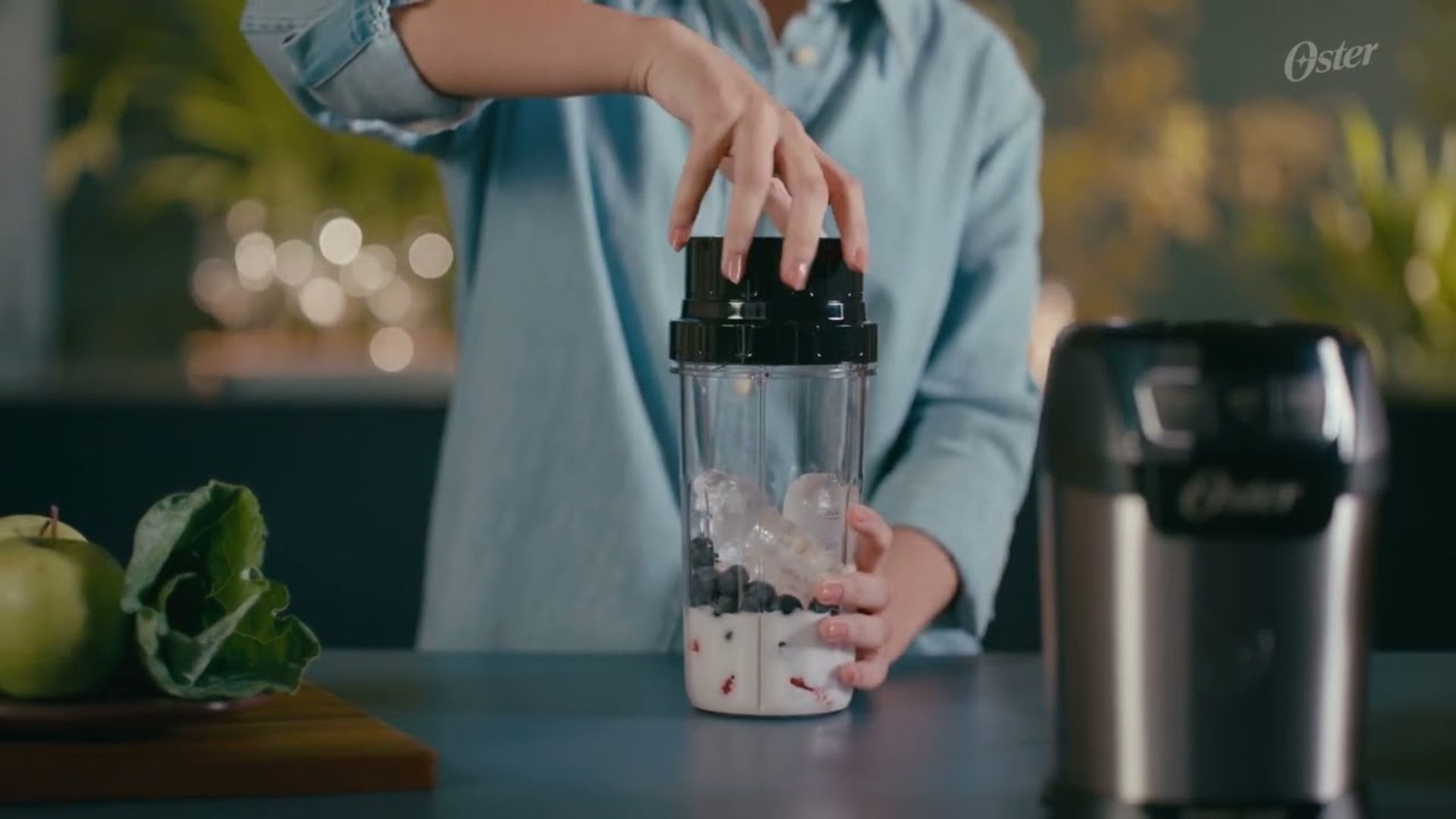
The large jar blender has a rival: Oster Ultra Power bets on 1,000 W, six stainless steel blades, and two portable cups with leak-proof lids.

-
Tesla injected an additional $250 million into the German factory, doubled the battery cell target, and opened its own production line for startups.

-
No more TV stuck on the wall: Samsung The Freestyle+, the new projector with over 400 lumens projects on walls, floors, and ceilings, bringing cinema to any corner of the house.
-
A Japanese governor single-handedly stalled the construction of the world’s fastest train for nine years, and only now has he agreed to allow a tunnel excavated at a depth of 1,400 meters.


The proposal being discussed in the Legislature aims to abolish the model of six workdays for one day of rest, which would impact segments that operate every day of the week.
According to Daniel Mendez, the worker shortage does not solely depend on a potential change in labor legislation and is already affecting operational activities in restaurants, industrial kitchens, and support services.
For the entrepreneur, repetitive functions have lost attractiveness among some workers, requiring a reorganization of processes in companies that need to maintain operations in different regions of the country.
“If it’s bad today, the difficulty in hiring staff will get even worse, and it doesn’t just depend on the end of the schedule,” says Mendez.
Besides corporate restaurants, the operation he leads includes about 400 service units for companies, with activities such as maintenance, cleaning, and access control.

Sapore has also expanded its presence in the food retail sector with the purchase of Galeria dos Pães, a traditional bakery in São Paulo, in an expansion beyond the corporate dining segment.
The acquisition, announced in May 2026, added a well-known brand from São Paulo’s capital to the company’s portfolio and integrated a strategy of operating in different fronts of the food sector.
Founded in 1992, Sapore presents itself as the first Brazilian multinational corporate restaurant and operates in Brazil and Colombia.
The company recorded net revenue of R$ 3.6 billion in 2025 and was created by Mendez, a Uruguayan naturalized Brazilian who started working as a waiter in his father’s restaurant in Jaguarão, Rio Grande do Sul, as a child.
Automation in restaurants targets repetitive tasks
Within the restaurants, the company’s initial priority is in activities described by the company as mechanical and of low operational complexity.
Tray collection, according to Mendez, appears among the first areas that can be replaced by equipment capable of repeating movements, organizing utensils, and feeding the next stages of washing.
Currently, this routine involves general service assistants who remove plates, glasses, and cutlery from trays, separate waste, place items in water, and direct materials to the dishwasher.
In Sapore’s assessment, this type of function involves repetitive tasks, less attractiveness for new workers, and direct impact on the daily efficiency of kitchens.
The investment in humanoid robots has not yet had its value disclosed by the company, which treats the initiative as a study front within the automation plan.
Mendez states that the initial cost is high and only makes sense when applied on an industrial scale, with the potential for replication in the 1,400 restaurants operated by the company.
“The project is expensive, but if you insert it into an industrial line, of 1,400 restaurants, it does not compromise business expansion and leads to gains in the medium and long term,” says the entrepreneur.
In Mendez’s assessment, companies that manage to adopt technology before a worsening in labor shortages will be able to reduce operational pressures in the sector.

As a comparison, the executive cites the adoption of processed fruits and vegetables in the early 2000s, when part of the kitchens still maintained larger structures and were more dependent on internal teams.
At that time, according to him, corporate restaurants maintained butchers, confectioners, and professionals responsible for stages that were later performed by specialized suppliers.
6×1 Schedule and Labor Shortage Pressure the Sector
The transformation also involves the profile of younger workers and how some of them view career progression in professional kitchens.
Mendez states that the traditional career path in this environment, once marked by a slow evolution between roles, has lost appeal among people seeking faster advancement and less exposure to repetitive tasks.
“In the past, a good chef started by washing dishes and gradually climbed the restaurant hierarchy. But today’s young people don’t want to wait ten years to become a chef,” he says.
According to the businessman, this change forces food companies to redesign roles, schedules, and internal processes to maintain daily operations.
The debate about the 6×1 schedule adds another layer of pressure to team management in restaurants, hospitals, remote areas, and industrial units served by the company.
At Sapore, about 30% of employees still work under this regime, while 35% work on a 5×2 schedule.
The rest participate in tests with alternative formats, such as 2×2 and 12×36, defined according to the region, type of client, and the requirements of each operation.
Hospitals, mining companies, petrochemicals, and units located in remote areas require different coverage models, as some of these activities cannot be interrupted.
In some contracts, there are also risk premiums, specific safety rules, or demand concentrated at certain times of the day, factors that influence the definition of schedules.
“The end of the 6×1 schedule will inevitably bring financial impacts. But we have been testing various alternatives to try to mitigate this,” says Mendez.
According to him, the tests have already indicated a reduction in absenteeism, although the company is still evaluating the effects of each format on costs and productivity.
Robots at Clients Reduce Demand for Meals
Automation also affects Sapore on the demand side, as some of the company’s corporate clients adopt machines for activities previously performed by workers.
While seeking robots to fill internal gaps, the company serves operations that also replace people with equipment in factories, logistics centers, and other corporate environments.
In practice, the reduction of workers in these locations can decrease the volume of meals served in restaurants located within companies.
“My clients are also becoming increasingly robotized. And robots don’t eat,” says Mendez.
The businessman cites the case of a company served by Sapore that, according to him, already has 500 robots performing activities previously done by employees.
In response to this scenario, the company intends to expand more segmented services and menus aimed at different consumption profiles within the units served.
Menus for vegans, people with lactose intolerance, gluten restrictions, and other dietary needs are expected to gain space as a way to offset any reduction in the volume of meals per unit.
This reorganization also reinforces the use of data to predict demand, adjust purchases, and tailor food preparation to the behavior of each restaurant.
Sapore is investing R$ 50 million in a SAP management system to connect all restaurants, map consumption variations according to calendar and climate, and reduce losses in the food chain.
SAP System and Artificial Intelligence Reduce Waste
The system has already been implemented in about half of the company’s restaurants, according to Mendez, and it is expected to reach the entire operation by 2028.
In the integrated units, Sapore claims that monthly food waste has dropped from 10 tons to 240 kilograms, a result attributed to more precise control of demand, stock, and preparation.
“Until then, it was much by ‘gut feeling’, what the managers thought would have higher or lower demand, based on their experience. Now we are giving numbers to everything,” says the businessman.
With the change, decisions previously based mainly on managers’ perceptions are now supported by consolidated indicators on consumption, calendar, climate, and the history of each unit.
In addition to the management system, the company uses ovens equipped with artificial intelligence to standardize preparation stages and reduce the need for constant supervision.
These devices are used in kitchens that need to produce a large volume of meals at concentrated times, a common characteristic in corporate restaurants and collective food operations.
The adoption of technology occurs in parallel with the update of NR-1, a work safety and health standard that now includes psychosocial risk factors in Occupational Risk Management.
According to the schedule of the Ministry of Labor and Employment, the inclusion of these factors will be effective from May 26, 2026.
In practice, the change increases companies’ attention to work organization, operational pressure, shifts, internal environment, and factors that can affect employees’ mental health.
For labor-intensive operations, such as corporate restaurants and outsourced services, the review of schedules becomes a labor, productive, and regulatory concern.
In this context, Sapore seeks to reorganize its structure in the face of hiring difficulties, high turnover, possible changes in the 6×1 schedule, new occupational health rules, and automation adopted by corporate clients.
Technology, previously treated mainly as an efficiency tool, is now taking up space in the company’s operational decisions in a sector pressured by costs, shifts, worker availability, and changes in demand profile.