Portuguese
  Spanish


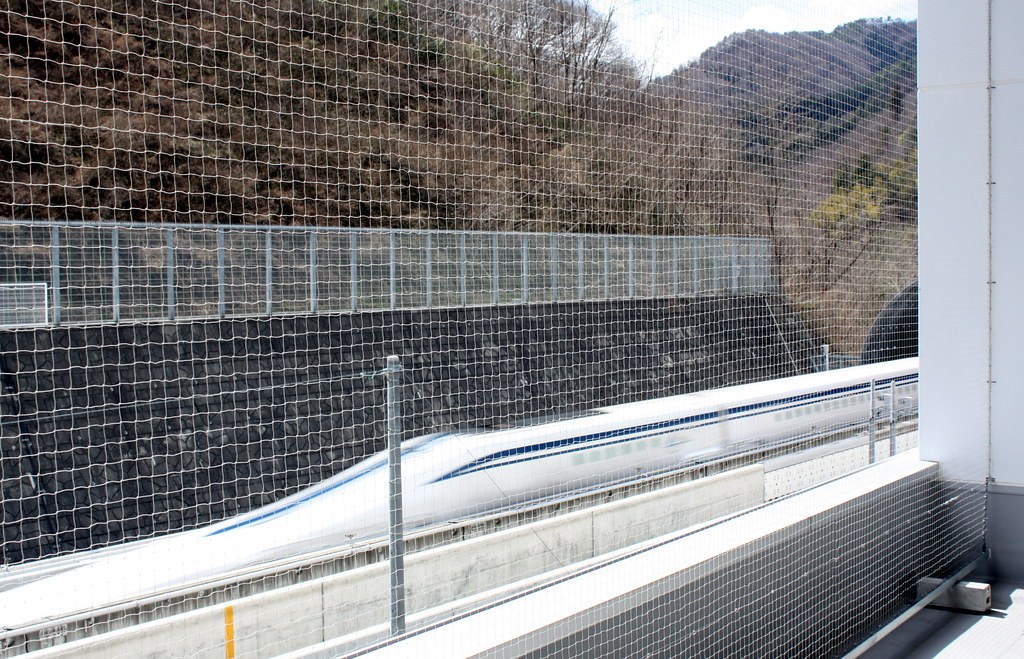
After nine years of single-handedly halting the construction of the world’s fastest train, the Japanese province of Shizuoka has finally relented and allowed the excavation of the last section of a tunnel that descends 1,400 meters deep under the Japanese Alps, unlocking the maglev that will connect Tokyo to Nagoya at 500 kilometers per hour.
The engineering of the Japanese magnetic levitation train is already known: a train that floats over tracks and cuts across the country at airplane speeds. But the story behind this week’s unlocking is not about technology. It’s about a political stalemate that held up one of the largest projects on the planet for almost a decade.
The governor who single-handedly held up the project
The decision came on July 7. The province of Shizuoka agreed to allow JR Central to excavate the last 8.9 kilometers of the Southern Alps tunnel, the missing section needed to complete the backbone of the new line. It seems like a technical detail, but it was the knot that held everything up.
For nine years, a single governor held the project hostage over a legitimate concern: the fear that the excavation would drain the waters of the Oi River, which supplies agriculture and cities in the region. While the project advanced in the rest of the country, that piece in the middle of the mountain remained untouched, and without it, the train could not move forward.
-
Almost 1 billion euros, two gigafactories, and a million-dollar public investment, Chinese company aims to turn Spanish city into Europe’s new battery hub.

-
Advancement in the industry: Brazilian company creates ultralight material comparable to steel and paves the way for hydrogen cylinders up to 70% lighter, with a direct impact on logistics, the energy industry, and national competitiveness – learn about Forza Composites

-
A 180-meter ship with a deck the size of a football field was christened to carry 25,000 tons of giant energy modules around the world.

-
While modern cities rely on pumps and electricity, in Iran, ancient tunnels carried water through the desert using only slope and gravity.


The saga only ended with an environmental agreement that guarantees measures to protect the region’s water resources. It took almost a decade of negotiation, studies, and political wear to release a section of less than 9 kilometers. It is proof that, in megaprojects, the obstacle is rarely the engineering.
The scale of what was held up
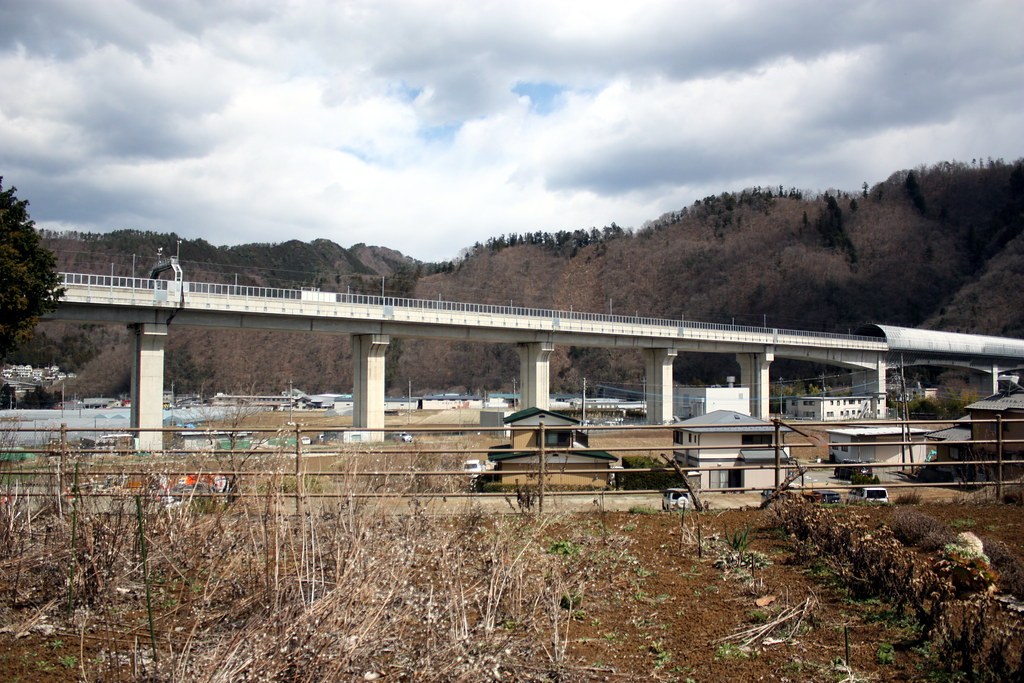
To understand why this stalemate became world news, one must look at the size of the project. The Alps tunnel is 25 kilometers long and reaches 1,400 meters below the surface, placing it among the deepest excavations ever attempted for a passenger railway.
The entire line, budgeted at around $67 billion, promises a leap in mobility that is hard to imagine. The trip between Tokyo and Nagoya, which currently takes about an hour and a half, will drop to just 40 minutes when the maglev becomes operational. It’s the difference between a journey and a hop between cities.
Even with the unlocking, patience will still be necessary. The line is not expected to be ready before 2036, given the complexity of drilling through mountains, controlling aquifers, and setting up a technology that practically admits no error. Nine years lost in the stalemate weigh even more when adding the time that remains.
When a river is worth more than a bullet train
What strikes me most about this story is the power that a single local concern had over a national-scale project. In a country known for its efficiency and obsession with deadlines, a governor managed to hold up for nine years the crown jewel of Japanese engineering, in the name of the water that supplies his region.
One can see both sides. On one side, technological progress and national pride in having the fastest train in the world. On the other, communities that depend on a river and fear losing their water source because of a project decided in Tokyo. It’s the kind of conflict between development and the environment that repeats worldwide, including in Brazil.
The agreement that unlocked the project tries to balance this scale. JR Central will have to constantly monitor the level of aquifers and return the water to the basin if the excavation diverts it, a kind of trust contract between the company and the local population. If it works, it could become a model for other megaprojects facing the same resistance worldwide.
I wonder how many Brazilian megaprojects are living exactly this dilemma, stalled not for lack of money or technology, but due to disputes over who wins and who loses with them. The difference is that in Japan, the solution came from a negotiated agreement, not years of paralysis in the courts.
The global race for floating trains
Japan is not alone in this race. China has already tested magnetic levitation trains that exceed 600 kilometers per hour and is investing heavily to make maglev a showcase of its engineering. The technology, which eliminates friction by making the train float over magnetic fields, is seen as the next big leap in land transportation.
The promise is enticing: speeds that compete with airplanes on medium-distance routes, without the bureaucracy of airports or the emissions of flights. But the cost is brutal, and few countries in the world have the budget and patience to support an entire maglev line. The Japanese stalemate shows that even with plenty of money, the path is full of obstacles.
Meanwhile, Brazil is still debating conventional railways that have dragged on for decades. The distance between a country discussing trains floating at 500 per hour and another struggling to complete common tracks is a portrait of two infrastructure realities. Not surprisingly, this contrast becomes recurring material here.
We often think that having resources and technology is enough to carry out a major project. The case of the Japanese maglev shows that the hardest part may be convincing everyone that it’s worth it, and that sometimes a single river has the power to hold up the fastest train on the planet for almost an entire decade.
Is it worth excavating 1,400 meters under the mountain for 50 minutes less travel time, or does the environmental cost speak louder?