Portuguese
  Spanish


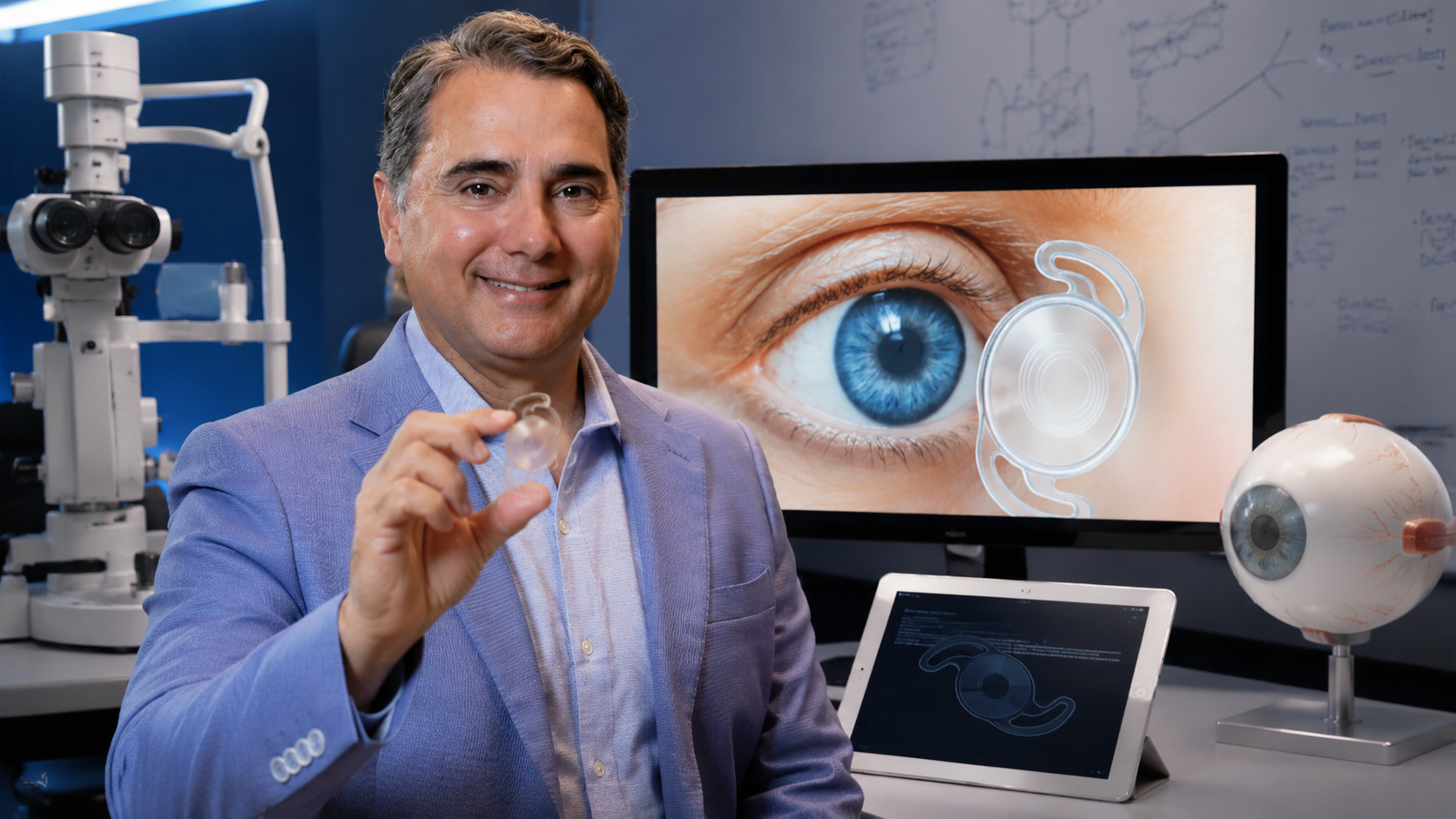

Discover the advancement of Brazilian science that developed an intraocular lens for cataract surgery, enhancing vision quality with high precision.
A revolutionary innovation promises to transform global eye health and highlight Brazilian science. The Brazilian researcher João Marcelo Lyra, professor at the State University of Health Sciences of Alagoas (Uncisal), developed the Galaxy, the world’s first lens with a spiral optical design.
According to a publication by Época Negócios on June 30, 2026, the device is a qualitative leap in cataract surgery, as it offers clear vision at multiple distances — including the intermediate field for smartphone use — and reduces night halos and contrast loss.
Cataracts affect millions of people and, in Brazil, reach severe proportions. Data from the Brazilian Society of Ophthalmology (SBO) indicate 550,000 new cases annually in the country. The disease clouds the lens, the eye’s natural lens, gradually impairing vision. The only definitive solution is to replace this structure with an artificial intraocular lens. With the launch of the Galaxy, Brazilian science can address the main complaints of operated patients: visual discomfort and dependence on glasses.
-
World’s Largest Particle Accelerator Begins Four-Year Hiatus for Magnet Overhaul, Aiming to Hunt Dark Matter by 2030

-
“Sahara Dust Turns Rain Red, Startling Residents Across Europe”
-
Stanford Scientists Develop 20-Cent Paper Centrifuge Inspired by Ancient Toy, Spins at 125,000 RPM Without Electricity, Separates Plasma in 1.5 Minutes, Aiding Diagnostics in Remote Areas

-
World’s Largest Vaccine Manufacturer, Immunizing Two-Thirds of Global Infants, Originated in a Pune Horse Farm





The impact of ocular opacification on the population with cataracts
The loss of lens transparency causes individuals to see in a cloudy and blurred manner. The emergence of more than half a million new cases each year overwhelms health systems and demands solutions in the field of ophthalmology.
Historically, the standard treatment is cataract surgery, a safe procedure with quick recovery. However, traditional implants faced a dilemma. Many operated patients complained of optical side effects, such as the formation of bright circles around lights and a decrease in contrast perception, making tasks like driving at night difficult.


The union between artificial intelligence and optical physics
Disturbed by these limitations, Lyra led an interdisciplinary group with experts in optical physics, computing, and medicine. The project was supported by the Brazilian Artificial Intelligent Networking Medicine (Brain), a research group linked to the Federal University of Alagoas (Ufal).
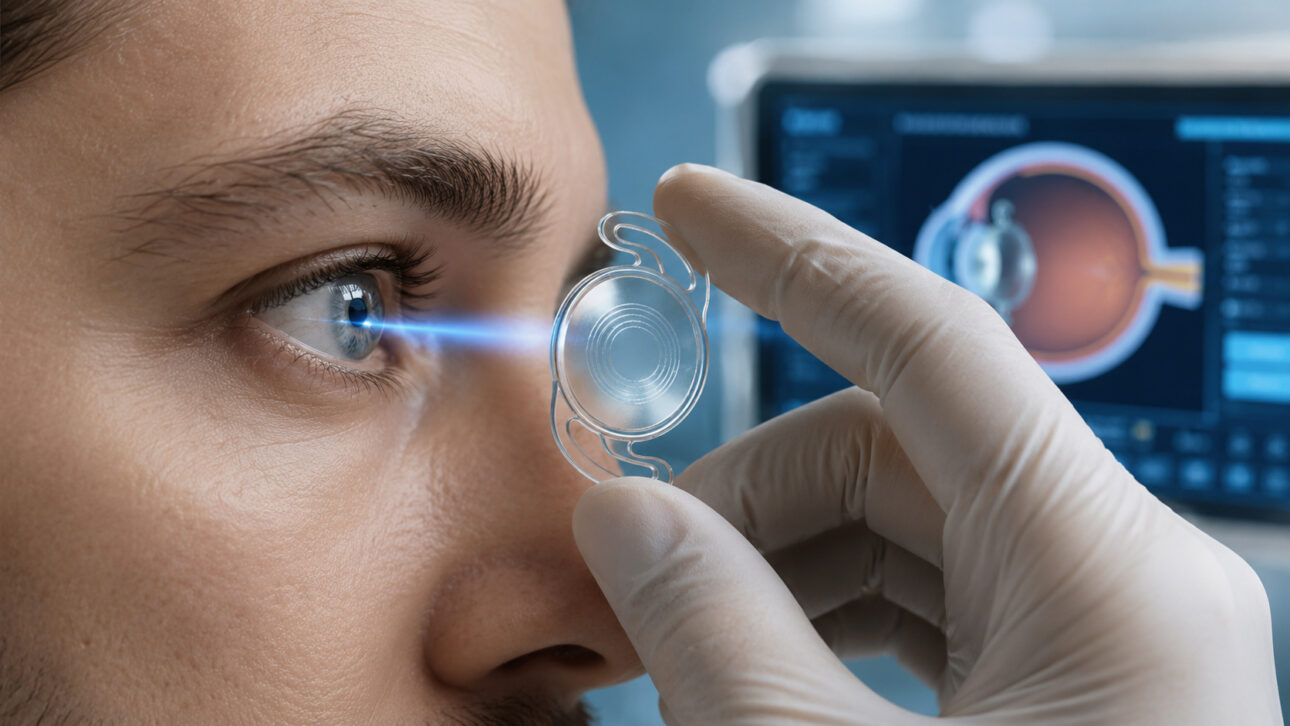
The major technological breakthrough was replacing the conventional diffractive system with a refractive mechanism with spiral architecture. According to the source, using a ray-tracing software driven by artificial intelligence, scientists smoothed the distribution of light entering the eye. According to the device’s creator, the popularization of smartphones and post-pandemic demands for higher visual quality dictated the need to focus on intermediate vision.
Clinical results of the new intraocular lens against cataracts
According to a publication by UNCISAL itself, human tests took place in 2022 at the João Carlos Lyra Foundation in Maceió, where 15 patients received the implant. The collected data confirmed that the spiral optical engineering surpassed the indices of imported trifocal lenses available on the market.
The device’s effectiveness was proven by specific metrics:
- Continuous focus: clear vision at distances ranging from 35 cm to 70 cm;
- Night comfort: reduction of 50% to 60% in the presence of halos compared to trifocal lenses;
- Contrast level: reaching 94% sensitivity, surpassing the 80% rate of traditional models.
These high-precision parameters consolidated the project, proving that the country has the technical capacity to lead global medical innovation and redefine the well-being of those suffering from cataracts.
Access window and criteria for the implant
In Brazil, the technology has been available on the market since 2025. UNCISAL states that the global balance indicates nearly 100,000 implants performed worldwide, with about 10,000 in national territory. However, access to the innovation is restricted to the private medical network.
The insertion of the device into the public system is currently unfeasible due to the low reimbursement value that the Unified Health System (SUS) provides for the surgical procedure, an amount that does not cover the material costs. In addition to patients with cataracts, the treatment is recommended for people over 55 years old who are dependent on glasses with a prescription higher than 1.5 for distance.

The new horizon for global eye health
The development of the Galaxy lens crowns the strategic role of national research in the medical field. The work led by Lyra proves that the integration between cutting-edge medicine and computational technology can solve historical vision problems.
By optimizing light distribution, the novel design eliminates the dilemma between regaining clarity and suffering from visual disturbances. The recognition of the technology by major international agencies elevates the prestige of the country’s medicine and paves the way for treatments that prioritize patient comfort.