Portuguese
  Spanish


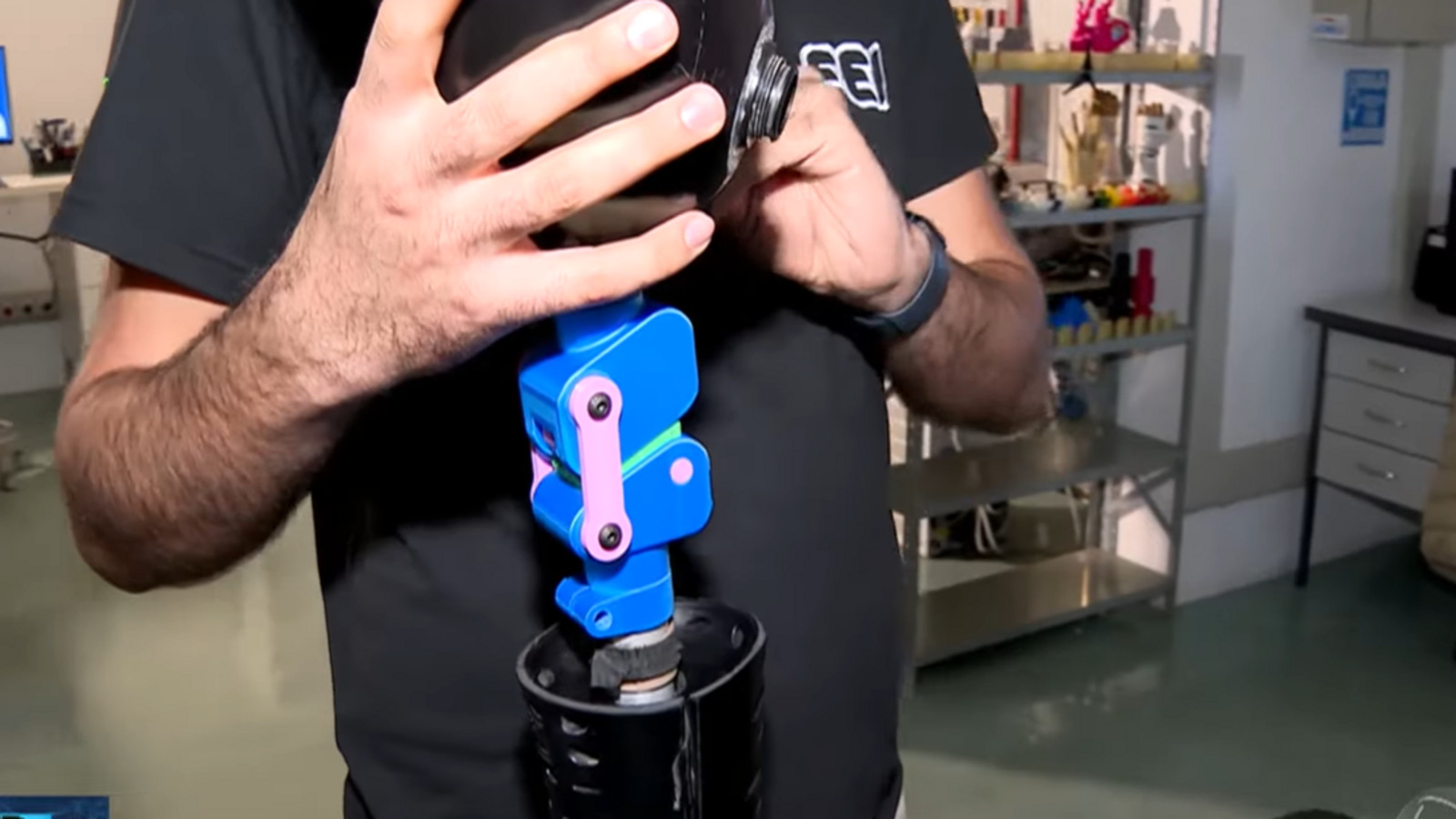

Prototype developed by university students in Brazil uses sensors to analyze movements, allows part replacement, and could reach SUS in up to three years
A 3D printed knee developed by Brazilian students could enhance the quality of life for amputees by offering a more accessible, customizable prosthesis that closely mimics the body’s natural movements. The prototype is still undergoing tests and could reach SUS in up to three years.


3D printed knee aims to mimic natural movements
The prosthesis is part of a collaborative research between FEI and other institutions, funded by the Financier of Studies and Projects (Finep), and recently won the Transformation in Society category of the InovaFEI award, promoted by the institution.
It uses 3D printing to produce a prosthetic knee with greater adaptability to the patient.
-
The large jar blender has a rival: Oster Ultra Power bets on 1,000 W, six stainless steel blades, and two portable cups with leak-proof lids.

-
Tesla injected an additional $250 million into the German factory, doubled the battery cell target, and opened its own production line for startups.

-
No more TV stuck on the wall: Samsung The Freestyle+, the new projector with over 400 lumens projects on walls, floors, and ceilings, bringing cinema to any corner of the house.
-
A Japanese governor single-handedly stalled the construction of the world’s fastest train for nine years, and only now has he agreed to allow a tunnel excavated at a depth of 1,400 meters.


According to Felipe Batista, in São Bernardo do Campo (SP), tests conducted so far show that the equipment can mimic the body’s natural movement more accurately.
Sensors help customize the prosthesis
The proposal includes the use of sensors to analyze each patient’s movement. With this data, the team aims to produce a personalized prosthesis, adjusted to the needs of those who need to walk again.
Another unique feature mentioned in the project is the ability to adapt and replace parts over time, which is important for growing children and adolescents.
Cost and access are central points of the project
Mechanical engineering professor Mohammad Shaterzadeh states that traditional prostheses are costly and lack flexibility. For him, replacing the entire knee is unfeasible due to the high cost.
The expectation is that the technology could reach SUS in up to three years, increasing access for patients like Heitor, a nine-year-old who dreams of becoming an amputee soccer player.
This article was prepared based on information from the provided source material, with data, numbers, and statements preserved as per the consulted material.