At 18, student Lakshmi Agrawal from Bellevue (USA) created a hydrosponge made from jute residue that captures up to 80% of 6PPD, the pollutant released by tires that kills salmon. The cheap and biodegradable invention earned her a $75,000 prize at the world’s largest science fair.
A teenager decided to tackle an invisible poison that had been killing fish near her home. At 18, Lakshmi Agrawal developed a hydrosponge capable of removing the tire pollutant identified as responsible for the death of salmon from the water, and the feat caught the attention of the scientific world. The case was reported by the specialized publication Northwest Sportsman.
The big idea lies in the material: jute fiber, a cheap and abundant plant. Instead of creating an expensive filter full of chemicals, the young woman started with an agricultural residue and transformed it into a sponge that traps up to 80% of the contaminant. The result is an accessible, biodegradable solution ready to act in the short term.
The work earned significant recognition. The invention secured Lakshmi a $75,000 prize at the world’s largest science fair, placing a high school student at the center of an environmental debate involving a billion-dollar industry. All this from a simple observation: the salmon were dying, and she wanted to understand why.
-
New Zealand Drills Geothermal Well with Steam Exceeding 400 Degrees, Potentially Revolutionizing Clean Energy

-
Taiwan Invests $2.3 Billion to Produce 66 Brave Eagle Jets Domestically, Showcasing Technological Autonomy Amid Chinese Pressure

-
Microsoft Reveals Windows Setting to Safely Remove USB Drives and Prevent Data Loss
-
Astronomers Discover Two Giant Planets with Cotton Candy-Like Density, Comparable in Size to Jupiter, Orbiting a Star 1,110 Light-Years Away


How the jute hydrosponge works
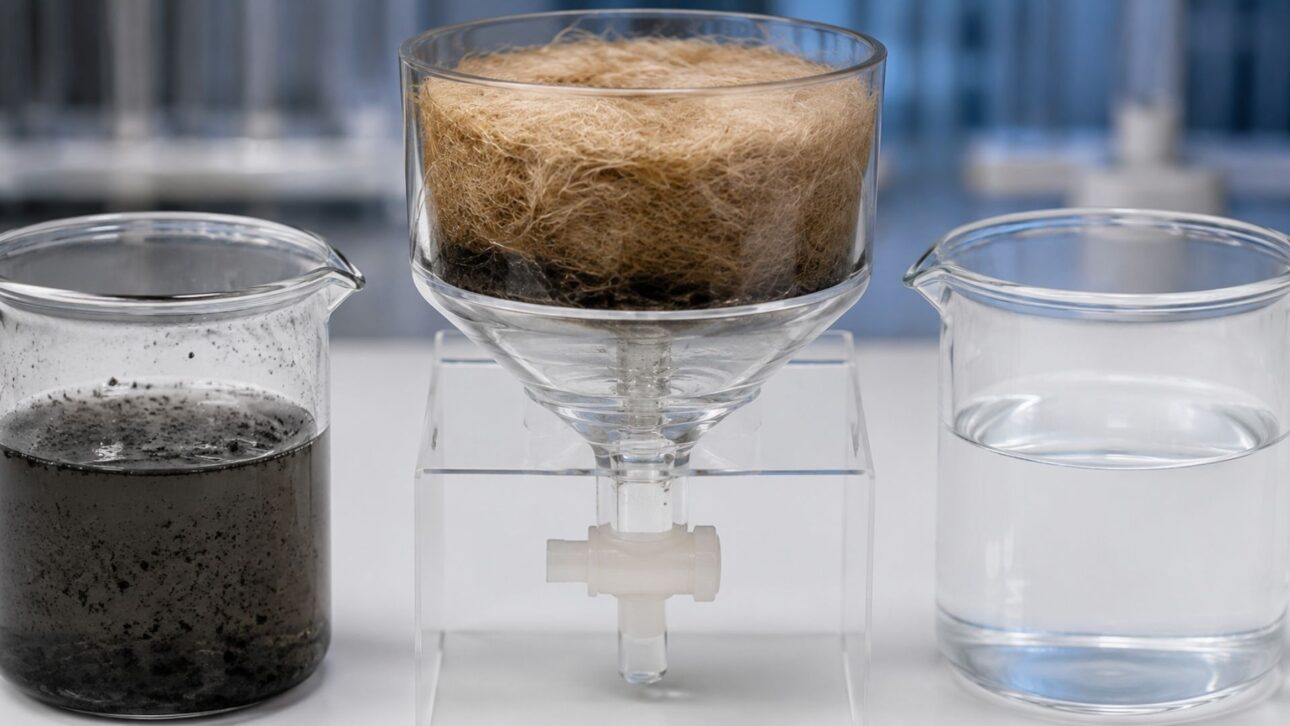
The idea is based on a simple filtration principle. The hydrosponge created by Lakshmi Agrawal is, in practice, a sponge made of cellulose nanofibers obtained from jute plant residues. Modified in the laboratory, this fiber gains the ability to attract and trap tire wear particles and the toxic pollutant that comes with them.
The main target is a compound called 6PPD-quinone. When rainwater runs off the asphalt, it carries tire microparticles and tire pollutants to streams and rivers. The jute sponge acts as a trap: as the water passes through the hydrosponge, it leaves behind a good portion of these substances, becoming cleaner on the other side.
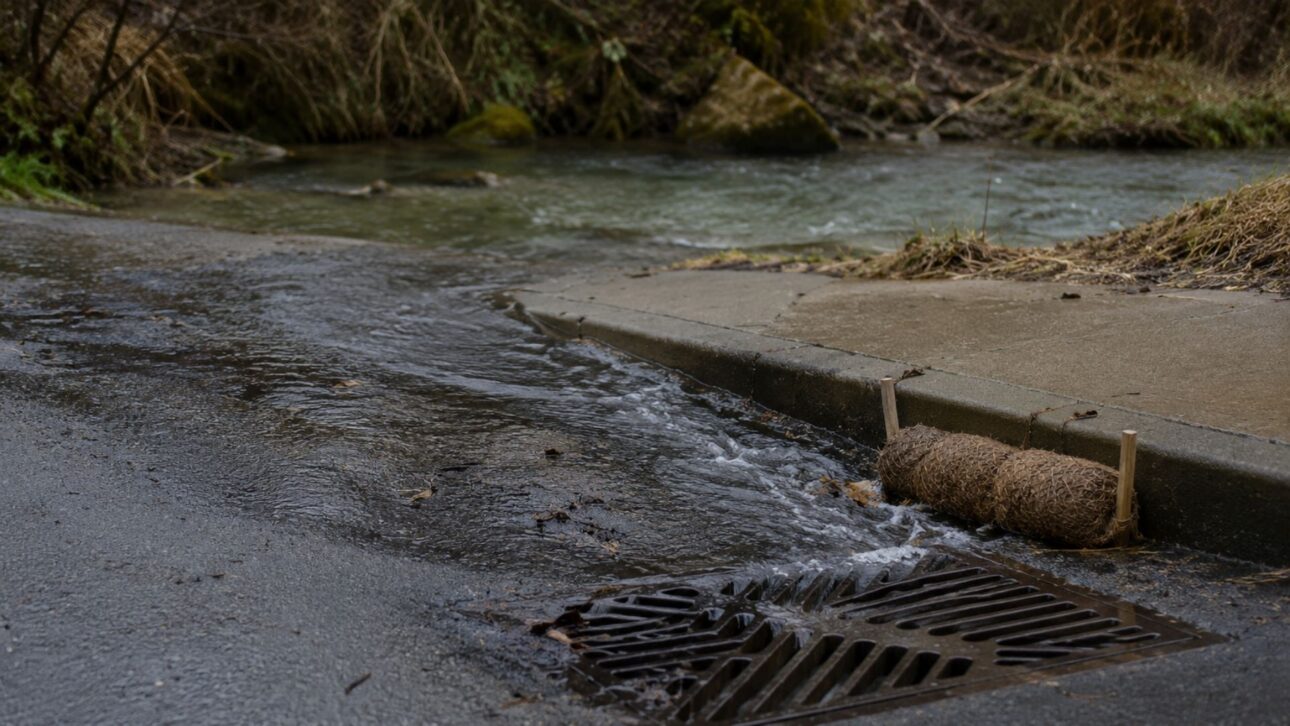
The numbers show the efficiency of the method. According to Northwest Sportsman, the hydrosponge captures up to 80% of 6PPD-quinone, as well as tire particles and even heavy metals present in urban runoff water. It’s not a total cleanup, but it’s a huge reduction of a poison that, in small doses, is already enough to kill salmon.
Another strong point is the simplicity of its operation. The sponge does not rely on harsh chemicals or complex machines to operate, which makes it easy to imagine its use in drains, drainage systems, and points where rainwater enters rivers. It is a technology designed to be installed where the problem really occurs.
Who is Lakshmi Agrawal, the young woman behind the invention

The inventor is a high school student with a scientist’s eye. Lakshmi Agrawal, 18, is a student at Interlake High School in Bellevue, Washington, United States. It was there, close to home, that she began to be bothered by an environmental problem that many people didn’t even notice.
The starting point was a local observation. Lakshmi noticed that the number of coho salmon deaths was increasing in the waterways of her region and went after the cause. Upon discovering that the culprit was a tire pollutant, she decided not to wait for a solution from large laboratories and decided to test her own idea.
This type of initiative requires method and persistence. Transforming a common plant like jute into an efficient filter against a specific pollutant involves many tests, adjustments, and measurements, the silent work that usually remains hidden behind a headline. The young woman faced this process while still in high school, showing scientific maturity above average.
Her future already has a prominent address. After being recognized at the science fair, Lakshmi Agrawal plans to study at MIT, one of the most respected technology institutions in the world. Her journey reinforces the image of a young generation willing to tackle environmental problems with applied science and practical solutions.
The tire pollutant that kills salmon
To understand the invention, you need to know the enemy. The tire pollutant at the center of the story is 6PPD-quinone, a substance that forms from a widely used additive in tire manufacturing, 6PPD. This additive protects the rubber from aging, but when it reacts with the air, it creates a highly toxic compound.
The path of this poison to rivers is everyday. With every brake and every kilometer driven, tires release tiny particles that remain on the asphalt. When it rains, the water washes the streets and carries this material to streams and rivers, taking along the 6PPD that transforms into the dangerous 6PPD-quinone. It’s a problem born from everyday traffic.
The effect on fish is devastating. Researchers have linked 6PPD-quinone to mass die-offs of coho salmon, also known as silver salmon, in rivers in the United States. In some waterways, up to 80% of the fish die before they even manage to spawn, threatening entire populations and unbalancing ecosystems that depend on salmon.
It is worth remembering that this problem is already known to science, and Lakshmi’s merit is not in discovering the poison, but in combating it. While the industry seeks definitive substitutes for 6PPD, there were no solutions to clean the water already contaminated today. It is precisely this gap that the jute hydro sponge aims to fill.
Why jute? The choice of material
The choice of raw material is what makes the invention so elegant. Jute is a cheap, abundant vegetable fiber that grows easily, widely used to make bags, ropes, and rustic fabrics. Instead of relying on expensive materials, Lakshmi saw in this simple resource the basis for a high-performance environmental filter.
Using jute waste has an important ecological weight. Since the sponge starts from plant leftovers, it utilizes a material that would often be discarded, turning waste into a solution. And, being of plant origin, the hydro sponge is biodegradable, meaning it decomposes in nature without leaving behind another difficult-to-eliminate plastic waste.
The advantages also appear in production numbers. According to the Society for Science, organizer of the fair, the young woman’s solution requires about 85% less energy to be manufactured and costs approximately 98% less than existing alternatives on the market. It’s a rare combination of being both cheaper and more sustainable.
This set of qualities is what gives strength to the proposal. An efficient but expensive filter would hardly leave the laboratory. A cheap, simple-to-produce, and biodegradable jute hydro sponge has a real chance of being used on a large scale, especially where resources are limited and the tire pollutant problem is more severe.
How much is the problem worth and why does it matter
Behind the salmon, there is a gigantic industry. The inventor herself sums up the size of the challenge. “Hydrosponges are an immediate solution for the $143 billion tire industry while protecting salmon populations,” said Lakshmi Agrawal, according to the Northwest Sportsman. The statement shows that she thinks not only about the fish but the entire system.
The young woman’s logic is that of a bridge between two times. Replacing 6PPD with another safe additive on a global scale is something that can take years, as it involves reformulating tire production worldwide. Until that happens, water continues to be contaminated every day, and that’s where the idea of a short-term solution comes in.
The hydro sponge presents itself as this immediate remedy. Instead of waiting for the industry to solve the root of the problem, the technology tackles the tire pollutant where it already is, in runoff water, reducing the damage while the bigger change is yet to come. It’s a way to buy time for threatened ecosystems.
The reach can go beyond fish. By removing tire particles, heavy metals, and 6PPD from the water, such technology can also help protect drinking water sources and other aquatic animals. What started as a defense of salmon can turn into a broad tool for depollution.
What is the Regeneron ISEF and the $75k prize
The recognition came on the biggest stage possible for young scientists. Lakshmi Agrawal received a Regeneron Young Scientist award, worth $75,000, at the 2026 edition of the Regeneron International Science and Engineering Fair, the ISEF, considered the largest pre-university science fair in the world. Participating in it is an achievement in itself.
The competition brings together the best student projects on the planet. Every year, the ISEF gathers young people from dozens of countries, selected at local and national fairs, to compete for prizes totaling millions of dollars. In 2026, the total distributed exceeded $7 million, according to the Society for Science, which gives a sense of the level of competition.
Lakshmi’s prize is among the highest at the fair. In addition to the $75,000 Young Scientist Award, she also secured an additional amount for winning her category, reinforcing the project’s prominence among thousands of competitors. It’s not every day that a sponge made of jute surpasses works of extremely high technical complexity.
This type of award changes the life of a young researcher. More than the money, the recognition opens doors to universities, scholarships, and investors, and gives visibility to an idea that could be forgotten in a drawer. For the hydro sponge, the award acts as a push towards the real world.
Can the hydro sponge really reach the real world?
The question that remains is whether the invention will leave the laboratory. The good news is that the hydro sponge was designed from the start to be practical. Being cheap, simple, and biodegradable, it has characteristics that facilitate large-scale production, something essential for any technology that aims to have a real environmental impact.
The natural place to use it is in drainage systems. Since tire pollutants reach rivers mainly through rainwater that runs off the streets, it makes sense to install such filters in storm drains, galleries, and rainwater collection points. There, the sponge would intercept the contaminant before it reaches the fish.
Today, the main weapon against this type of contamination is the so-called rain gardens, beds, and biofiltration systems that make the water pass through soil and plants before reaching the rivers. The jute hydro sponge emerges as a cheaper and more compact complement to these solutions, capable of occupying smaller spaces and reinforcing the capture of tire pollutants where drainage already exists.
There are still steps to overcome before large-scale use. Tests in real environments, outside the laboratory, partnerships with cities and industries, and durability studies are steps that usually separate a good idea from a product functioning in everyday life. None of this negates the merit of the invention, but it shows that the journey continues.
The most important thing is the change in logic it proposes. The hydro sponge addresses the problem immediately and locally, without waiting for major global agreements. If it manages to advance, it could become an example of how simple solutions, even created by students, help tackle environmental damage while definitive answers are not yet available.
What does this have to do with Brazil
The most direct connection with Brazil lies in the jute itself. The fiber used in the hydro sponge is cultivated in the Brazilian Amazon, mainly in the states of Amazonas and Pará, where the plant arrived in the 20th century and became the basis of an important economic cycle in the region. In other words, the raw material of the invention has roots in Brazil.
This opens a reflection on added value. The country has been producing jute for decades, generally destined for sacks and simple uses, but Lakshmi’s case shows that the same fiber can become cutting-edge environmental technology. Seeing new uses for Amazonian resources is a chance to generate income and innovation without needing to cut down the forest.
The problem of tire pollutants is also Brazilian. With a huge fleet of vehicles and cities crossed by urban rivers, Brazil faces the same runoff of tire particles that contaminates the waters. Here, the threatened fauna is not salmon, but native fish and aquatic ecosystems that suffer from the diffuse pollution of the streets.
Finally, there is the lesson about young science and the environment. The story reinforces that industrial and environmental problems can be tackled with creativity and local materials, something that resonates with Brazil’s potential in biodiversity and natural fibers. Brazil has jute, has young scientists, and has rivers to protect, ingredients of the same recipe.
And you, would you use a jute sponge to clean the rivers?
The story of Lakshmi Agrawal shows how keen observation turns into impactful science. At 18, she transformed jute fiber into a hydro sponge that captures up to 80% of the tire pollutant that kills salmon, proved it could be done cheaply and biodegradably, and won $75,000 at the world’s largest science fair. All from a problem that was in the river near her home.
And you, do you believe that simple solutions like a jute sponge can help save rivers from tire pollution? Share in the comments what you think of the invention and if you believe that Brazil, a major producer of jute, should invest in green technologies like this one.