Portuguese
  Spanish


Local production of military jets shows how Taiwan attempts to unite defense, industry, and technological autonomy in a program that replaces old aircraft, trains new pilots, and gains strategic relevance while Chinese pressure keeps the island at the center of Asian tensions.
Taiwan has placed the T-5 Brave Eagle at the center of its industrial defense policy by locally producing 66 advanced training jets to replace old aircraft used by the Air Force and strengthen capabilities maintained within the island.
Conducted by the Aerospace Industrial Development Corp, AIDC, the program combines operational renewal, pilot training, and reduction of external dependency in a scenario marked by China’s military and political pressure on Taipei.
With a budget of 68.6 billion Taiwanese dollars, a value reported by Reuters as equivalent to about US$ 2.32 billion at the time of the announcement, the project places national aeronautical production at the center of Taiwan’s security strategy.
-
Microsoft Reveals Windows Setting to Safely Remove USB Drives and Prevent Data Loss

-
Astronomers Discover Two Giant Planets with Cotton Candy-Like Density, Comparable in Size to Jupiter, Orbiting a Star 1,110 Light-Years Away
-
Meteor Showers and Full Moon Create Rare Celestial Display Over Brazil in Late July

-
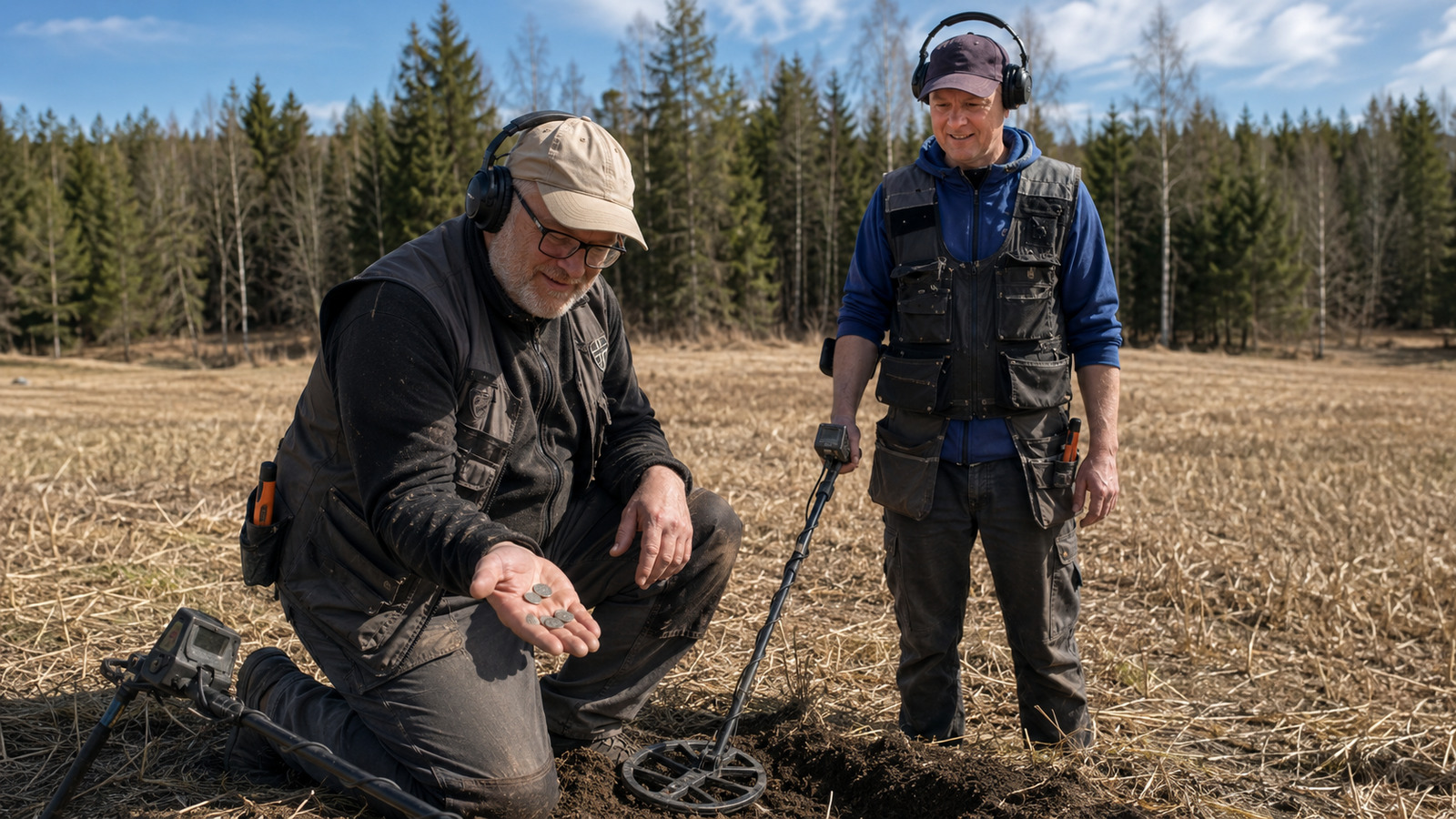
Metal Detector Enthusiasts Uncover Largest Viking Coin Hoard in Norwegian History with 2,970 Silver Pieces Near Rena



According to the Air Force’s plan, the 66 units are to replace the AT-3 and F-5 used in training, which extends the role of the Brave Eagle beyond a simple exchange of aging aircraft.
Brave Eagle strengthens Taiwan’s defense industry
More than renewing the training fleet, Taiwan seeks to preserve within its territory competencies related to engineering, system integration, manufacturing, and maintenance, areas considered sensitive in a highly dependent global defense supply chain.
According to AIDC’s assessment, the Brave Eagle marks the resumption of a domestic aircraft development program, focusing on autonomous manufacturing, aerospace talent development, and strengthening national suppliers linked to the military sector.
Within the Air Force training structure, the aircraft occupies an intermediate stage between basic training and employment in more complex fighters, preparing pilots to handle modern systems before operational progression.
Designed as an advanced training jet, the Brave Eagle does not directly replace air superiority fighters, but offers a platform made in Taiwan to bring pilots closer to technologies used in more sophisticated military aircraft.
Replacement of F-5 carries historical value
The gradual retirement of the F-5 has symbolic weight because these American-origin fighters have been part of Taiwan’s military aviation for decades, accompanying different phases of the island’s air defense and various operational adaptations.
Although modernizations have extended their use, the age of the platform made renewal a necessity, while the AT-3, in service since 1984, also entered the list of aircraft to be replaced in training missions.
According to Reuters, the Brave Eagle is the first domestically produced jet by Taiwan since the F-CK-1 Ching-kuo, introduced more than three decades earlier and associated with the first major phase of the local aeronautical industry.
This interval helps explain why the program gained a dimension beyond the purchase of a military trainer, as the initiative places Taiwan back in a technological area dominated by few countries and marked by high industrial barriers.
Chinese pressure increases the strategic weight of the program
The decision to manufacture the aircraft on the island reflects a shift in priority in Taiwanese defense, traditionally associated with equipment supplied by the United States and, at the same time, increasingly interested in systems developed internally.
While Beijing expands its military modernization and maintains its claim of sovereignty over Taiwan, the Taiwanese government preserves its own institutions and rejects Chinese control, making each domestic advancement in defense politically sensitive.
Even focused on training, the Brave Eagle gains strategic significance because it strengthens the local industrial base in an essential area to keep pilots prepared, reduce support bottlenecks, and sustain operational continuity in a tense environment.
In this context, a training jet comes to represent more than just a stage in military training, as it involves technical mastery, maintenance capability, and partial autonomy over decisions that may be affected by international disputes.
Local production reduces external vulnerabilities
By mastering part of the development, assembly, and technical support, Taiwan gains more control over maintenance, system upgrades, and fleet availability, important factors for an air force that needs to maintain constant readiness.
AIDC itself associates the Brave Eagle with the revitalization of the island’s defense industry, in a program officially started in February 2017 and marked by the first flight of the prototype in June 2020.
Through this path, the state-owned company attempts to consolidate technical knowledge, strengthen national suppliers, and maintain qualified jobs in a sector where external dependence can affect deadlines, costs, and response capability.
Instead of merely importing ready-made aircraft to accelerate fleet renewal, Taiwan undertook a more time-consuming and complex project, yet aligned with the goal of keeping critical capabilities under domestic control.
Military training becomes industrial policy
The relevance of the T-5 also lies in the decision to treat military technology as industrial policy, a move that transforms aircraft, defense systems, and supply chains into instruments linked to national security and technical development.
Although the program does not place Taiwan on the same level as the major global manufacturers of supersonic fighters, it demonstrates how a training aircraft can function as a tool for technological autonomy in a high-risk environment.
The continuation of external military agreements remains important for Taipei, but the local production of the Brave Eagle reduces part of the dependency in a fundamental stage of pilot preparation and the maintenance of military aviation.
With 66 advanced training jets produced on its own territory, Taiwan seeks to renew the training of its crews, sustain the local aerospace industry, and keep part of the technical cycle under domestic control in a high-tension region.