Portuguese
  Spanish


TOI-791 b and TOI-791 c orbit a star in the constellation of Volans, about 1,110 light-years from Earth, and are among the lowest-density giant planets ever detected. The discovery, made with data from TESS and ground-based observations, may help astronomers understand how superpuffed worlds form and evolve.
Newly identified giant planets have drawn attention for an unusual characteristic: despite having dimensions close to those of Jupiter, TOI-791 b and TOI-791 c have densities so low that they were compared to cotton candy.
The two worlds orbit the star TOI-791, an F7-type dwarf approximately 1,110 light-years from Earth, in the constellation of Volans. The discovery was conducted by an international team led by the University of Oxford.
Published in the Monthly Notices of the Royal Astronomical Society, the study places the two exoplanets among the lowest-density giant planets ever detected.
-
Meteor Showers and Full Moon Create Rare Celestial Display Over Brazil in Late July

-
Metal Detector Enthusiasts Uncover Largest Viking Coin Hoard in Norwegian History with 2,970 Silver Pieces Near Rena

-
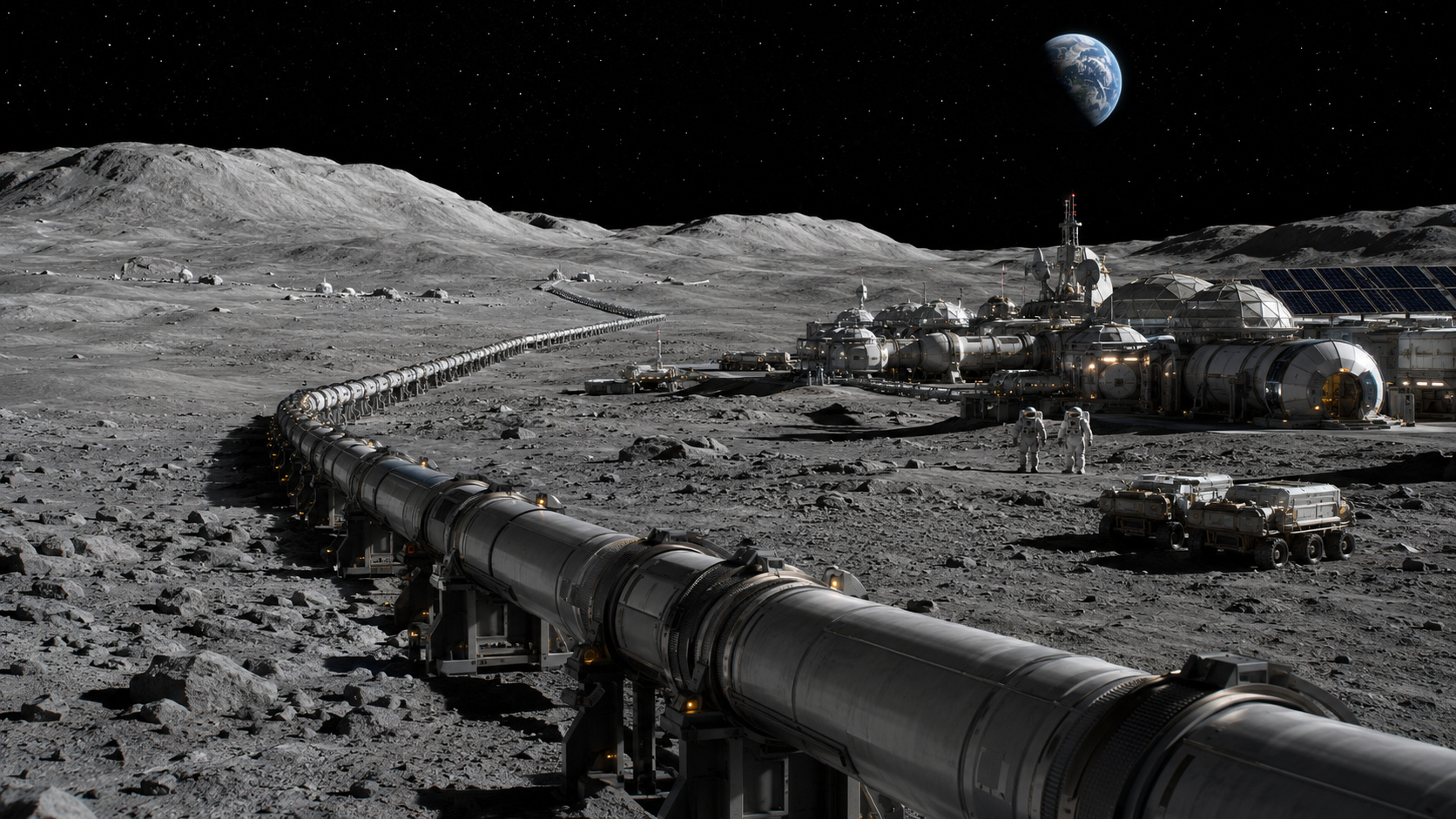
5 km Lunar Pipeline Could Supply Oxygen to Astronaut Bases, Replace Transport Robots, and Become First Major Infrastructure Project Beyond Earth
-
U.S. Attempted to Tame Hurricanes with Silver Iodide and Aircraft for Nearly 20 Years



Huge worlds, but surprisingly light
TOI-791 b is about the size of Jupiter, but with a density of 0.038 grams per cubic centimeter. TOI-791 c is larger and a bit denser, with 0.047 grams per cubic centimeter.
Cotton candy has approximately 0.05 grams per cubic centimeter. Jupiter, although much less dense than Earth, registers 1.326 grams per cubic centimeter, compared to 5.52 grams per cubic centimeter for our planet.
This combination of large size and small mass categorizes the two worlds as “super-puff” or superpuffed planets. They are rare, and finding two in the same system makes the case even more relevant for astronomy.
George Dransfield, from the Department of Physics at Oxford, stated that few planets of this type are known and that finding two in the same system is even more unusual.
Giant planets in orbital resonance
TOI-791 b and TOI-791 c appear to be in a 5:3 orbital resonance. This means that for every five orbits of the inner planet around the star, the outer planet completes almost exactly three.
This configuration allows for the observation of gravitational interactions. As they transit in front of the star, as seen from Earth, each passage slightly reduces the observed brightness. The drop in luminosity helps calculate the size of the planets.
In the TOI-791 system, the timings also vary. Small delays and advances, called transit timing variations, allowed the estimation of the masses of the two bodies. With known size and mass, researchers calculated their densities.
Discovery began with TESS
The initial identification came from data from NASA’s Transiting Exoplanet Survey Satellite. Volunteers from the citizen science project Planet Hunters TESS pointed out the two planets as candidates in 2019 and 2023.
After that, astronomers used telescopes in different regions to confirm the signals. An important instrument was ASTEP, the Antarctic Search for Transiting Exoplanets telescope installed at the Concordia Station in Antarctica.
The location was decisive because the transits last more than 11 hours. During the Antarctic winter, long periods of darkness allowed the entire phenomenon to be followed without interruptions caused by sunrise.
The team claims that these are the longest planetary transits ever fully observed from a ground-based telescope.
Why are these planets so puffed up?
The explanation remains open. One hypothesis is that super-puffed planets have huge atmospheres, rich in hydrogen and helium, surrounding smaller cores.
Another possibility discussed is that these worlds formed far from the star, in colder regions of the protoplanetary disk, rapidly accumulating gas before reaching their current configuration.
Amaury Triaud, from the University of Birmingham and principal investigator of ASTEP, stated that the system offers a unique laboratory to understand how super-puff planets form and evolve.
Oxford reported that only four other systems are known to contain multiple super-puff planets. For Jon Jenkins, from NASA’s Ames Research Center, these objects are an enigma about the formation of giant planets like Jupiter and super-puffs.
Future observations may use the James Webb Space Telescope. The expectation is to investigate the planets’ atmospheres and look for molecules with carbon, nitrogen, and oxygen, data that can indicate where they formed and which materials participated in this process.
TOI-791 b and TOI-791 c show that huge worlds are not always dense. They also reinforce how distant planetary systems can hold important clues about the formation, migration, and evolution of planets outside the Solar System.
What do you think of this discovery of giant planets lighter than cotton candy? Leave your opinion in the comments and tell us if this type of exoplanet helps change the way we imagine worlds outside the Solar System and for scientific research?