Portuguese
  Spanish


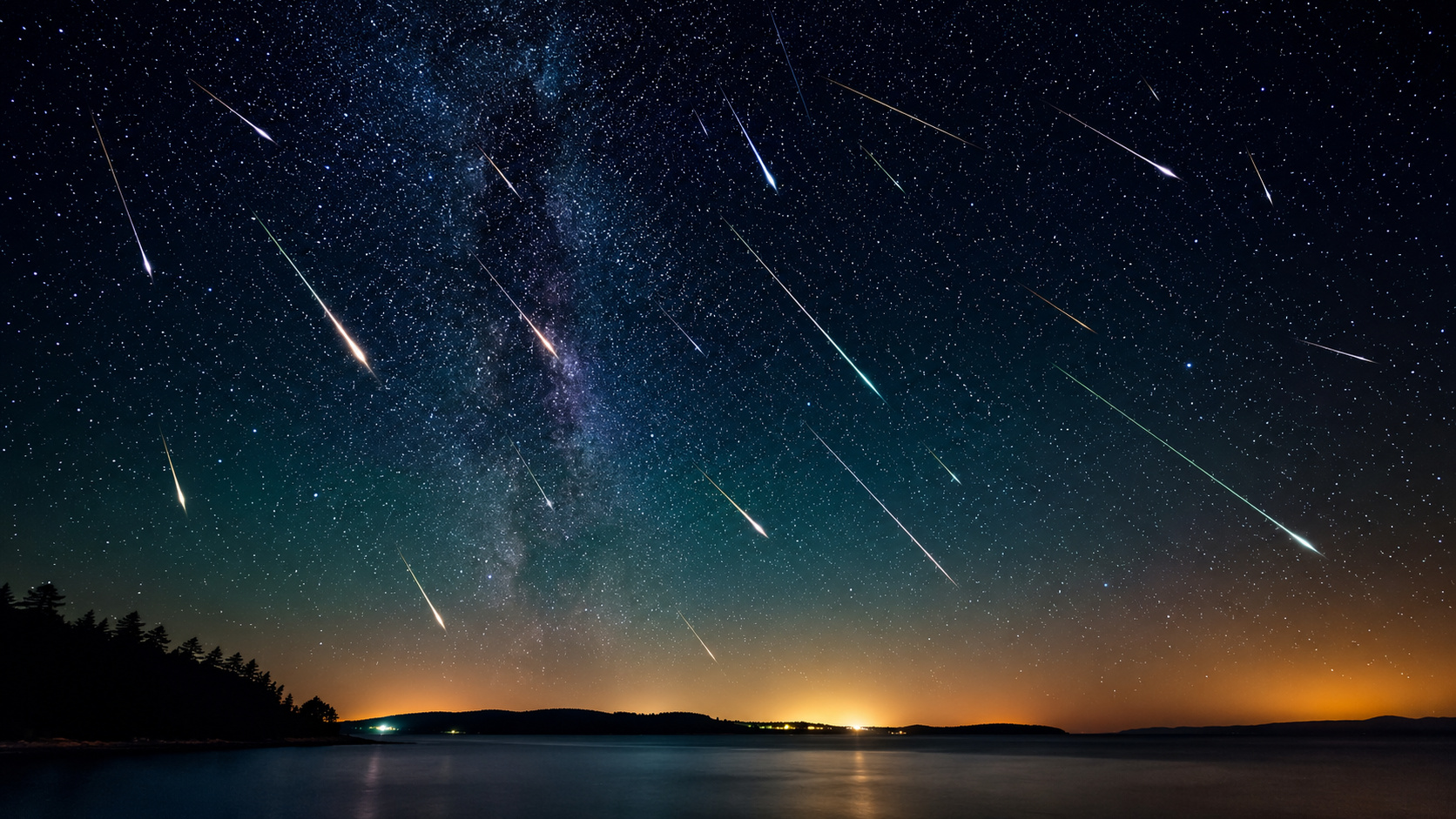

Delta Aquarids South and Alpha Capricornids peak at the end of July 2026, but the best window to see meteors in Brazil may come earlier.
The end of July 2026 holds a rare encounter between two meteor showers known to sky watchers: the Delta Aquarids South and the Alpha Capricornids. Both reach their peak on the night of July 30 to 31, creating a combination that can result in both a higher volume of meteors and brighter appearances in the same area of the sky.
For those observing from Brazil, the news is especially relevant. The Delta Aquarids South favor the Southern Hemisphere, while the Alpha Capricornids can be well seen on both sides of the Equator, placing Brazilian territory in a good position to observe the phenomenon, provided the sky is dark enough.
Delta Aquarids South and Alpha Capricornids Meteor Shower will have a joint peak at the end of July 2026
According to the American Meteor Society, the Delta Aquarids South will be active between July 12 and August 23, peaking on the night of July 30 to 31, 2026. The organization attributes the shower a ZHR of 25 meteors per hour under ideal conditions, with an average speed of 41 km/s, making it the more active of the two.
-
Metal Detector Enthusiasts Uncover Largest Viking Coin Hoard in Norwegian History with 2,970 Silver Pieces Near Rena

-
5 km Lunar Pipeline Could Supply Oxygen to Astronaut Bases, Replace Transport Robots, and Become First Major Infrastructure Project Beyond Earth

-
U.S. Attempted to Tame Hurricanes with Silver Iodide and Aircraft for Nearly 20 Years
-
Teen Inventors Win $50,000 for Pen-Sized Device Using Ultrasound to Remove 94% of Microplastics from Water




The Alpha Capricornids also reach their maximum on the same night. Although they are more modest, with about 5 meteors per hour and a speed of 23 km/s, they have a characteristic that usually compensates for the lower quantity: the production of fireballs, slower and very bright meteors, capable of attracting attention even when overall activity is low.


This simultaneous encounter allows the observer to witness two different behaviors in the sky. On one hand, a more constant and numerous shower; on the other, a less intense shower, but with a higher chance of displaying much more striking luminous streaks.
Full moon on July 29 creates an obstacle and opens the best observation window before the peak
The main problem for observation in 2026 is not the lack of meteors, but the brightness of the Moon. The American Meteor Society reports that on the peak night of the two showers, the Moon will be at 98% illumination, a condition sufficient to obscure most of the weaker meteors.
In Brazil, the situation becomes even clearer when observing the lunar calendar. timeanddate records that the full Moon occurs on July 29, 2026, which helps explain why the morning after the peak will still have a very bright sky.
That is why the best strategy is not necessarily to wait for the peak night. EarthSky recommends taking advantage of the moonless mornings after midnight in the week before July 30, when the sky is darker and increases the chance of seeing both the Southern Delta Aquariids and the first meteors of the Perseids appearing at the end of July.
Where the Southern Delta Aquariids and the Alpha Capricornids come from and why these meteor showers appear every year
A meteor shower occurs when the Earth crosses the trail of particles left by a comet or another body of the Solar System.
Upon entering the atmosphere at very high speed, these grains burn due to friction with the air and produce the luminous trails popularly known as shooting stars.
In the case of the Southern Delta Aquariids, the most accepted origin is associated with the comet 96P/Machholz. Meanwhile, the Alpha Capricornids are linked to the debris of the comet 169P/NEAT, according to the American Meteor Society.
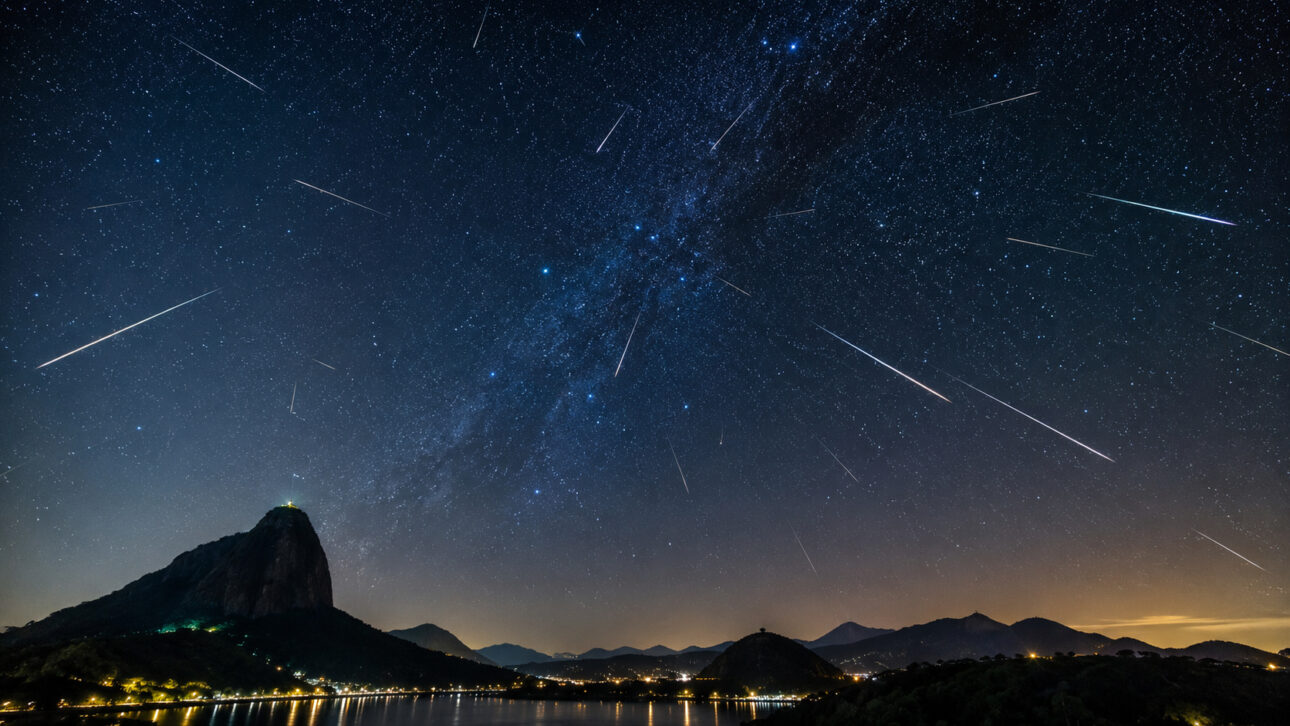
The two showers have their own signatures. EarthSky highlights that the Delta Aquariids tend to be more discreet and can leave persistent trails in about 5% to 10% of the cases, while the Alpha Capricornids stand out precisely for their potential to produce slower and visually more impressive meteors.
How to differentiate in the sky the fast meteors of the Delta Aquariids from the fireballs of the Alpha Capricornids
The point from where meteors seem to originate is called the radiant. In the case of this late July encounter, the American Meteor Society indicates that the radiant of the Southern Delta Aquariids is in Aquarius, while that of the Alpha Capricornids is in Capricorn, two neighboring constellations in the same region of the sky.
In practice, this creates the sensation of a “duel” in the same celestial band. To differentiate one shower from the other, the best trick is to observe the meteor’s pace: the Delta Aquariids tend to be faster and more discreet, while the Alpha Capricornids appear more slowly and, when they appear strongly, can produce the most striking flashes of the night.

This difference is precisely what makes the coincidence so interesting. Those in a dark location can, in the same observation session, see more numerous meteors crossing the sky and, with some luck, catch one of those fireballs that turn an ordinary dawn into an astronomical spectacle.
Practical guide to observing the meteor shower in Brazil with a dark sky, patience, and eyes turned south
The most important rule for observing the meteor shower in Brazil is to avoid light pollution. The American Meteor Society and EarthSky emphasize that the ideal is to find a dark location with a wide horizon and dedicate observation to the period between late night and dawn, when the radiant rises better in the sky.
No telescope or binoculars are needed. Since meteors can appear in any part of the sky, observation works best with the naked eye, with a clear field of vision and a few minutes of adaptation to the dark before starting the search.
For the Brazilian public, the most favorable combination in 2026 is clear: look for a dawn in the week before the peak, choose a dark spot, keep your eyes on the southern band of the sky, and be patient. This strategy increases the chance of seeing not only the Southern Delta Aquariids but also one or another Alpha Capricornid shining brightly over the horizon.