Portuguese
  Spanish


Offshore production advancement places Guyana at the center of the global energy geopolitics, boosts billion-dollar revenues with oil, attracts ExxonMobil, Chevron, and other foreign investors, increases the weight of the Stabroek Basin in global energy chains, and exposes the urgent challenge of transforming accelerated growth into real social development
Guyana, a country bordering Brazil, Venezuela, and Suriname, has come to occupy an increasingly strategic space in the global oil market since the discovery of large offshore reserves in the Stabroek Basin in 2015.
Since then, the small South American country has attracted billion-dollar investments in the hydrocarbons sector, expanded its energy production, and started to be viewed as a new petrostate of South America amidst instability in the Middle East.
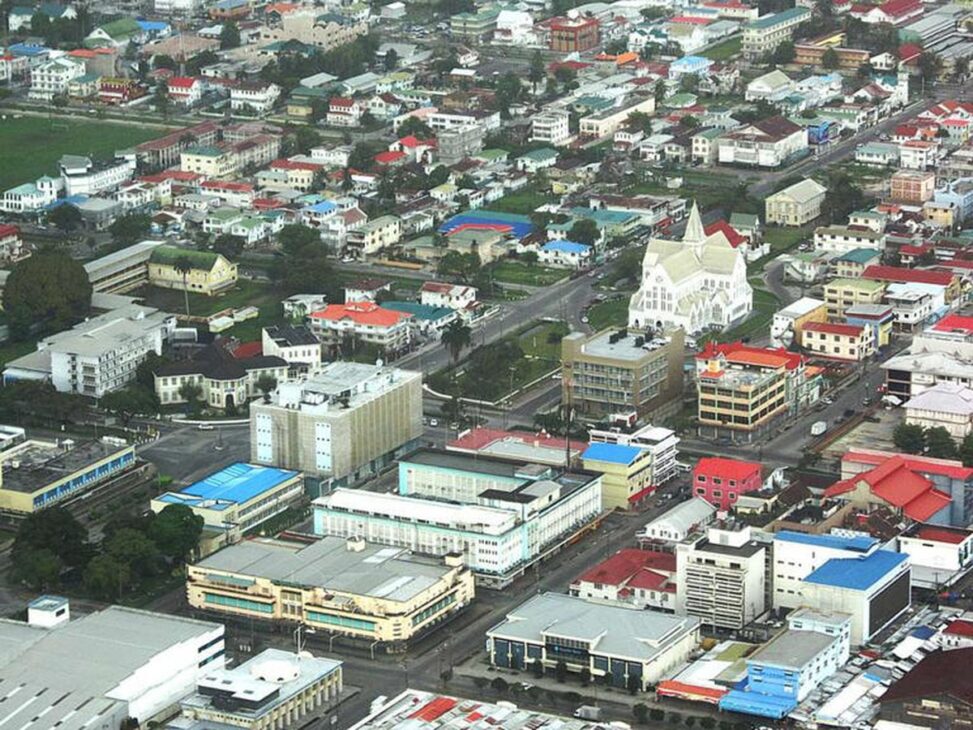
According to data from the International Monetary Fund (IMF), Guyana is already among the fastest-growing economies in the world. Additionally, the Economic Commission for Latin America and the Caribbean (ECLAC), in the report Preliminary Overview of the Economies of Latin America and the Caribbean 2025, projected an average growth of 24% in 2026, the highest rate in Latin America.
-
European Parliament Approves Digital Euro, Aiming to Challenge Visa and Mastercard’s Dominance and Transform Payments Across Europe by 2029

-
Israel finds Hezbollah militarized tunnel over 200 meters long under village, with 4 missile launch shafts, 12 chambers, anti-tank missiles, drones, and weapons depots at a depth of 25 meters.

-
Ukraine launches largest drone attack on Moscow since 2022, Russia claims to have intercepted nearly 200 aircraft near the capital, Kapotnya refinery targeted again, and offensive reignites alert about war reaching the Russian energy heart just a few kilometers from the Kremlin.

-
Truck drivers, freight, and fines from 2022 take center stage in politics: Chamber approves MP with amnesty, mandatory tracking by CIOT, million-dollar penalties, and new minimum wage for those who spend more than 24 hours on the road.



The advancement occurs mainly because oil has come to represent the majority of the country’s exports. As a result, foreign direct investments have rapidly grown to finance ports, civil works, and structures linked to the energy sector.
ExxonMobil leads exploration in Stabroek and drives a new phase for Guyana in the international energy market
The main force behind this growth is ExxonMobil, which operates the Stabroek Basin in partnership with Hess and CNOOC since the block began operations in 2019.
The production of the area is expected to exceed 1 million barrels per day by 2027, consolidating Guyana as a new relevant supplier outside the Middle East.
At the same time, the crisis in energy transportation through the Strait of Hormuz and the production slowdown among Gulf countries increase the search for suppliers considered more secure.
Therefore, international importers have started to pay more attention to the Latin American hub formed by Guyana, Suriname, Venezuela, and Brazil, a region that has gained strategic relevance in light of the uncertainties affecting important global oil routes.
In this scenario, the Guyanese oil industry may gain even more weight in international energy chains. However, this advancement also increases the country’s economic dependence on the oil sector.
Billion-dollar revenues expand economic opportunities, but still do not eliminate structural challenges faced by the population
With the expansion of production, Guyana has started to receive significant revenues from royalties and shares related to oil. According to estimates released by Reuters, the government is expected to collect about US$ 4.3 billion in the fiscal year 2026 solely from oil revenues.
Despite this, the accelerated growth of the Gross Domestic Product has not yet eliminated structural problems. Part of the population continues to live with precarious infrastructure, rising cost of living, electrical bottlenecks, and urban limitations.
Thus, the main challenge for the country will be to convert the wealth generated by oil into permanent benefits for society. Otherwise, economic growth may continue to be concentrated in certain sectors without reaching the entire population.
The Brazilian experience often appears as an example in this debate. According to the report “Oil and Living Conditions” by Agência Pública, Brazilian cities benefiting from oil exploration revenues do not always show social indicators proportional to the volume of resources received.
In general, these municipalities have infrastructure superior to the national average and more robust budgets. However, they still face problems related to income concentration, governance quality, and the distribution of economic benefits.
Dependence on oil raises an alert about governance, planning, and sustainability of economic growth
Among countries that accumulate large revenues from mineral and energy exploration, challenges related to resource management and the transformation of this wealth into lasting development often arise.
Among the risks most cited by experts are high inflation, institutional deterioration, economic concentration, and low capacity to convert extraordinary revenues into permanent improvements for the population.
In Guyana, this warning gains strength because oil has quickly become the main driver of the national economy. Therefore, analysts point out that the government will need to avoid excessive dependence on the energy sector in the coming years.
Furthermore, it will be necessary to direct investments towards infrastructure, energy, public services, and urban planning to sustain the growth observed since the beginning of commercial exploration in Stabroek.
Without this efficient conversion of resources, the country may record impressive economic numbers while continuing to face significant social and structural challenges.
Natural gas project expands energy strategy and may open a new industrial phase for Guyana
Besides oil, Guyana is also seeking to structure a new natural gas industry. Recently, ExxonMobil requested environmental authorization to develop the Haimara condensate gas discovery, located in the Stabroek block.
The government is considering using this gas for both domestic power generation and to stimulate new industrial hubs. Among the possibilities analyzed are projects related to fertilizer production, data centers, and future export of liquefied natural gas (LNG).
Meanwhile, international companies continue to expand their presence on the South American Atlantic margin, especially in areas close to Guyana and the Caribbean coast.
Chevron, for example, intensified its exposure to Guyanese assets after acquiring Hess’s stake in the Stabroek block, reinforcing global interest in the region.
With the instability observed in the Persian Gulf and the search for new secure supply sources, this international presence may grow even more in the coming years. Thus, Guyana gains a historic opportunity to consolidate its position in the global geopolitics of oil and gas.
Still, the question that remains open is clear: will the wealth generated by oil, gas, and billion-dollar investments be enough to transform Guyana’s economic growth into lasting social development for the entire population?