






 Portuguese
  Spanish
  6 min of reading
  0 comments


The drone attack attributed to Ukraine led Moscow to report 194 interceptions, hit the Kapotnya refinery again, and heightened the alert on Russian energy infrastructure. According to Exame and Reuters, the episode occurred this Thursday, 18, amid the war started in 2022, with damages and injuries reported by identified sources.
The drone attack launched by Ukraine against Russia this Thursday, 18, was described by Exame as the largest since the start of the Russian invasion, in February 2022. According to the report, Moscow’s mayor, Sergei Sobyanin, stated that at least 194 drones were intercepted approaching the Russian capital.
The offensive hit the Moscow region, with one of the main points cited being the Kapotnya refinery, located in the southeast zone of the Russian capital. According to Exame and Reuters, the unit was targeted again in the same week, reigniting the debate about the reach of Ukrainian drones and the vulnerability of Russian energy infrastructure.
Moscow returned to the center of the war with drones
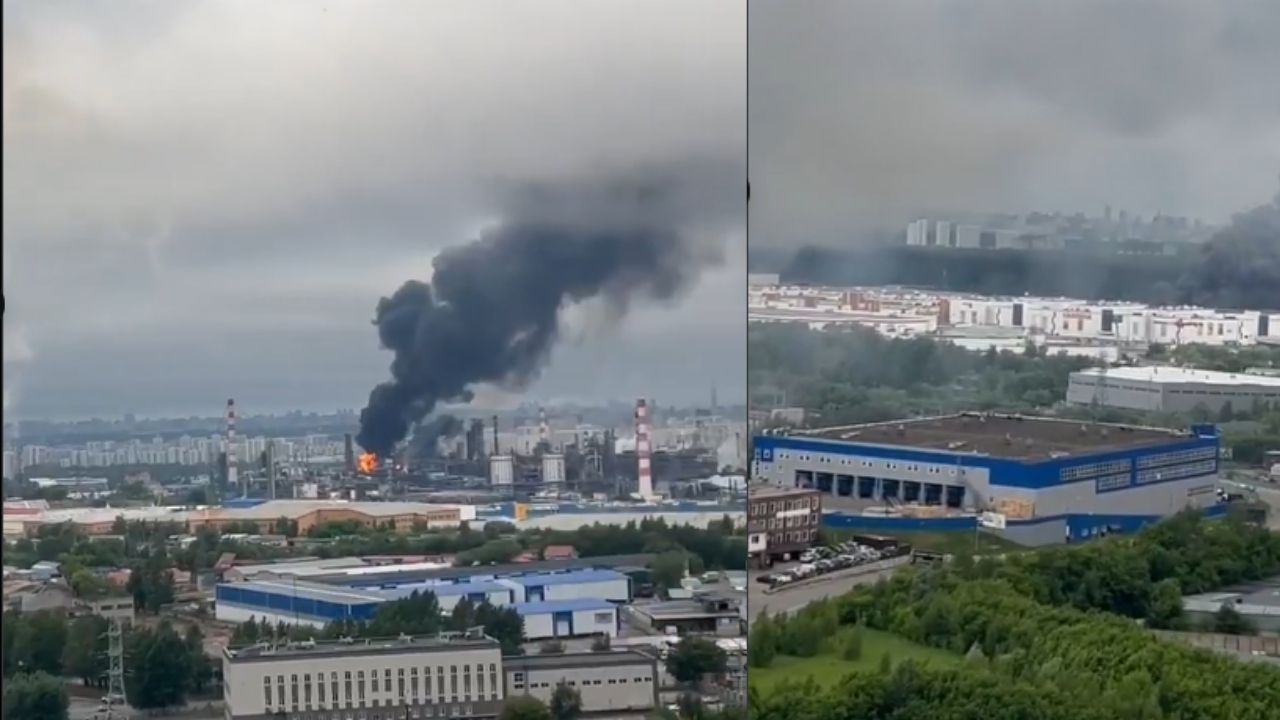
Moscow is usually less hit than Ukrainian cities frequently bombed since the start of the war. Therefore, an offensive of this scale has military, political, and psychological effects, especially when it involves the Russian capital and an installation linked to the energy sector.
-
Truck drivers, freight, and fines from 2022 take center stage in politics: Chamber approves MP with amnesty, mandatory tracking by CIOT, million-dollar penalties, and new minimum wage for those who spend more than 24 hours on the road.

-
China off the radar: US plans mega $30 million weapons depot in Australia, out of reach of most Chinese missiles, with full capacity expected by 2028

-
Trump’s wall advances at a rapid pace: government promises to complete a barrier of over 3,000 km by 2027 while drones and cartels turn the US border into a new field of technological dispute
-
China prepares mBridge, a new digital payment system with blockchain that promises transactions in seconds, lower fees, and the advancement of the digital renminbi while aiming to reduce dependence on the dollar in global trade.



The distance also weighs on the reading of the episode. Exame highlighted that Moscow is more than 400 kilometers from the Ukrainian border, making the long-range offensive a sensitive point for Russian defense and the perception of security in the capital.
Russia reported nearly 200 drones near the capital
According to Exame, Moscow’s mayor, Sergei Sobyanin, stated that at least 194 drones were intercepted approaching the capital. The report compares this number to the intense attacks of previous months, when reported interceptions usually numbered in the dozens.
Exame reported that the drone attack was part of a broader offensive against Russian territory. According to the report, Russian air defenses claimed to have intercepted nearly a thousand drones in various regions of the country, including areas over the Sea of Azov.
Kapotnya Refinery Targeted Again
According to Exame, the main target mentioned was the Moscow oil refinery in the Kapotnya district. Reuters also reported, based on industry sources, that the facility suffered a second attack in the same week, with damage and fires in areas of the plant.
Exame reported that the refinery is controlled by Gazprom Neft, a subsidiary of the Russian state-owned Gazprom. The repetition of the drone attack on Kapotnya, according to the analysis presented by the report, reinforces the Ukrainian strategy of targeting fuel and logistics-related structures within Russia.
Facility is Near the Kremlin and Strategically Important
The location of the refinery increases the symbolic impact of the offensive. According to Exame, the Kapotnya facility is about 15 kilometers from the Kremlin, making the attack especially sensitive as it hits an energy structure close to the Russian political center.
According to the Ukrainian General Staff, cited by Exame, the Kapotnya refinery accounts for a significant portion of fuel consumption in the Moscow region and supplies airports such as Domodedovo, Vnukovo, Sheremetyevo, and Zhukovsky with aviation fuel. This is the justification presented by Kiev for treating the facility as a target linked to the Russian war effort.
Explosions and Smoke Increased Repercussions
Reuters described large explosions and fires at the Moscow refinery following the new attack. Exame also reported that video footage showed black smoke in the affected area and the attempt to intercept drones approaching the facility.
The images increased the repercussions of the drone attack because they showed an energy facility near Moscow amidst explosions and smoke. In a war marked by competing narratives, this type of footage also reinforces the symbolic weight of an offensive against Russian infrastructure.
Injuries and Damage Increased Tension in Surrounding Areas
According to Reuters, the governor of the Moscow region, Andrei Vorobyov, stated that 16 people were injured during the Ukrainian attack. Exame also cited reports of damage in urban areas, including a shopping center in the southeastern part of the city and residential buildings on the outskirts of the capital.
Exame attributed to Governor Andrei Vorobyov the information that residential buildings on the outskirts of the capital were hit, including a building in the Zhukovsky district, from which residents had to be evacuated. The proximity between infrastructure targets and civilian areas heightened tension in the outskirts of Moscow.
Zelensky Linked Offensive to Attacks on Kiev
According to Exame, Ukrainian President Volodymyr Zelensky classified the offensive as a response to Russian attacks against Ukraine. The statement was made after bombings that, according to the report, damaged a historic monastery in Kyiv classified by UNESCO as a world heritage site.
In the speech reproduced by Exame, Zelensky stated that Ukraine did not want the war, but that Moscow would also feel the effects if Ukrainian territory continued under fire. The statement reinforced the tone of response adopted by Kyiv in the face of Russian bombings against Ukrainian targets.
Energy war gained a new chapter
Exame reported that Ukraine has been concentrating long-range attacks against Russian refineries for months. According to the report, the strategy seeks to pressure the energy infrastructure and reduce revenues from a sector considered important for financing the Russian military effort.
By targeting refineries, depots, and fuel facilities, Kyiv attempts to hit structures that Ukraine associates with Russian military logistics and war financing. The offensive against the energy sector also seeks to pressure points considered sensitive to Moscow’s economy and military effort.
Kapotnya had already been hit in the same week
The Kapotnya refinery had already been targeted in a previous attack on Tuesday, the 16th. According to Reuters, industry sources said that this action damaged the CDU-6 unit, responsible for about 53% of the plant’s capacity.
In the new action, industry sources heard by Reuters said that the attack damaged the Euro+ unit, with a capacity of about 140,000 barrels per day, equivalent to approximately 47% of the refinery’s capacity. The information reinforces the operational weight of the target within the plant’s processing structure.
Offensive occurred before NATO meeting
According to Exame, Thursday’s attack occurred hours before a meeting of NATO defense ministers in Brussels, where Ukraine’s security was among the agenda topics. The coincidence of dates increased the diplomatic reading of the offensive amid discussions on military support for Kyiv.
The meeting occurred at a time when Kyiv is trying to maintain Western support and expand its defense and long-range attack capabilities. While diplomacy seeks space, drones have taken on a central role in the Ukrainian military pressure against Russian targets.
Moscow faces a less predictable threat
For Russia, the advancement of Ukrainian drones creates a challenge that is difficult to fully contain. Even with active air defenses, mass attacks can saturate systems, force disruptions, and spread insecurity in regions previously considered more protected.
In this context, Moscow once again appears as a target of air incursions attributed to Ukraine, according to reports from Russian authorities and international news. The question remains as to how far Russia can simultaneously protect borders, cities, refineries, depots, and airports.
Drones change the symbolic reach of the war
The drone attack against Moscow and the Kapotnya refinery shows a war increasingly distant from traditional front lines. Ukraine attempts to hit strategic points within Russia, while Moscow claims to have intercepted a large part of the aircraft launched against the capital and other regions.
The offensive also raises an uncomfortable question: when energy facilities near the Kremlin come into the crosshairs, the war begins to produce symbolic effects within the Russian capital itself. Do you believe that attacks against refineries can pressure negotiations or are likely to further escalate the military conflict? Share your opinion.




Be the first to react!