Portuguese
  Spanish


With a public notice expected this month and an auction in October, EF-118 brings together national and foreign groups in a competition that could change the Southeast’s railway logistics and open a new route for millions of tons of cargo.
EF-118, a railway that will connect Espírito Santo and Rio de Janeiro, is firmly on the market’s radar with an auction scheduled for October and the promise of inaugurating a new phase for freight transport in the country. The project has already attracted at least four interested groups, including major names like the Spanish Acciona and the Chinese Power China.
The public notice is expected to be published later this month, and the competition involves a billion-dollar project that deviates from the more common model of railway concessions in Brazil. The railway, officially called the Southeast Railway Ring, is the country’s first greenfield concession, with a network built from scratch.
According to folhavitoria.com.br, the concession is also expected to mark the debut of the National Railway Grant Policy, created by the federal government in November.
-
Audit in Rio de Janeiro’s State Government Uncovers Ghost Employees Across All 77 Departments, Leading to Over 4,000 Dismissals and Significant Cost Savings

-
Audit Reveals 80% of Ghost Employees in Rio Government Departments, Leading to Over 4,000 Dismissals and Saving the State $3.3 Million Monthly

-
Former Shoe Factory Worker Turned Entrepreneur Opens 19th Tool Store, Projects $230 Million Revenue, Expands to São Paulo
-
Father Founded Arezzo in a Belo Horizonte Garage; Son, as CEO, Merges to Form “Azzas 2154” with Over 30 Brands, 2,000 Stores, and a $110 Million IPO


Four groups have already appeared in the competition for the concession
So far, at least four companies or consortia have shown interest in the project, according to the investigation cited by the report. Among the names already mentioned are Acciona, Power China, and a consortium formed by the managers 4UM and Opportunity.
The presence of foreign companies alongside Brazilian groups reinforces the view that the railway has the potential to attract significant capital. It also indicates that the market sees value in an asset that took a long time to materialize and could gain scale in a strategic region for national logistics.
R$ 6.6 billion project will have a strong weight of public resources
The financial design of EF-118 draws attention because the railway is not expected to sustain itself solely with operational revenue. Of the R$ 6.6 billion planned for the implementation phase, about R$ 4 billion will come from public resources, according to the model approved by the National Land Transport Agency, ANTT.
These resources do not come directly from the Treasury. The structure provides that the money comes from the payment of grants from other railway concessions, which helps to make feasible a project considered decisive for expanding the network in the Southeast.
Route connects ports, existing network and can reach up to 24 million tons per year
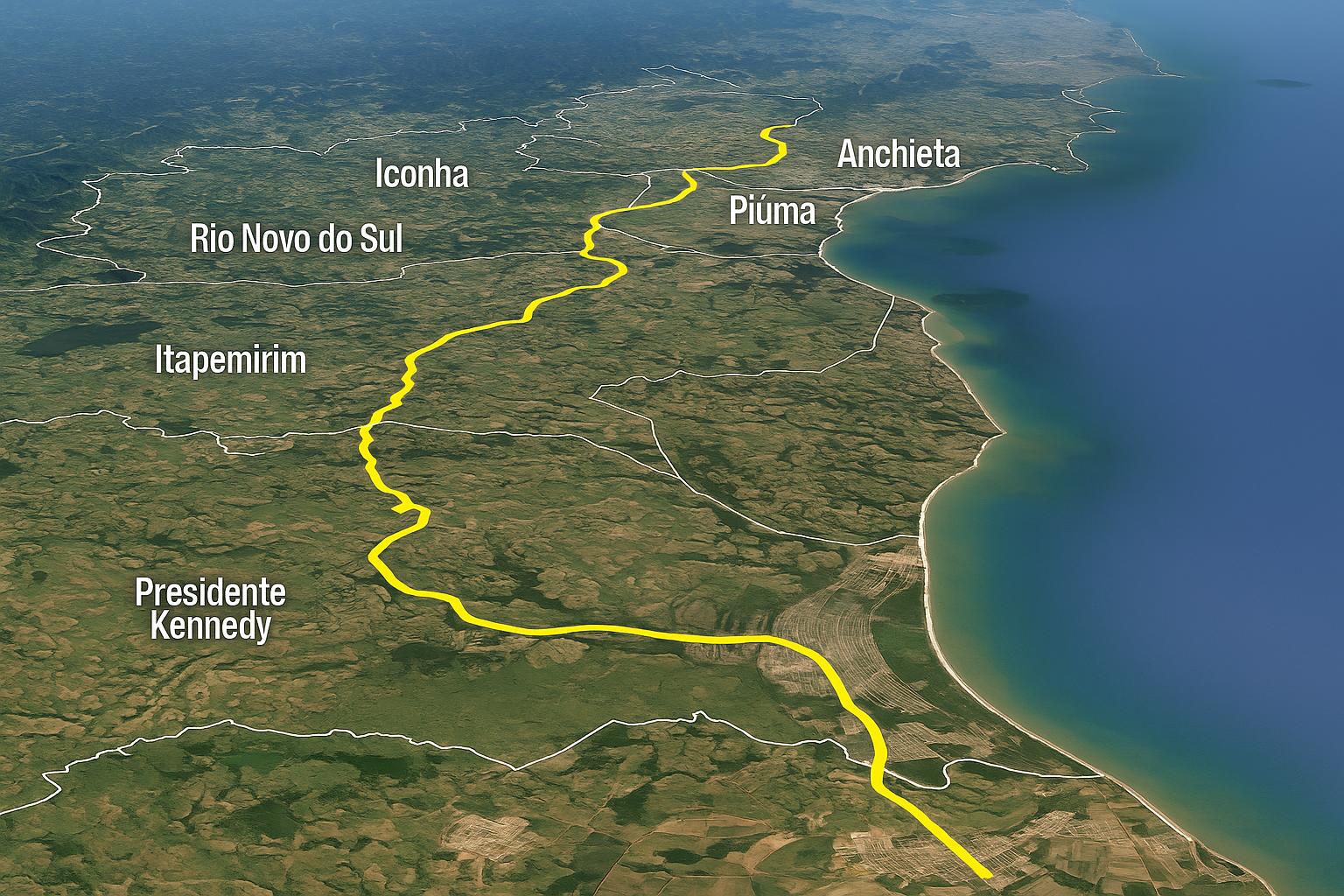
The mandatory route goes from Santa Leopoldina, in Espírito Santo, to São João da Barra, in the north of Rio de Janeiro, totaling about 246 kilometers. There is also the possibility of expansion to Nova Iguaçu, also in Rio.
At the Espírito Santo end, the railway connects to the Vitória-Minas network. The project also paves the way for integration with the Port of Açu and terminals such as the Port of Ubu, in Anchieta, and the Central Port, in Presidente Kennedy.
In practice, the new connection can create a stronger railway axis in the Southeast and expand cargo routes to the region’s ports. The projected capacity is up to 24 million tons per year, including general cargo, liquid bulk, agricultural solid bulk, and minerals.
Auction in October may unlock the first of eight planned concessions
With a bid notice expected this month and an auction in October, the EF-118 is expected to be the first of the eight railway concessions that the government wants to bring to market starting in 2026. This makes the project an important test for the new model and for investor appetite in heavy infrastructure assets.
If the schedule is maintained, the competition for the railway should gain momentum in the coming weeks. And, due to the combination of size, location, and financial design, the project is already emerging as one of the most observed in the sector.
The movement around the EF-118 shows that the railway goes far beyond a route on the map: it can reshape cargo logistics between Espírito Santo and Rio and open a new race for railway assets in the country. Want to follow other billion-dollar infrastructure disputes? Share the article and leave your opinion.