






 Portuguese
  Spanish
 5 min of reading
  0 comments


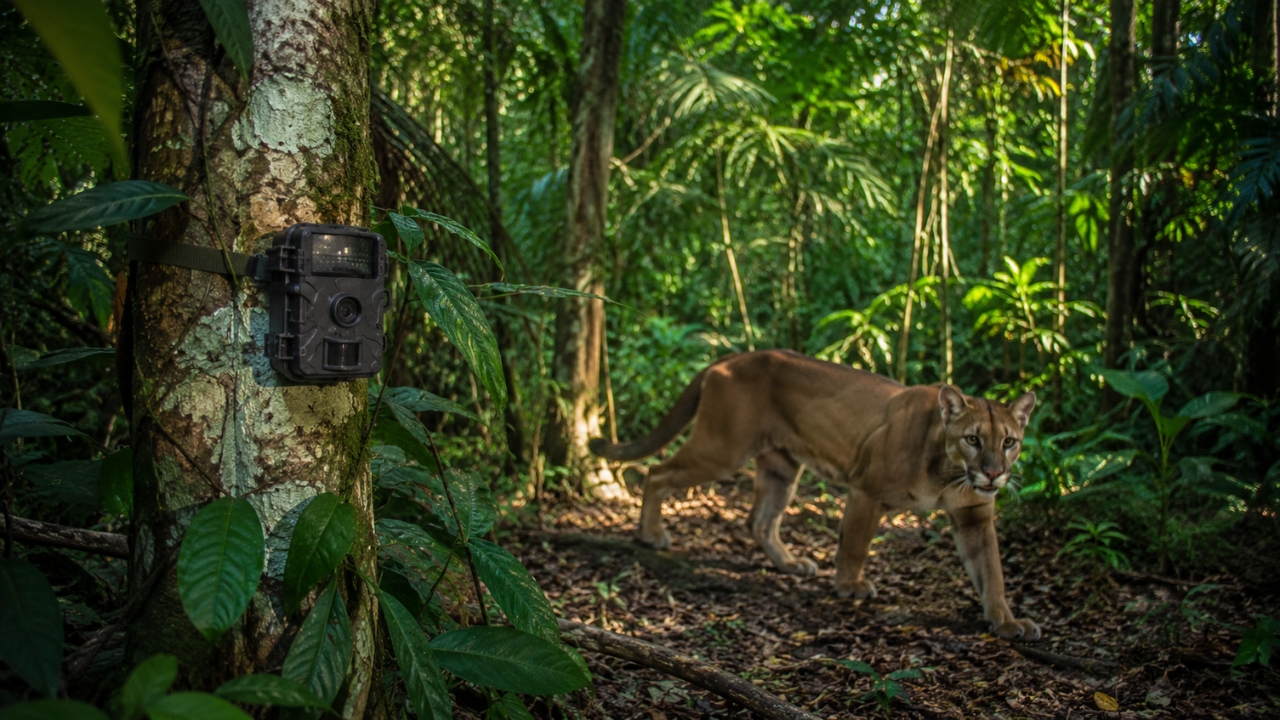
With sensors installed in conservation units, Rio de Janeiro aims to expand the survey of the state’s biodiversity, identify animals difficult to observe, and transform images captured in the forests into information for preservation policies.
The State of Rio de Janeiro will install 480 cameras in reserves and conservation units to map wildlife, record hard-to-find species, and better understand what still lives hidden in the fragments of the Atlantic Forest. The action involves the State Department of Environment and Sustainability, Inea, and municipalities of Rio de Janeiro.
The most significant data is not just in the number of devices. The images will also help update the Endangered Fauna List of the State of Rio de Janeiro, which had not been revised since 1998. In practice, there are 27 years of delay in an essential survey to guide conservation policies.
The cameras are part of the Endangered Fauna project and will be distributed by Inea in strategic forest points. The proposal is to transform animal records into concrete data for researchers, park rangers, and public managers.
-
Brazilian City Revitalizes Nearly Extinct Ecosystem by Planting 11 Million Native Trees and Paying Residents to Restore Forests Over 40 Years

-
Victorian-era Glass Dumped into the North Sea Returns as Rare Multicolored Gems on Seaham Beach, Attracting Global Collectors.

-
Brazilian Researchers Develop Technology to Extract Drinking Water from Air Humidity Using Recycled Synthetic Fiber
-
Neymar’s Family Sells 300,000 Bottles of Wine Before Launch, Aims for $20 Million Revenue in First Year


Cameras will function as hidden eyes inside the reserves
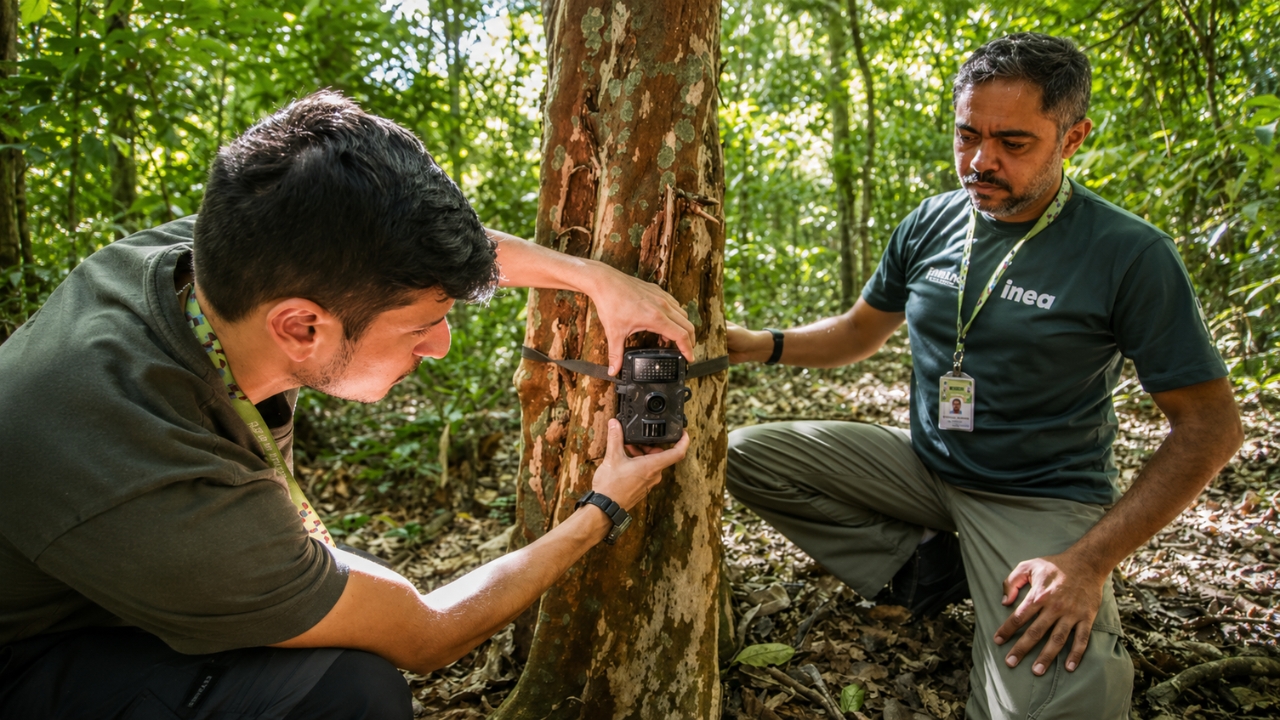
The equipment is known as camera traps. According to WWF and the environmental dictionary of ((o))eco, this type of technology uses motion, temperature, or infrared sensors to capture photos and videos when an animal passes in front of the camera.
The great advantage is that the camera works without relying on human presence. It can record nocturnal, discreet, or rare animals, precisely those that almost never appear during a regular field visit.
In the case of Rio, this resource can reveal everything from large mammals to smaller species that help indicate the health of ecosystems. The technology does not enter the forest just to generate beautiful images. It enters to produce evidence.
Project should reach municipalities and conservation units of Rio de Janeiro
According to the State Department of Environment and Sustainability of Rio de Janeiro, the 480 cameras will be distributed to all municipalities of Rio de Janeiro and also to state conservation units.
Among the mentioned areas are the Cunhambebe State Park, in the Costa Verde, the Três Picos State Park, in the Mountain Region, and the Médio Paraíba Wildlife Refuge.
The coverage by Eu, Rio!, with information from Agência Brasil, highlighted that the Mountain Region will have significant importance in the project. Cachoeiras de Macacu, Nova Friburgo, Petrópolis, and Teresópolis are expected to receive five cameras each due to the environmental relevance of these areas.
Other mountain municipalities, such as Duas Barras, Bom Jardim, and Areal, will also be included. In total, the region is expected to gather nearly 60 pieces of equipment.
Araras Reserve concentrates one of the greatest visual potentials
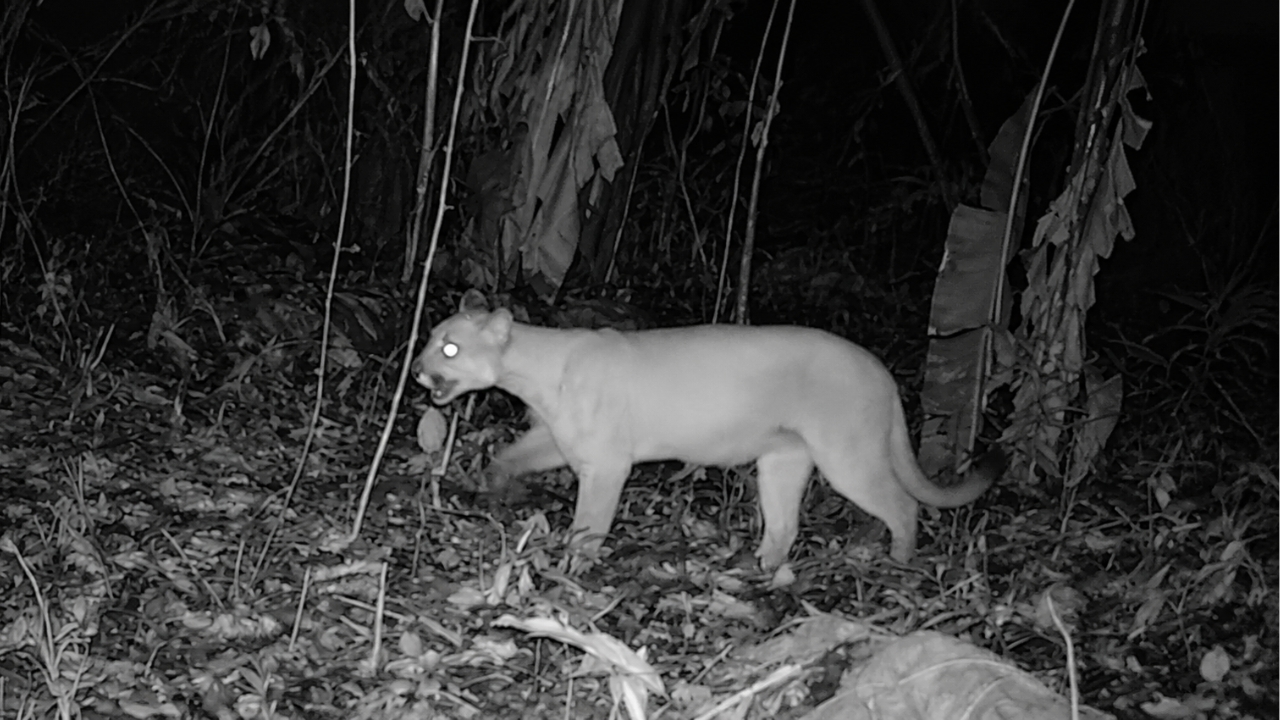
One of the strongest points for the story is the Araras State Biological Reserve, in the Mountain Region. The unit was mentioned as a beneficiary and already has a history of important records by monitoring cameras.
According to Tribuna de Petrópolis, images captured in Rebio Araras have already shown puma, tinamou, dusky-legged guan, white-lipped peccary, collared peccary, margay, oncilla, crab-eating raccoon, tayra, southern tamandua, capybara, and paca.
The reserve covers about 3,837.82 hectares and is managed by Inea. This type of area shows why technology can be decisive. Even near cities and roads, the forest still harbors animals that many people have never seen up close.
White-lipped peccaries reappeared after more than 80 years without known records


The case of the white-lipped peccaries shows the impact of this type of monitoring. According to ((o))eco, the species was recorded again in the Mountain Region after more than 80 years without known records.
Camera traps confirmed groups of 20 to 60 individuals in the Araras State Biological Reserve in 2022. For researchers, this type of record indicates not only the presence of a species but also the possible connection between fragments of the Atlantic Forest.
It is an important detail because conservation does not only depend on protecting an isolated area. It also needs to understand how animals circulate, where they feed, which sections they use as passageways, and which regions can still sustain viable populations.
Threatened fauna list should be updated within two years
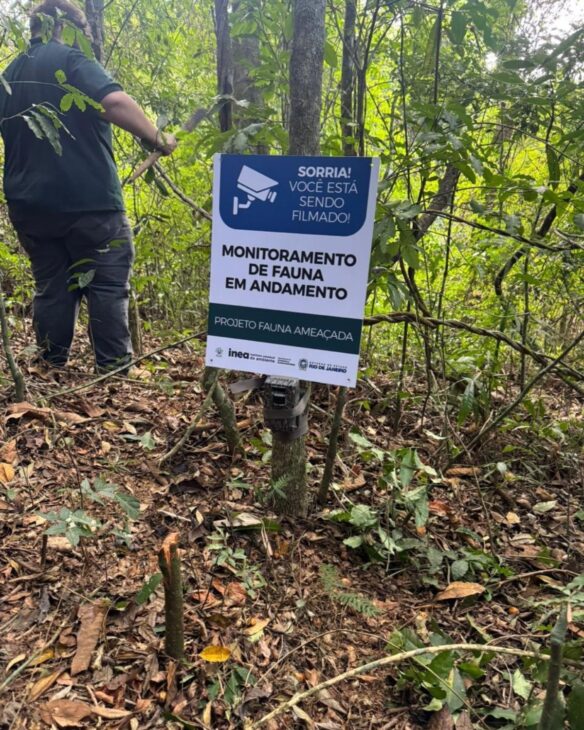
The State Secretariat for the Environment and Sustainability reported that the material gathered by the cameras will be analyzed by researchers and used to update the Threatened Fauna Book of Rio de Janeiro.
The official forecast is that the document will be ready within two years. A specialized company will be contracted through a public tender to support the organization and analysis of the data.
This process is relevant because an outdated list can hinder environmental decisions. Without recent data, it is more difficult to define priorities, protect species at risk, and plan management actions.
Fluminense Atlantic Forest gathers more than 1,300 identified vertebrates
The Secretariat also points out that more than 1,300 vertebrate species have already been identified in the Atlantic Forest. The number includes about 620 bird species, 200 reptiles, 280 amphibians, and 260 mammals.
Among the examples cited in the context of the project are the puma and the golden lion tamarin, species considered threatened. Inea manages 40 state conservation units, totaling approximately 494,017 hectares of protected area.
At the same event, held at the Museum of Tomorrow, the first Atlas of Municipal Conservation Units of the State of Rio de Janeiro was also launched. The document gathers information on more than 400 municipal units, with data collected from municipalities between 2019 and 2022.
Technology enters the forest to turn image into decision
The installation of the 480 cameras is part of a larger movement. According to the Secretariat itself and the resolution cited by LegisWeb, the state is working with the Strategy and State Action Plan for the Biodiversity of Rio de Janeiro, aimed at the period from 2025 to 2030.
The difference now is that the environmental policy now includes a powerful visual tool. Each image can show a rare species, confirm the presence of an endangered animal, or reveal behaviors that were previously invisible.
More than just monitoring the forest, Rio is trying to see what still persists in it. In a state marked by dense cities, roads, and pressure on natural areas, these cameras can show that biodiversity is not far away. It continues to move in the forests, often in silence, waiting to be seen so it can be protected.


Be the first to react!