Portuguese
  Spanish


Truck drivers’ mobilization is expected to occur in Brasília in the coming weeks to defend a provisional measure issued in March 2026, following the threat of a national strike. The text increases control over payments, monitoring of the minimum freight rate, and provides for penalties to companies, including suspension of registration in national road freight transport.
The truck drivers are organizing a demonstration in Brasília, in the coming weeks, to pressure the National Congress for the approval of the freight provisional measure. The mobilization is led by category leaders, including Wallace Landim, known as Chorão, president of the Brazilian Association of Motor Vehicle Drivers.
According to the portal CNN Brazil, the dispute occurs in May 2026, after the federal government issued the PM in March, amid threats of a national strike caused by the rise in diesel prices and dissatisfaction with the freight rates paid. The text tightens the monitoring of the minimum rate and can penalize companies that violate the rules.
Truck drivers want to avoid weakening of the PM in Congress

The articulation in Brasília has a direct objective: to prevent the provisional measure from losing strength during its passage through the Legislature. Leaders of the truck drivers believe that the text may be altered by deputies and senators before the vote.
-
Payment Infrastructure Expert Highlights Diverse Realities in Latin American E-commerce, with Card Usage Ranging from 89% in Ecuador to 50% in Colombia

-
Brazil’s Central Bank’s Tight Monetary Policy Risks Stifling Both Production and Demand Amid High Inflation and Fiscal Imbalance

-
Over a Century After the Sinking, US Takes Legal Action to Stop Auction of Over 100 Titanic Artifacts

-
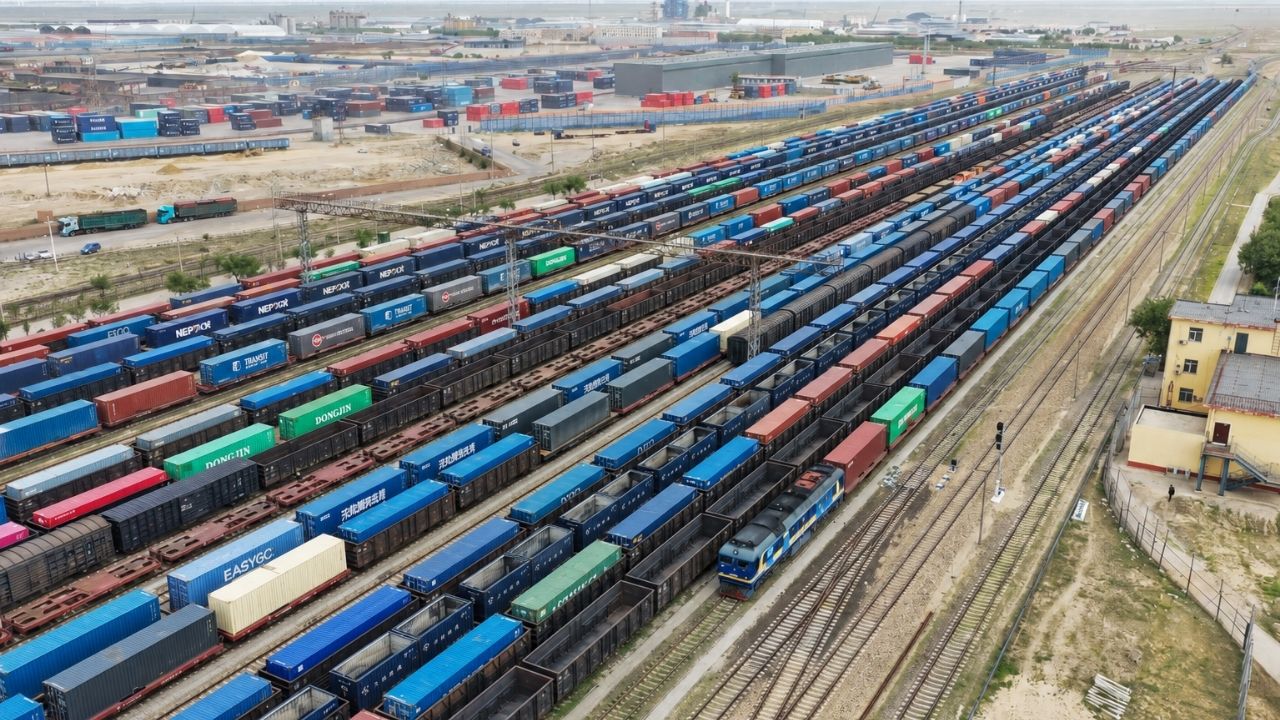
Chinese Rail Port in Inner Mongolia Surpasses 25,000 China-Europe Trains, Connecting 75 Routes Across Over 10 Countries, Showcasing Central Corridor as a Strong Land Alternative to Long Sea Routes


The category’s fear is that the main points of the PM will be softened. For the drivers’ representatives, the proposal will only have a real effect if it maintains monitoring instruments, payment control, and penalties capable of curbing freight rates below the minimum rate.
The provisional measure needs to be approved within the legal deadline to remain valid. Since the text was issued in March, the political pressure has become a race against time for the category.
Therefore, unions and associations from different regions of the country are expected to participate in the mobilization. The strategy is to show presence in Brasília before the debate advances in Congress without the strength desired by the truck drivers.
Minimum freight rate returns to the center of the dispute
The minimum freight rate is a long-standing issue in road freight transport. The policy seeks to establish minimum values for the service, preventing truck drivers from accepting trips below operational cost.
The discussion gained momentum again after the rise in diesel prices and the threat of a national strike. When fuel prices rise, the margin for independent drivers becomes even tighter, especially in contracts with pressured freight rates.
For the category, the problem is not just the existence of the minimum rate table, but the difficulty in monitoring those who pay below it. Without effective control, the rule may exist on paper but lose effect in practice.
Industry and agribusiness sectors often criticize the minimum rate policy, claiming it impacts logistical costs. Behind the scenes, truck drivers fear that this resistance may influence changes in the text of the MP.
CIOT becomes a central piece in payment control
One of the most important points of the provisional measure is the mandatory use of CIOT, the Transport Operation Identifier Code, in all freight operations. The tool allows for the recording of trip data and cross-referencing of payment information.
In practice, the CIOT can make it more difficult to hide freight rates below the minimum rate. With more traceable data, monitoring gains an objective basis to identify irregularities.
The text also provides for cross-referencing information with the Federal Revenue Service. This mechanism expands control over contractors, carriers, and operations involving road freight payments.
For truck drivers, this is one of the most sensitive points of the MP. Without financial tracking, monitoring would rely more on complaints and occasional fines, which would reduce the measure’s reach.
Companies may face harsher penalties
The provisional measure also provides for harsher penalties for companies that violate the minimum rate rules. Possible sanctions include the suspension of the RNTRC, the National Registry of Road Cargo Transporters.
The suspension of the registration can be significant because it affects the ability to operate formally in road transport. For the category, a strong punishment is necessary to give real consequence to the violation of the table.
The proposal seeks to target companies that hire freight below the minimum value, expanding control over the entire chain. This includes contractors, carriers, and agents involved in the operation.
The debate, however, is likely to face resistance. For part of the productive sector, strict penalties may increase costs and create insecurity in hiring. For truck drivers, the absence of punishment encourages the continuation of practices considered abusive.
Judicial decision increased tension over monitoring
The discussion gained more momentum after the Federal Court of São Paulo suspended infraction notices and fines for non-compliance with the minimum freight price applied to two companies. The case involved a transportation company and a manufacturer of hygiene and cleaning products.
The decision reinforced the leaders’ concern about the fragility of enforcement. If fines and notices are frequently contested, the category fears that the minimum floor policy will lose its ability to impose limits on the market.
In this context, the MP appears as an attempt to strengthen the legal and operational basis of enforcement. The text seeks to clarify how payments should be controlled and what consequences fall on those who violate the rules.
For the government, the measure also serves as a political response to the threat of a strike. In March, trucker leaders temporarily suspended the strike after dialogue at the Palácio do Planalto.
Diesel price increase maintains pressure on the category
The price of diesel remains as the backdrop of the mobilization. For independent truckers, fuel represents one of the largest portions of operating costs, along with maintenance, tires, tolls, financing, and food on the road.
When diesel prices rise and freight does not keep up, the balance is upset. This is the point that turns a technical discussion about tables into a risk of national mobilization.
The category argues that it is not enough to have demand for transportation if the amount received does not cover the minimum travel costs. Therefore, the defense of the MP has become a way to press for predictability in remuneration.
At the same time, hiring companies observe the impact on the final cost of the supply chain. Higher freight costs can weigh on food, inputs, industrial products, and exports, making the debate sensitive for the entire economy.
What is at stake in the new mobilization
The truckers’ mobilization in Brasília once again puts road freight transport at the center of the political agenda. The category wants to approve an MP with stricter enforcement, payment control, and penalties capable of ensuring the minimum freight floor.
Congress, in turn, must evaluate the text under pressure from different sides: truckers, government, transport companies, industry, agribusiness, and companies that depend on road logistics. The result could determine whether the MP will be a strong response to the category or a more moderate version after negotiations.
The question now is whether the political articulation will be enough to avoid a new threat of a national strike. For truckers, the approval of the measure could represent protection against freight rates considered unfeasible.
Do you think that tightening the enforcement of the minimum freight rate is necessary to protect truck drivers, or do you believe that the measure could increase costs for companies and consumers? Leave your opinion in the comments.