Portuguese
  Spanish


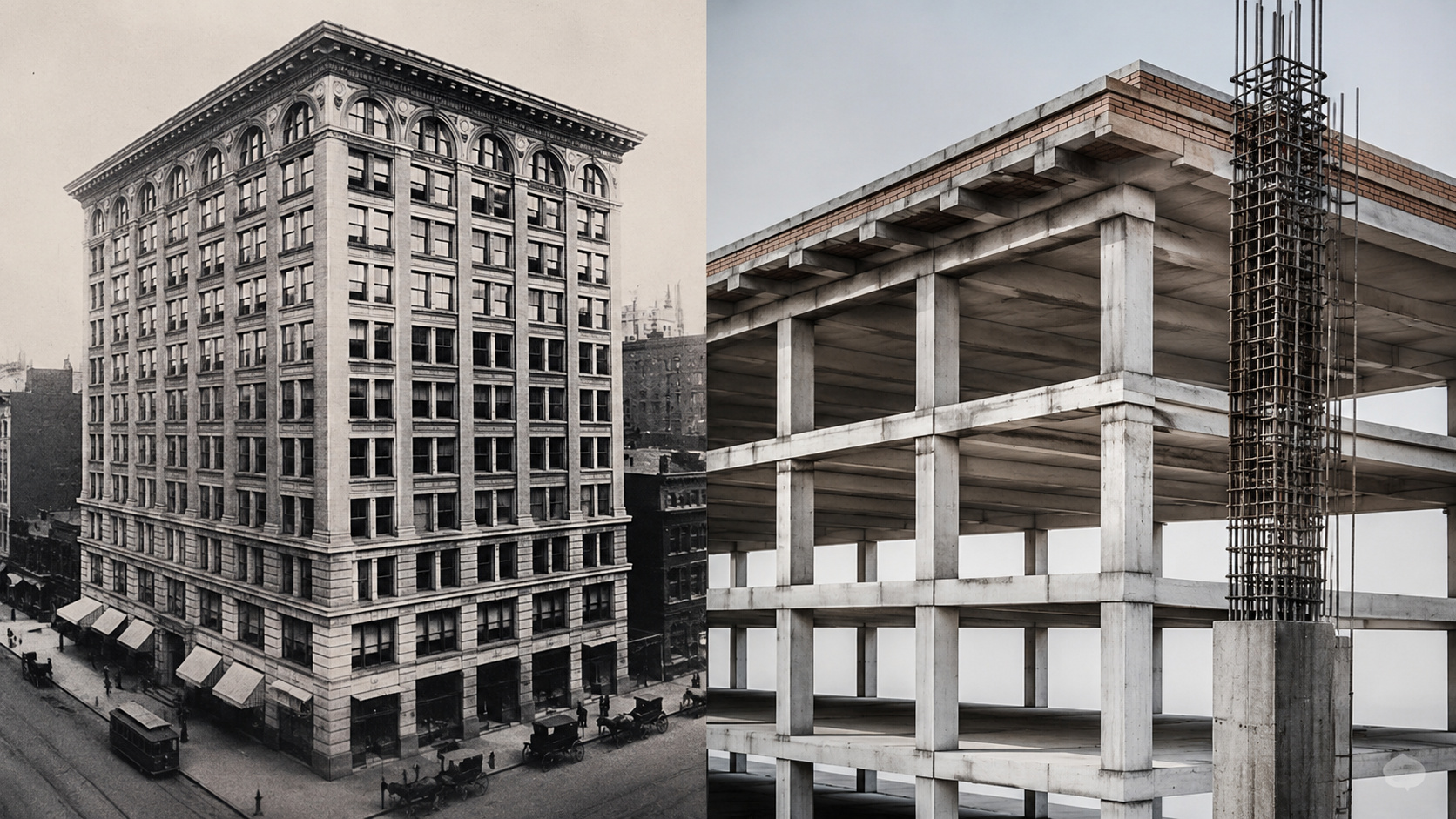

Completed in 1903, the Ingalls Building became the world’s first reinforced concrete skyscraper and definitively changed civil engineering.
At the beginning of the 20th century, most engineers believed that reinforced concrete was not yet capable of supporting very tall buildings. At the time, the tallest building constructed with this material had only six floors, and any attempt to exceed this limit was viewed with great skepticism. Even so, businessman Melville E. Ingalls decided to finance a project considered bold for the time: to build a 16-story building using practically only reinforced concrete as the main structure. The result was the Ingalls Building, completed in 1903 in the city of Cincinnati, United States, today recognized by the American Society of Civil Engineers (ASCE) as the world’s first reinforced concrete skyscraper.
The city hall took about two years to authorize the construction of the reinforced concrete skyscraper
The project faced strong resistance even before the start of construction. According to the ASCE, municipal authorities took approximately two years to grant the construction license.
The reason was simple: many technicians believed that a concrete building of that height might not support its own weight and could end up collapsing.
-
Up to 60 concrete mixer trucks pour 380 m³ of concrete onto the “big slab” of Niemeyer’s first work in Amazonas, in a decisive stage of the construction of the monumental oca that will mark the Parque Encontro das Águas in Manaus.

-
Alert in Santa Catarina: the Anita Garibaldi Bridge on BR-101 is completely closed in both directions due to “structural risk,” and drivers are diverted to a 20 km/h detour that promises kilometer-long queues until July 20.

-
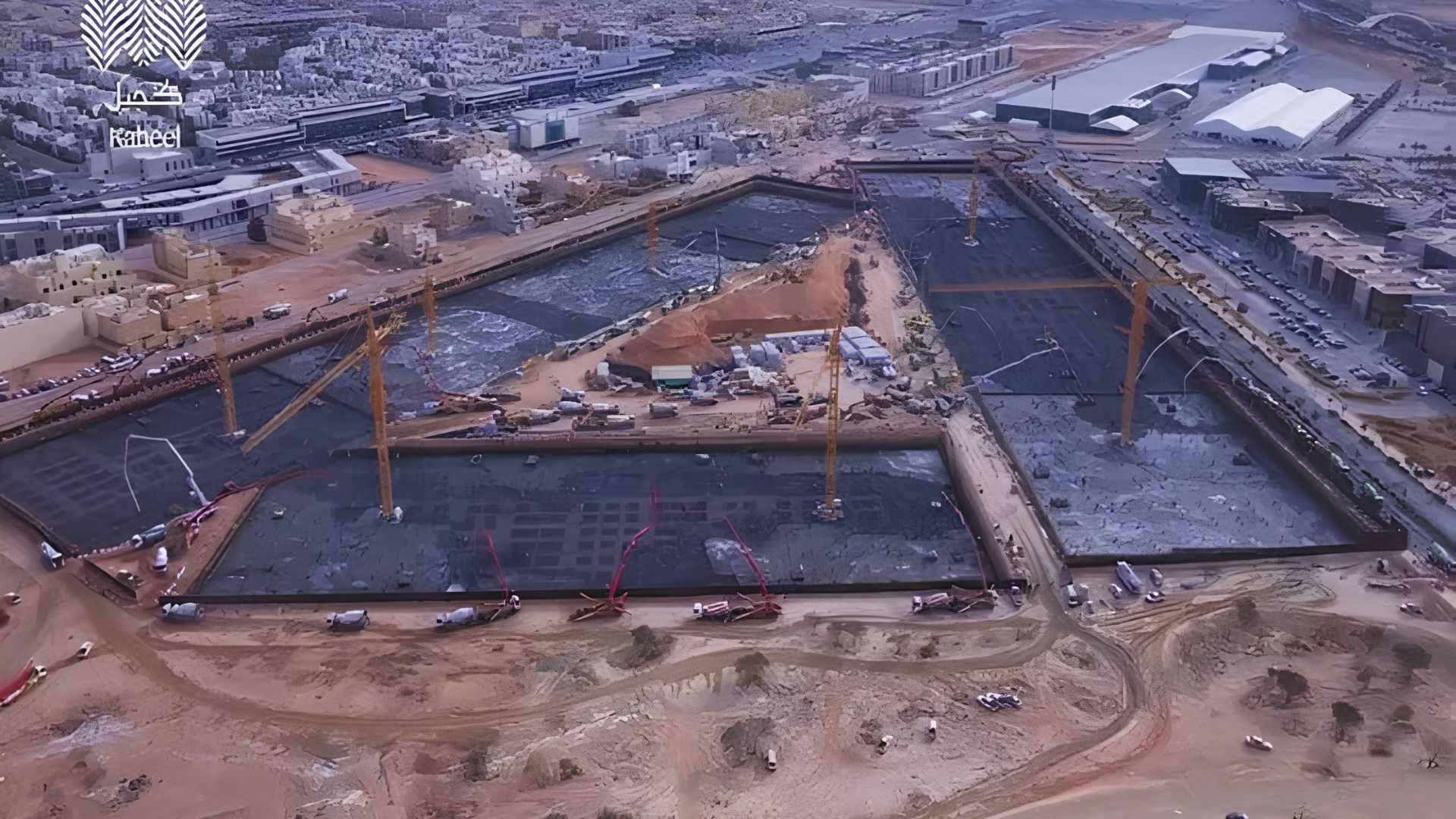
More than 6,000 trucks poured nearly 70,000 cubic meters of concrete without interruption for 72 hours to create the largest continuous concrete pour in history and erect a megaproject in Saudi Arabia.
-
28-meter, 156-ton titans traveled 20,000 km from China to the port of Santa Catarina: Portonave received 7 fully electric megacranes, part of a R$ 210 million package, to double container handling.




At that time, steel dominated the construction of tall buildings, while reinforced concrete was still considered a relatively new technology for large structures.
The reinforced concrete skyscraper had 16 floors and was about 64 meters tall
After approval, construction began in 1902. Designed by the firm Elzner & Anderson and with structural engineering by Henry N. Hooper, the building was completed in 1903 with 16 floors and approximately 64 meters (210 feet) in height.


Today these numbers may seem modest, but at the time, they represented a huge technological leap. The Ingalls Building immediately became the tallest reinforced concrete building ever constructed in the world.
Special steel bars allowed concrete to support tall buildings
A large part of the project’s success was attributed to the system developed by engineer Ernest L. Ransome.
According to the ASCE, Ransome had patented, in 1884, twisted surface steel bars, capable of better adhering to concrete and significantly increasing its structural strength.
This system allowed the combination of the high compressive strength of concrete with the ability of steel to withstand tensile stresses, forming a much more efficient set for tall buildings.
Many people believed that the Ingalls Building would fall
The construction aroused enormous curiosity in Cincinnati. According to historical records cited by the SAH Archipedia, there was so much skepticism surrounding the work that a story emerged of a journalist who supposedly stayed near the building waiting for the moment when the supports would be removed, believing that the building would collapse.
Although this narrative is part of local tradition, it illustrates the level of distrust regarding reinforced concrete at that time. The collapse, however, never happened.
The success paved the way for a new generation of skyscrapers
The completion of the Ingalls Building had a much greater impact than just its height. According to the American Society of Civil Engineers, the work demonstrated that tall buildings could be safely constructed with reinforced concrete, contributing to this structural system being gradually accepted in the construction industry in the United States.
The Skyscraper Museum in New York highlights that the building served as a true proof of concept for the technology, showing that concrete could compete with steel in certain applications and influencing the development of future concrete skyscrapers around the world.
More than 120 years later, the building still stands
The most impressive aspect may be its durability. Completed in 1903, the Ingalls Building remains in use more than a century later.
The building has undergone renovations and modernizations over the years, but its main structure remains preserved.

According to the ASCE, the success of the construction marked a turning point in structural engineering, helping to transform reinforced concrete into one of the most used materials in the construction of tall buildings worldwide.
A work that definitively changed engineering
Today, practically all major urban centers have skyscrapers built with reinforced concrete or mixed systems of steel and concrete.
This reality, however, began to change in 1903, when a project considered risky managed to prove that a 16-story building could remain safe using a technology that many experts still considered unviable.
The Ingalls Building became a landmark of modern engineering and remains one of the most important examples of the evolution of civil construction in the 20th century.