






 Portuguese
  Spanish



The New BYD Electric Sedan Surprises With Bold Design, Functional Proposal, and Unbelievable Price, But Remains Restricted to the Chinese Market. Experts Evaluate Global Potential and Analyze Whether the Model Can Revolutionize Access to Affordable Electric Mobility.
A new electric sedan is shaking up the Chinese automotive market — and, despite the attractive price, it is likely to remain restricted to the Asian country.
The BYD e7, aimed mainly at fleets and rideshare drivers, has begun to be distributed to dealerships as a demonstration model, attracting attention for its accessible and functional proposal.
The main highlight of the BYD e7 is its estimated price of 100,000 yuan (about R$ 79,000), a highly competitive price for a mid-size electric car.
-
Why Air Conditioning Remains Scarce in Millions of European Homes Despite Deadly Heatwaves, While Nearly 90% of U.S. Homes Have It

-
7.1 Magnitude Earthquake in Venezuela Shakes Buildings in the Brazilian Amazon: Residents Report Panic as Civil Defense Monitors Aftershocks Far from Epicenter in Morón
-
São Paulo Beach Ranked Among World’s Best, But Access Requires Challenging Hike

-
Brazilian TV Host Disguised as Homeless in São Paulo’s Drug District Recognized and Nearly Attacked During Filming



However, this price is expected to be limited to the Chinese market, at least for now.
The brand has not yet confirmed any plans to export the model to markets like Brazil, Europe, or the United States.
Accessible Model Targeted at Fleet Owners
Designed with a focus on the entry-level electric mobility segment, the BYD e7 is part of the manufacturer’s “e” line, which includes vehicles with lower production costs and practical features.
Until now, this series only included the compact hatch e2, which was exported to some countries.
With the launch of the e7, BYD expands its presence in a strategic niche: affordable electric utility vehicles, aimed at drivers who travel long distances daily, such as taxi drivers and rideshare workers.
The first units were sent to Chinese dealerships as part of an internal presentation process, with no official sales forecast to the public.
The expectation is that commercial testing will occur throughout 2025.
Design Inspired by Luxury Models
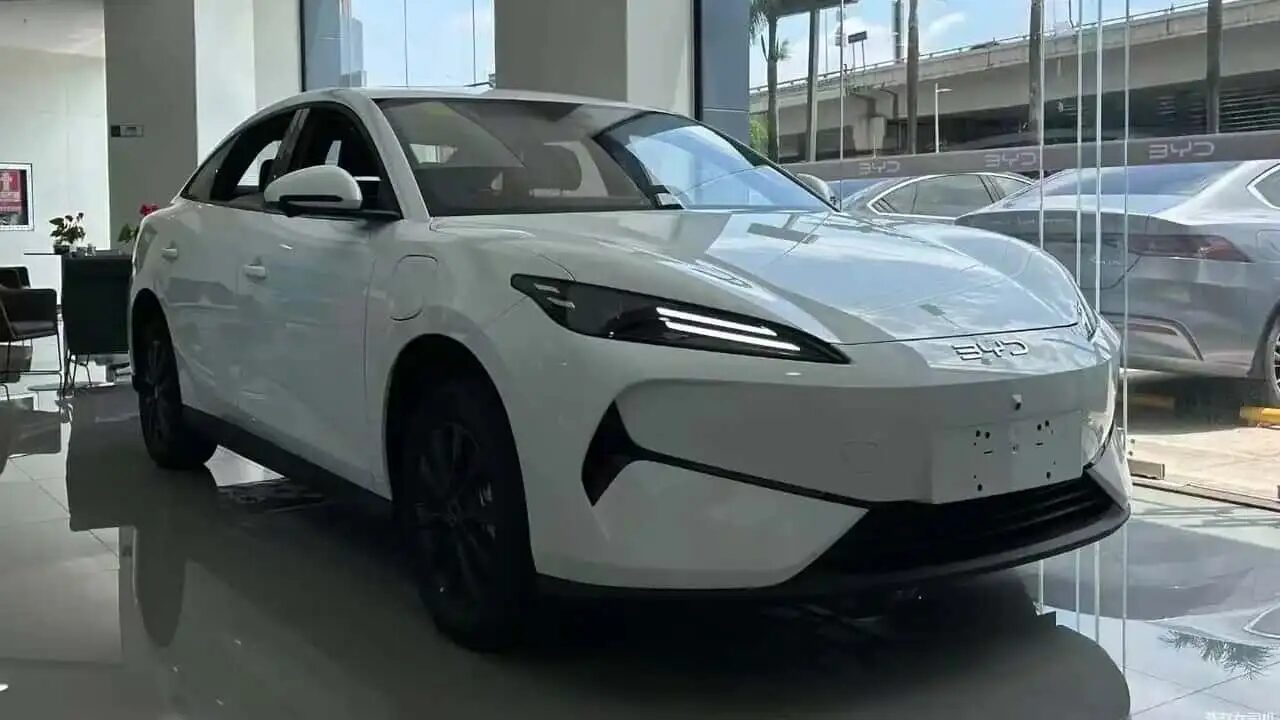
Although it is an entry-level model, the e7 stands out for its visuals.
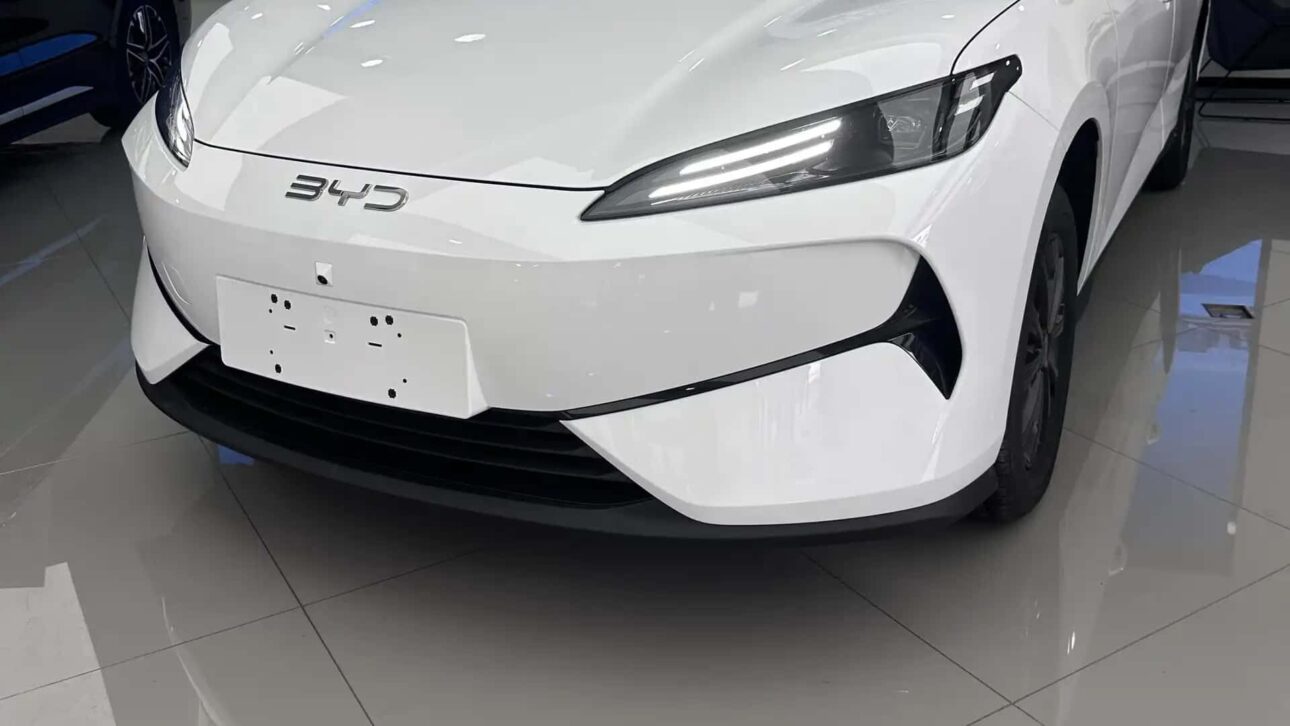
Its front end resembles the design of the Denza Z9, a luxury sedan from BYD itself, giving the new model a sophisticated appearance, even without premium finishes.
The thin headlights, aerodynamic shape, and discreet air intake create a modern visual identity.
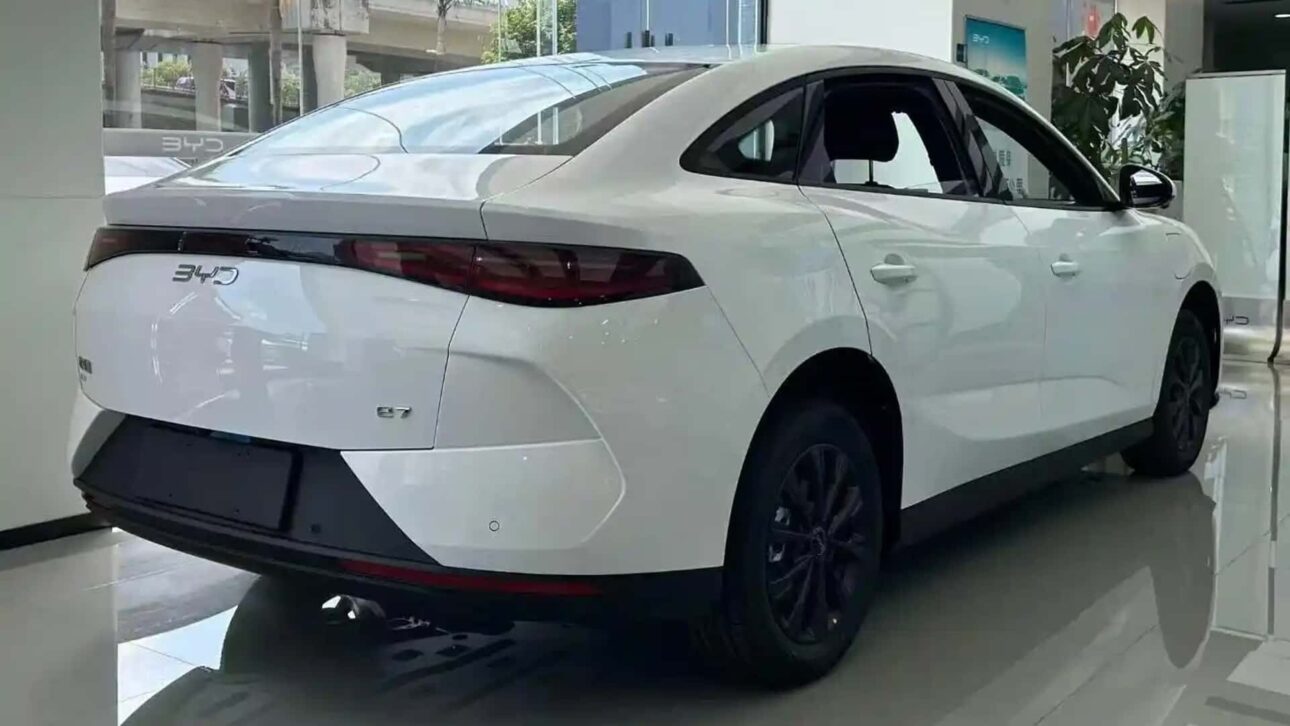
The sedan also features 16-inch wheels, conventional door handles, and a smooth roofline that ends in a small rear spoiler — solutions that balance aesthetics and functionality.
At the rear, the taillights divided by a darkened strip add a contemporary visual touch, while the 360° camera, sunroof, and disc brakes on all four wheels enhance the level of the offered package.
Generous Proportions and Urban Proposal
With a length of 4.78 meters and a wheelbase of 2.82 meters, the BYD e7 is longer than the Tesla Model 3, rivaling medium and large models in the electric segment.
Its width of 1.90 meters and height of 1.51 meters reinforce the vehicle’s robust presence.
Even being simpler technologically, the model does not fall short in internal space.
The cabin was clearly designed to provide comfort for rear passengers, with ample legroom and exclusive air conditioning outlets.
Functional Interior and Sufficient Technology
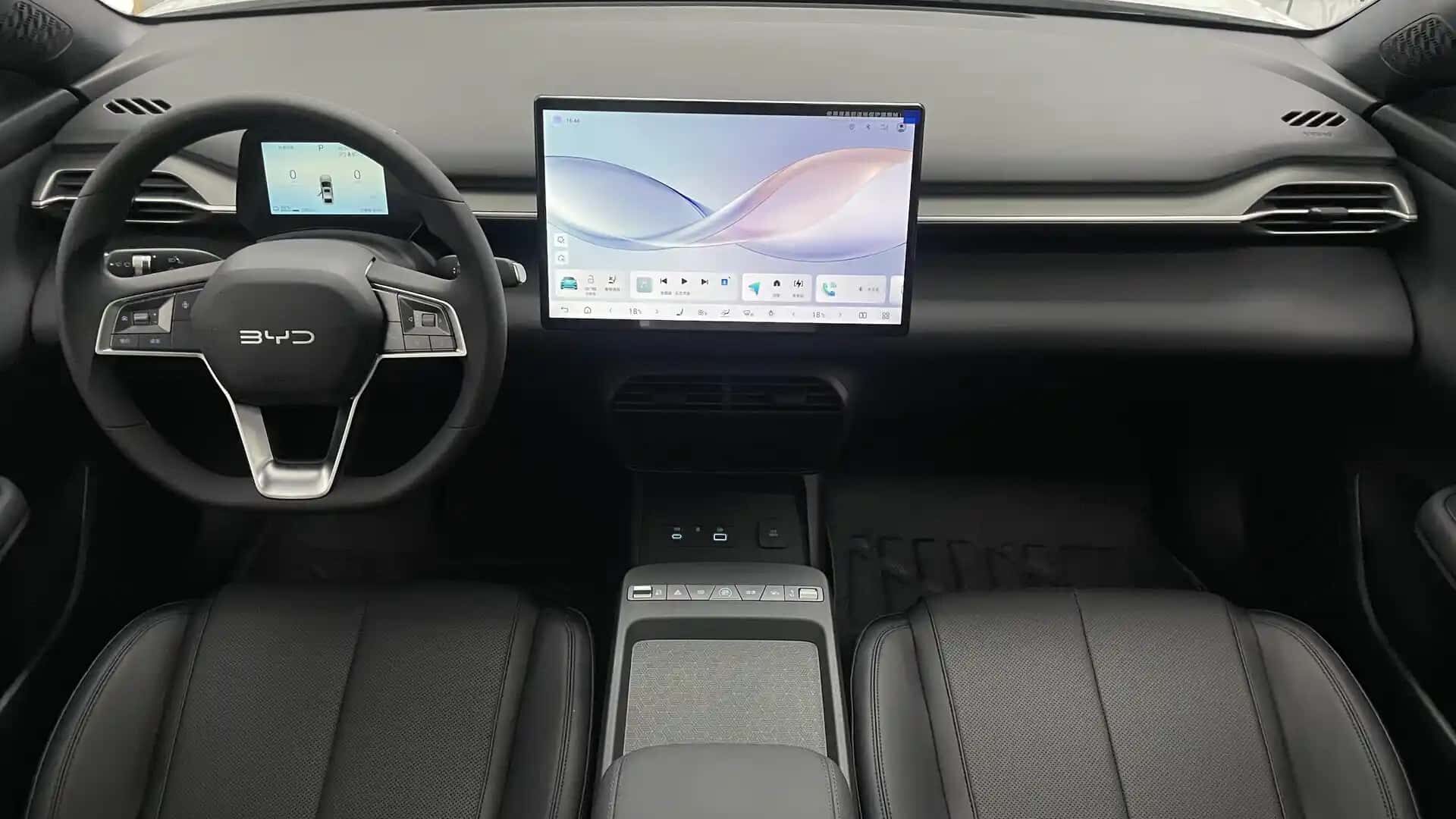
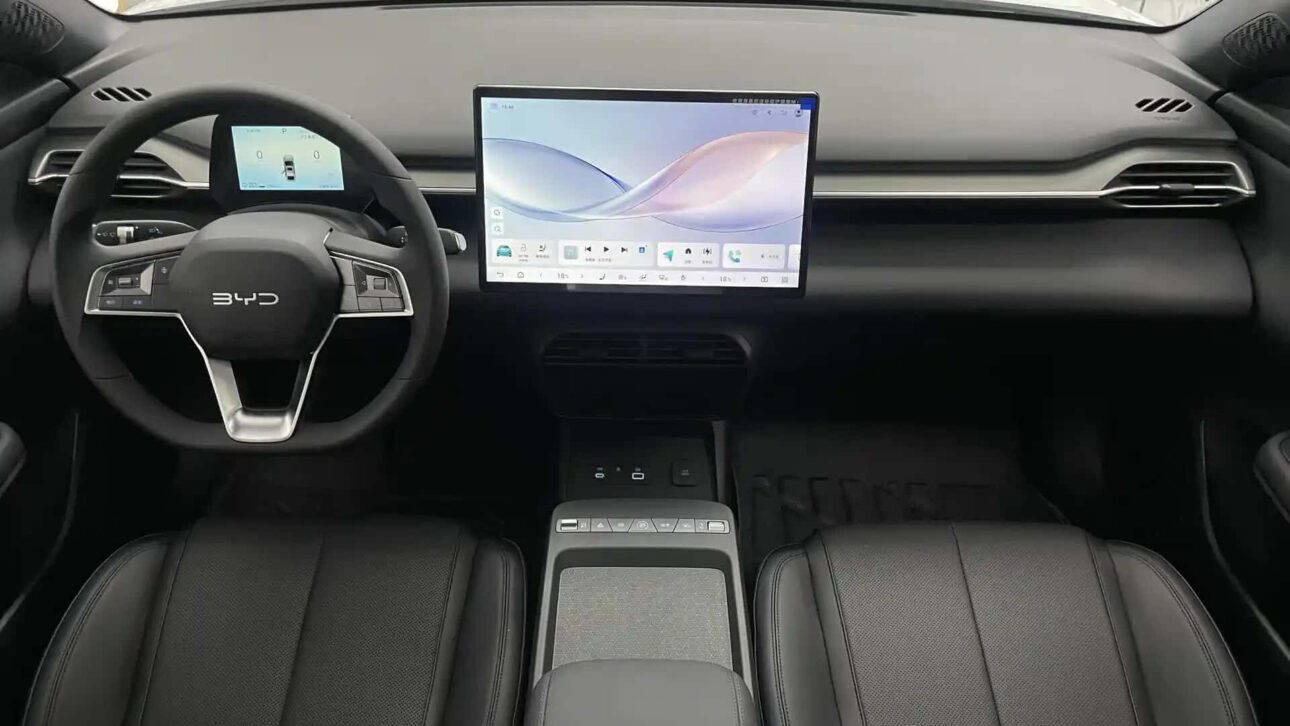
Inside, the e7 follows the standard of BYD’s new generation of vehicles.
The dashboard houses a 15.6-inch floating multimedia center, which is already a familiar feature for brand consumers.
The digital instrument panel is positioned behind the steering wheel, while the electronic gear lever is mounted on the steering column, freeing up space in the console.
The central console offers an area for smartphone charging, USB ports, and physical buttons for essential functions, prioritizing practicality.
The seats are covered in black synthetic material, which is easy to maintain — making sense for a model that will predominantly be used as a work tool.
In the rear, the sedan features USB ports, LED reading lights, and ISOFIX anchors for child seats.
Despite the lack of a central armrest, the seat provides a headrest for the middle occupant.
Mechanical Set Is Still a Mystery
So far, BYD has not revealed technical details about the capacity of the battery or the autonomy of the e7.
It is only known that it uses LFP (lithium iron phosphate) cells, a technology already established in the brand’s electric line, and that the maximum speed is 150 km/h.
The charging port is located on the right front fender, and everything indicates that the focus will be on conventional charging — reinforcing the low-cost proposal.
The weight varies between 1,499 kg and 1,566 kg, depending on the version.
Even without official performance data, experts expect sufficient urban autonomy to cover daily commutes for rideshare drivers.
International Market Is Still Uncertain
Despite the highly competitive price, BYD has not yet announced plans to launch the e7 outside of China.
As the brand has rapidly expanded its global operations, it is possible that a version of the model will be adapted for markets such as Latin America or Southeast Asia, where there is high demand for cheaper electric cars.
In Brazil, for example, an electric sedan below R$ 100,000 could transform the market, considering that currently available models cost much more.
However, issues such as import taxes, adaptation to local regulations, and logistics still pose considerable obstacles.
In other Asian countries and even in Eastern Europe, where there are incentives for fleet electrification, the BYD e7 could become an attractive alternative to fossil fuel-powered cars.
Curiosity: Why So Cheap?
A question that arises among automotive enthusiasts is how BYD manages to offer an electric sedan of this size at such a low price.
The answer lies in the scale of production and the use of standardized components.
The Chinese brand already has highly automated factories and controls the entire supply chain, from battery production to software design.
Moreover, the simplified proposal of the e7 — without luxuries or autonomous driving technologies — significantly cuts costs.
The car does not try to compete with high-end electric vehicles, but rather fill an essential gap in the market.
With a price that grabs attention and a functional package aimed at daily work, the BYD e7 shows that the future of electric cars can — and should — be affordable.
The big question is: will a model like this arrive in Brazil at a competitive price, even facing high tax burdens and logistical challenges? In your opinion, what should the price be when it arrives in Brazil? Leave your guess in the comments.


Com o Lula no Governo vai chegar com preço bom. 100000
Se chegar ao Brasil por este preço os motoristas de app vai poder trabalhar tranquilo sem ter muito gasto e faturar mais
Brasil é l@drão!