Portuguese
  Spanish


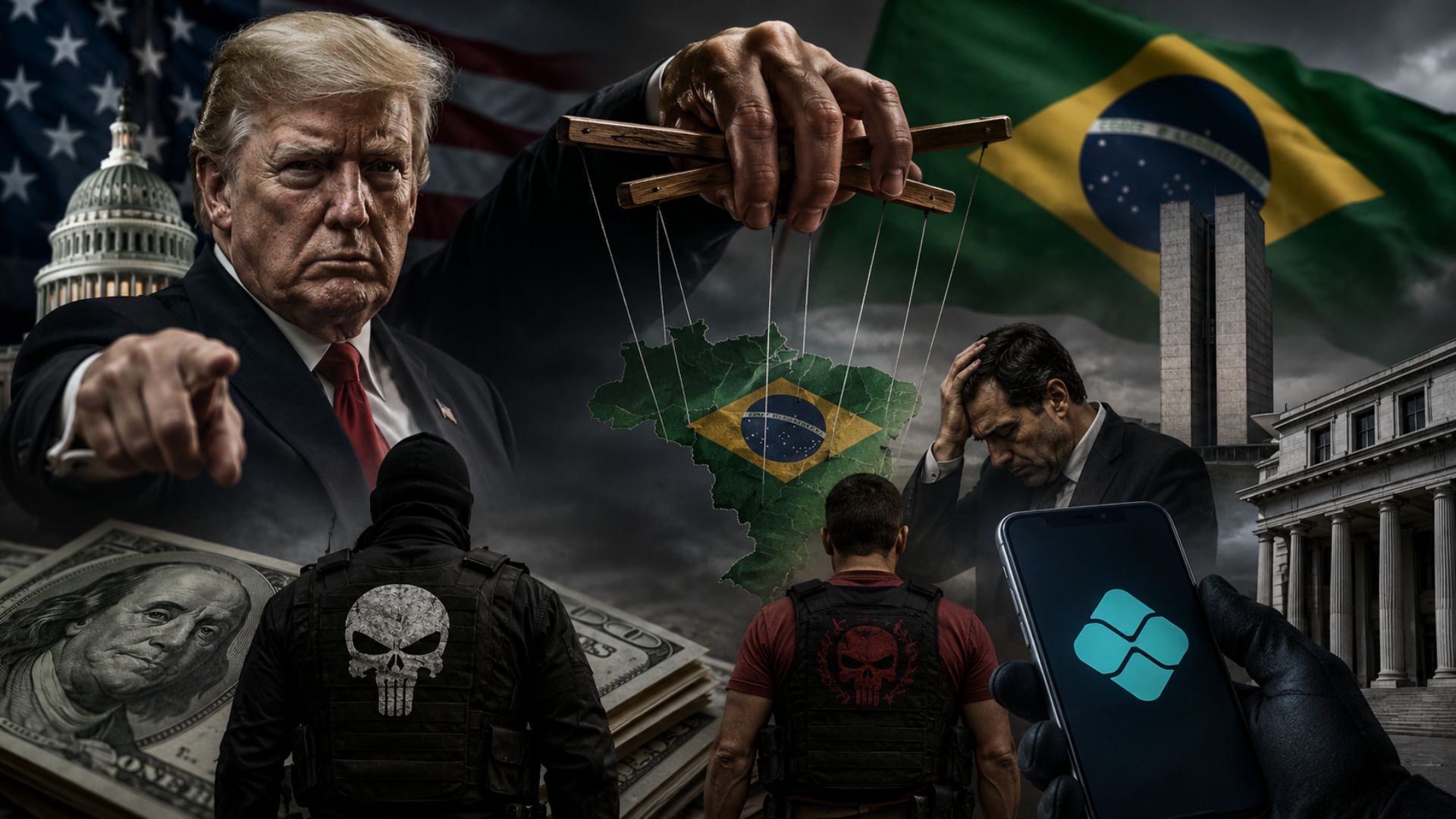

The economist José Kobori assesses that the USA has gained a strong tool of coercion against Brazil by classifying PCC and Comando Vermelho as terrorist organizations. According to him, Washington can use it to pressure companies, banks, and Pix, and undermine China’s influence in the country.
The economist José Kobori states that the United States has gained a big card up its sleeve to blackmail Brazil and try to undermine China’s influence in the country. The assessment, made on UOL News, stems from a recent fact: Washington’s decision to classify the PCC and Comando Vermelho factions as terrorist organizations.
According to the economist, the measure goes far beyond fighting crime: it expands the economic coercion power of the USA, which could use the terrorism label to target companies, banks, and even the Pix payment system. For Kobori, it is a geopolitical weapon, with still incalculable damages for Brazil.
The USA’s card up its sleeve, according to the economist

In the economist’s view, the classification is not just a matter of public security, but a pressure tool. Kobori argues that in future negotiations, the USA could, ultimately, threaten to attack Brazilian companies and the financial system if they wish, using the terrorism label as leverage. For him, by gaining the power to “define who is or isn’t linked to terrorism,” Washington can impose economic sanctions based on this definition.
-
Brazil’s Imigrantes Highway Celebrates 50 Years with Plans for Major Expansion, Including a 6 km Tunnel and Third Lane to Ease Traffic to São Paulo’s Coast

-
Brazilian Job Market Surprises: Unemployment Falls to 5.6%, Hits Record Low for May, Brazilian Incomes Rise, and Underemployment Reaches Lowest Level Ever Recorded by IBGE

-
Chinese E-commerce Giant Predicts Robots Will Replace 700,000 Delivery Workers as Autonomous Vehicles Expand to 200 Cities, Offering Training for Workers to Maintain Their Machines

-
Trump warns Europe with 100% tariff threat on digital tax, potentially impacting wine and trade agreements


The analyst goes further and sees geopolitical and commercial motivation behind the decision. He describes the measure as a “geopolitical weapon” and associates it with the interests of powerful sectors in the United States itself. Therefore, in his view, the damages for Brazil are still incalculable, as the effect is not limited to the factions but can spill over into the business environment and the country’s banking system.
Why Pix Came Under the Radar, According to the Economist
One of the central points of the analysis is Pix. According to the economist, the Central Bank’s instant payment system came under the American radar for reducing the space of card operators and other private platforms in Brazil. He mentions Visa, Mastercard, and the attempt of WhatsApp Pay as interests affected by the public payment infrastructure.
According to Kobori, Pix practically rendered the debit function of major card operators unfeasible and helped explain why WhatsApp Pay did not succeed in the country. In the most extreme scenario, he says, the USA could demand that banks stop using Pix to favor American companies, although the analyst himself considers it unlikely that the pressure would reach this limit.
The Fact Behind the Analysis: The Classification of PCC and CV
The economist’s assessment stems from a concrete event. At the end of May, the United States Department of State classified the Red Command and the PCC as “Specially Designated Global Terrorists” and announced the intention to include them on the list of foreign terrorist organizations starting June 5. In a statement signed by Secretary of State Marco Rubio, the American government described the two factions as some of the most violent criminal organizations in Brazil.
The measure fits into the Trump administration’s strategy of treating large Latin American factions as “narcoterrorists.” The announcement came after Senator Flávio Bolsonaro met with Rubio and Trump.
On the other hand, the Lula government had tried to block the designation, concerned about the possibility of it opening the door for actions on Brazilian territory or sanctions on banks that, even unknowingly, maintain relationships with faction members. This backdrop gives strength to the economist’s warning.
The Dilemma of Brazilian Diplomacy Between the USA and China


According to Kobori, the best short-term Brazilian response is to “buy time.” The economist argues that it is not in Brazil’s interest to seek a rupture with the USA now, noting that the country is the second-largest trading partner of Brazilians, only behind China itself. Diplomacy, in his view, tends to manage the dispute between the two powers without definitively aligning with either side.
He considers that the threat can range from diplomatic embarrassment to sanctions on the financial system, but doubts that the American government will take everything to the limit immediately. The central objective, in his view, would be to gain advantages in negotiations and protect the interests of US companies. It is worth remembering that this is the analysis of an economist, and not a measure already announced: the harshest scenario is presented as a possibility, not as a certainty.
The analysis places Brazil in an uncomfortable position between the US and China, with Pix and the financial system in the middle of the board.
Tell us in the comments if you agree with the economist that the classification of PCC and Comando Vermelho as terrorists becomes a pressure weapon, or if you consider the warning exaggerated.