






 Portuguese
  Spanish
  5 min of reading
  0 comments


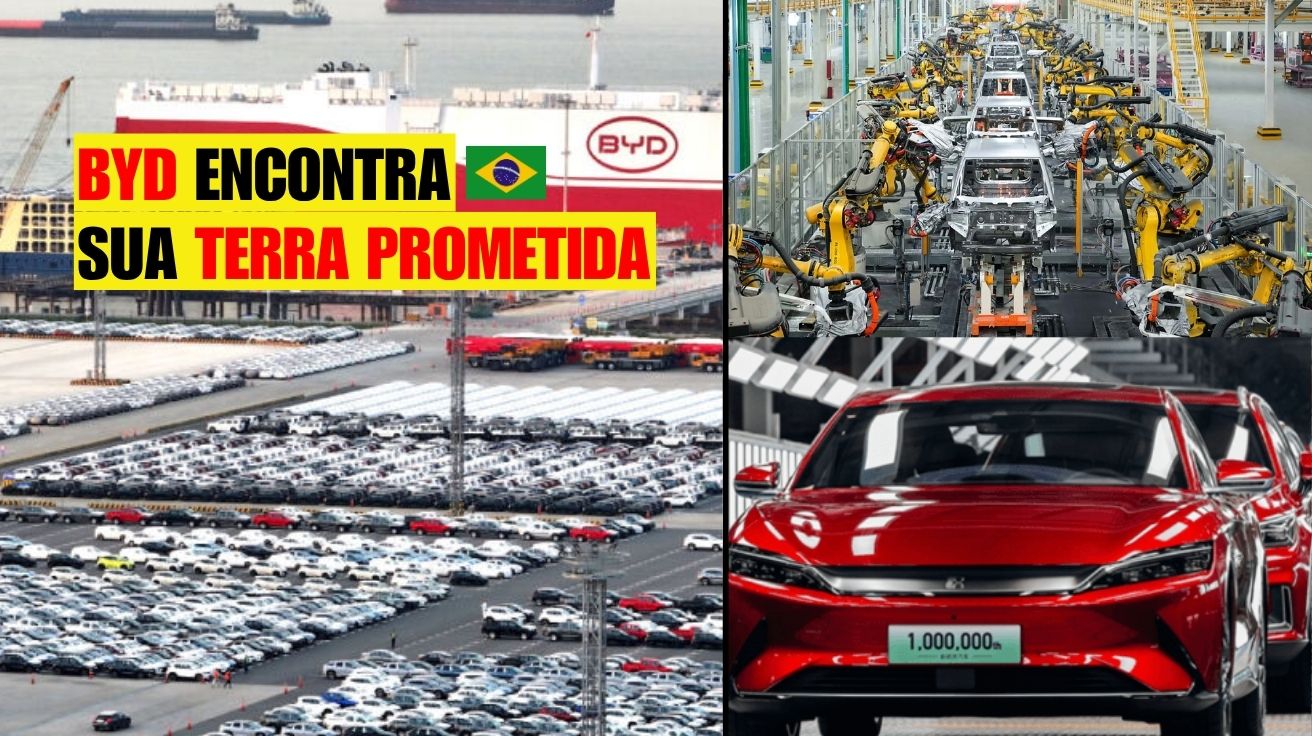
Chinese Automaker Advances In Brazil And Worries National Industry That Sees Risk To Production And Jobs With Increase In Imports Of Electric Cars.
The growing presence of BYD in the Brazilian market has raised an alert among traditional manufacturers and union entities, who see the accelerated expansion of the Chinese automaker as a direct threat to national production and jobs in the automotive sector.
According to a report published by Reuters, Brazil has become a strategic destination for the brand, which has expanded its fleet of cargo ships to accelerate shipments of electrified vehicles — including the largest car transport ship in the world, which docked in Itajaí (SC) at the end of May.
In recent months, the automaker has made four major shipments to Brazil, totaling about 22,000 cars, according to data collected by the international agency.
-
Survivor of 1966 SS Daniel J. Morrell Shipwreck in Lake Huron Recounts 38-Hour Ordeal in Extreme Cold

-
The Greatest Hoax in World Cup History? The Film That Denied Brazil’s 1958 Victory and Exposed How Fake Evidence Can Seem Convincing on TV
-
Fake South Korean Online Stores Offer Shopping Thrill Without Spending Money or Receiving Products
-
Brazilian Joins Homeownership Consortium, Faces Decade of Dual Payments Totaling $141,000, Surpassing Traditional Mortgage


This commercial offensive occurs in a context of low tariffs on imported electric vehicles, which further enhances the competitive advantage of the Asian company over brands that operate with local production.
BYD Brazil Expansion Threatens National Industry
The expansion of BYD in Brazil occurs in a market where the transition to electrified cars is still incipient, but promising.
It is estimated that imports of vehicles manufactured in China could grow by up to 40% by 2025, reaching the mark of 200,000 units.
As a result, Chinese cars could account for about 8% of light vehicle sales in the country, a significant number for a sector still adapting to the demands of electrification.
The growth of BYD in Brazil has been driven by affordable prices, a strategy aimed at attracting consumers and accelerating the adoption of so-called “green” cars.
However, representatives of the national industry warn that the model adopted by the Chinese automaker relies on a temporary tariff loophole, without generating countermeasures in terms of local industrialization or job creation.
According to investigation by Reuters, union and industrial entities advocate that the government advance this year the increase in the import tax on electrified vehicles from 10% to 35%, currently scheduled only for mid-2026.
The measure, according to these groups, would be essential to preserve the Brazilian production chain in the face of the Chinese offensive.
“Countries around the world have started to close their doors to the Chinese, but Brazil has not,” stated Aroaldo da Silva, president of IndustriALL Brazil, a union central representing workers from six industrial sectors. “China has taken advantage of this.”
BYD Factory In Brazil Delayed
Despite its strong presence in imports, BYD announced the installation of a factory in Camaçari (BA), where the Ford unit previously operated.
The initial plan aimed to start production as early as 2025, but, according to officials interviewed by Reuters, the timeline has been postponed to December 2026 following reports of labor abuses at the construction site.
The Ministry of Development confirmed that it is reviewing the request from Anfavea (National Association of Automotive Vehicle Manufacturers) to advance the tariff increase.
In a statement to Reuters, the ministry stated that the schedule for increasing tariffs was designed to respect companies’ development plans and the maturity of local production.
However, the sector demands more immediate measures in the face of BYD’s growth in Brazil.
The president of Anfavea, Igor Calvet, argued that new automakers are welcome, as long as they contribute to strengthening the national industry.
“We support the arrival of new brands in Brazil to produce, promote the component sector, create jobs, and bring new technologies. But, from the moment an excess of imports leads to less investment in production in Brazil, that concerns us,” he said in an interview with Reuters.
Growth of BYD In Brazil Without Local Supply Chain
Another concern raised by unions is the lack of transparency regarding BYD’s local partnerships.
With 18 months until the promised start of production in Bahia, there are no signs of agreements with national suppliers or actions that stimulate the auto parts supply chain.
“Even if the factory is here – what value does it really add if the components, development, and technology are all foreign?” questioned Aroaldo da Silva.
This movement, in practice, consolidates Brazil as one of the main destinations for China’s surplus automotive production.
According to data from the sector itself, China surpassed Japan in 2023 and became the world’s largest exporter of vehicles, driven by excess domestic production and the closure of markets like the United States and the European Union, which adopted high tariffs—of up to 100% in the case of the U.S.

Chinese Electric Cars Dominate Sales In Brazil
Despite the challenges of competing with Chinese prices, Brazil is still trying to solidify its role in the transition to a less polluting fleet.
According to the Brazilian Electric Vehicle Association (ABVE), more than 80% of electric cars sold currently in the country are imported from China.
The country has relevant lithium reserves and other essential inputs for battery production, but lacks complete infrastructure to manufacture all components independently.
Meanwhile, GWM (Great Wall Motors), also Chinese, is advancing in consolidating its industrial presence in Brazil.
The company purchased the former Mercedes-Benz plant in Iracemápolis (SP) in 2021, with a capacity of 50,000 cars per year, and is set to start production of the Haval H6 model in July 2025.
According to the president of ABVE and GWM executive, Ricardo Bastos, the automaker is negotiating with about 100 local suppliers to enable the operation.
“Brazil can become a relevant hub in automotive electrification. But for this, production needs to keep pace with imports,” Bastos declared to Reuters.
The dispute between accelerated imports and national production raises a central question: what is the real impact of BYD’s growth in Brazil on the future of the national automotive industry?





Be the first to react!