






 Portuguese
  Spanish


Intervention entered the contracting phase in Belo Horizonte and is part of a US$ 100 million program focused on mobility, housing, accessibility, and reduction of urban risks
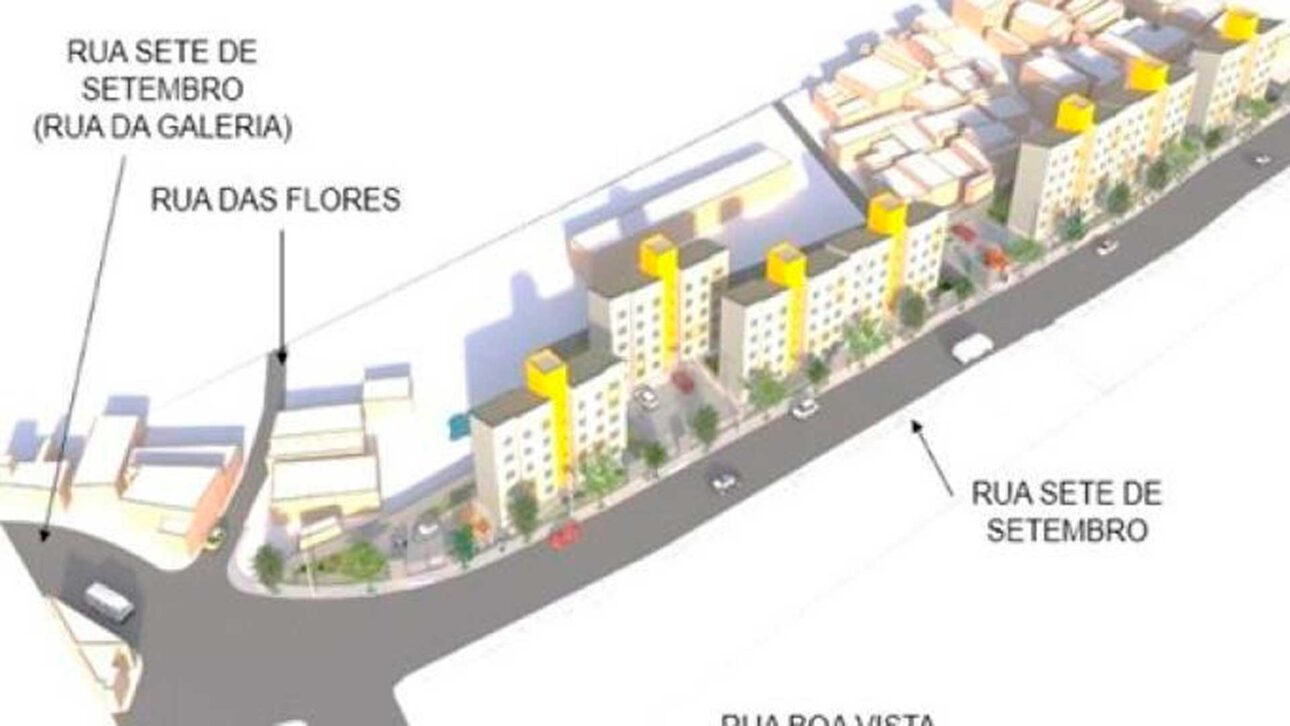
The Belo Horizonte City Hall has started the contracting phase for the urbanization works of Vila Cabana do Pai Tomás, in the western region of the capital of Minas Gerais. The intervention includes improvements in drainage, paving, accessibility, slope containment, qualification of public spaces, and construction of housing units.
The most notable point in the process is that the specific budget for the work in the community has not been disclosed. According to PBH, the cost estimate of the intervention is confidential due to the contracting rules linked to the World Bank, the program’s financier.
The work is part of the Belo Horizonte Urban Mobility and Inclusion Program, which gathers investments of US$ 100 million. Of this total, according to information released by the city hall and the World Bank, US$ 80 million comes from a loan from the International Bank for Reconstruction and Development, the Bird, and US$ 20 million corresponds to the municipal counterpart.
-
Workers renovating a playground in northern England uncover 176 World War II bombs buried underground; training artifacts still contained explosives.

-
Brazilian Architect Transforms Waste into Sustainable Homes with Solar Power and Rainwater Systems for 40 Years

-
Security Guard Becomes Doctor at Louisiana Hospital Where He Once Worked, Studied Chemistry Between Shifts

-
Woman Rescued from Luxury Complex in Brazil Worked Without Pay for 55 Years, May Be Entitled to Over $300,000




Although the program totals an amount equivalent to more than R$ 500 million, this amount refers to the complete package of interventions, not just Vila Cabana do Pai Tomás. Part of the resources will be applied in the community, but the exact cost of this stage will only be known at a later moment in the process.
Work progresses without disclosure of specific budget
The new phase began with the publication of the initial selection notice for companies interested in executing the works. According to PBH, this first stage does not immediately choose the winner but serves to qualify companies and consortia with technical, financial, and operational capacity to compete for the contract.
As reported by Hoje em Dia, the city hall stated that the estimated budget for the services in Cabana do Pai Tomás cannot be disclosed at this stage due to the guidelines applied to the process. The municipal administration also clarified that the R$ 512 million mentioned in the program’s context represents the approximate total value of the financed actions, not the isolated cost of the village’s urbanization.
In practice, this means that the population already knows what types of interventions are planned, but still does not know the specific amount reserved for the project in the cluster. The PBH states that the process will follow World Bank standards and international contractual conditions used in infrastructure works.
What changes in Cabana do Pai Tomás
The urbanization of Vila Cabana do Pai Tomás foresees urban infrastructure works in an area historically marked by access, housing, drainage, and socio-environmental vulnerability issues. According to the city hall, the goal is to improve the living conditions of residents and reduce risks in sensitive points of the community.
Among the planned actions are the implementation and adaptation of drainage systems, paving of roads, improvement of access, road requalification, and accessibility interventions. Containment and stabilization works in risk areas are also included, a demand considered essential in communities located on slopes and densely occupied areas.
Another important point is the construction of housing units. This measure is related to the resettlement of families affected by road interventions, works in risk areas, or necessary changes for the opening and improvement of access within the community.
According to the PBH, the proposal is to combine urban mobility, housing, safety, and infrastructure in the same package. This differentiates the work from a simple paving intervention, as the project involves urban reorganization, resettlements, sanitation, and qualification of public spaces.
Contracting will follow World Bank rules
The contracting process will be conducted by the Municipal Secretariat of Works and Infrastructure, Smobi. The initial selection will evaluate criteria such as experience in similar works, previous performance in contracts, technical capacity, and financial situation of the companies.
At the end of this phase, the expectation is that a limited group of companies or consortia will be qualified to present technical and commercial proposals. According to the information published about the tender, the selection of the winner should consider a combination of technical score and price, with a weight of 50% for each criterion.
The submission of applications is scheduled for July 24, with the opening of envelopes set for 2 p.m. at the Smobi headquarters in the Lourdes neighborhood. Until then, interested companies can seek clarifications from the commission responsible for the process.
Program also aligns with BRT Amazonas
The work in Cabana do Pai Tomás is part of a broader mobility and urban inclusion program. The same package includes the BRT Amazonas, a bus rapid transit corridor planned for Avenida Amazonas, one of the main connection axes between the West region and the Center of Belo Horizonte.
According to PBH, the BRT Amazonas plans exclusive lanes for high-capacity buses, improvements in the road system, modernization of stations, implementation of integration terminals, accessibility adjustments, and urban requalification. The proposal aims to reduce travel time, expand public transport integration, and improve circulation in a high-traffic area.
The World Bank reported, back in 2020, that the project could benefit 815,000 users of the Expresso Amazonas and about 20,000 residents of Vila Cabana do Pai Tomás. The international organization also pointed out indirect impacts for the Metropolitan Region of Belo Horizonte, especially due to the expected reduction in congestion, accidents, and emissions in the corridor.
This connection between transport and urbanization is central to the program’s design. The logic is that works in vulnerable communities should not be treated separately from mobility, as access to public transport, safe housing, and basic infrastructure directly affect the routine of study, work, and services.
Resettlements and social impact are at the center of the intervention
The urbanization of Cabana do Pai Tomás also involves removals and resettlements. In May 2024, PBH reported that it had started the first resettlement within the Urban Mobility and Inclusion Program, with the removal of families planned in areas necessary for the works.
At the time, the city hall stated that 51 families would be removed and resettled in the first stage. It also informed that the complete intervention planned 317 removals, with alternatives such as compensation, housing unit, or ongoing negotiation, depending on each case.
This aspect is one of the most sensitive points of the project. Urbanization works in villages and slums usually bring structural gains but also require social planning, dialogue with residents, adequate compensation, and monitoring of affected families.
According to the Municipal Chamber of Belo Horizonte, other international resources linked to the BRT Amazonas were also debated in a public hearing due to social impacts, compensations, and grants intended for families and merchants affected by interventions. The topic reinforces that the execution of the works will depend not only on engineering but also on the social management of the process.
Why the secret budget draws attention
The secret budget in public contracts often raises doubts because it involves public resources without immediate disclosure of the estimated value. However, the practice can be foreseen in contracting rules, provided it is justified and does not prevent oversight by control bodies.
According to guidance from the Federal Court of Accounts on Law 14.133/2021, the estimated budget may have a confidential nature when justified, without prejudice to the disclosure of necessary information for companies to formulate their proposals. However, the confidentiality should not prevent access by internal and external control bodies.
In the case of Cabana do Pai Tomás, the city hall attributes confidentiality to the rules of the World Bank and the guidelines of the ongoing process. For the resident, the essential point will be to monitor whether the contracting will advance with transparency in deadlines, in the physical execution of the works, in the resettlements, and in the delivery of the promised improvements.
Next Steps of the Process
The initial selection should define which companies or consortia are qualified to proceed to the proposal stage. Only after this phase will the process advance to the technical and commercial competition, with the selection of the company responsible for executing the works.
Meanwhile, the community awaits the effective start of the interventions. If executed as planned, the project could represent one of the main recent urban works in Cabana do Pai Tomás, with a direct impact on housing, circulation, drainage, safety in risk areas, and the quality of public spaces.
The work in Cabana do Pai Tomás reignites an important discussion about community urbanization, international financing, and transparency in large public contracts. Do you think the confidential budget is justified in this type of contracting, or should the city hall disclose the amount from the beginning? Leave your opinion in the comments.


