






 Portuguese
  Spanish


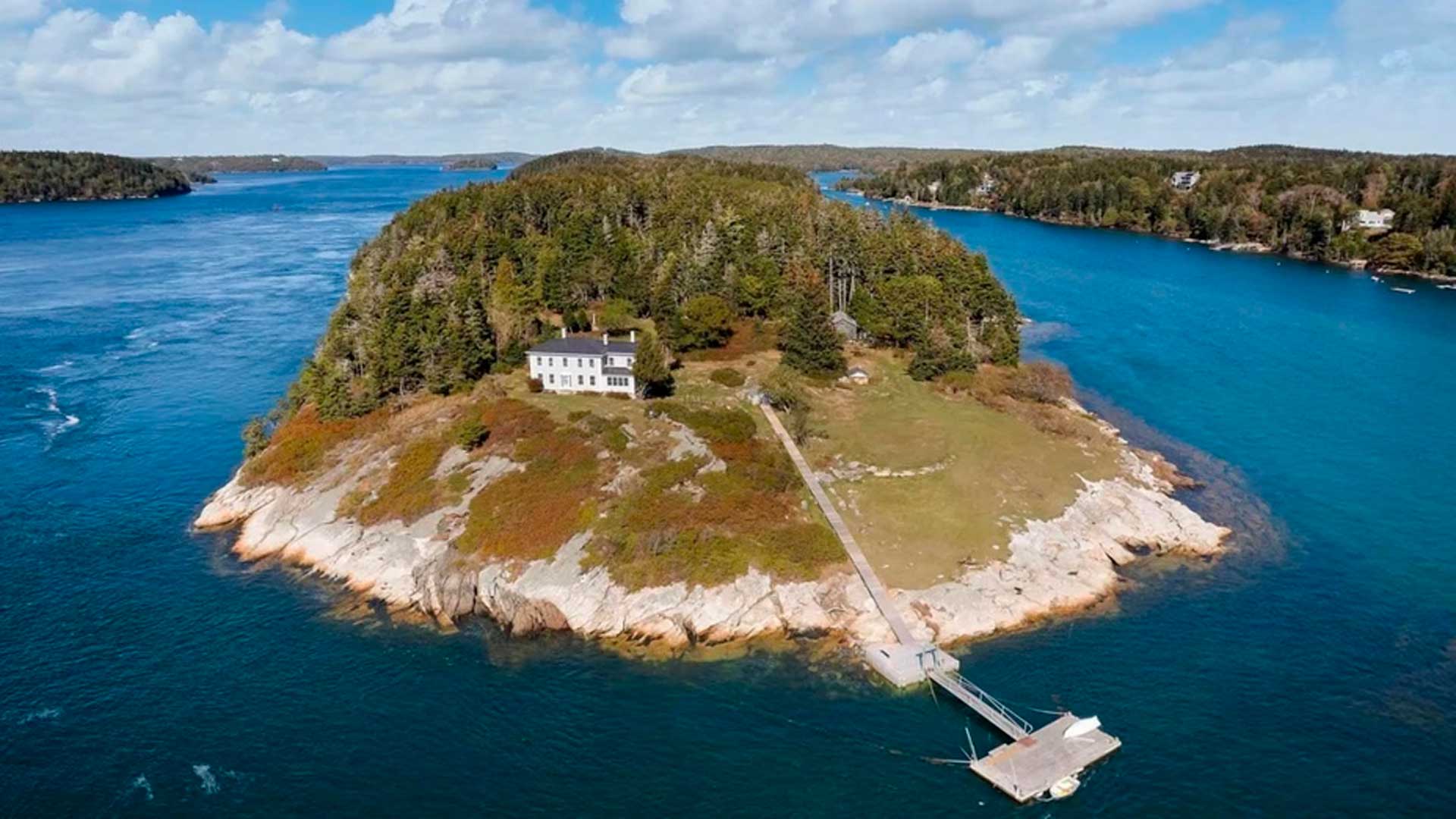


Property known as Gilbert Head features historic house, independent studio, granite pier, and over 10 preserved hectares on the US coast
A historic property linked to the American painter Stephen Etnier has entered the luxury real estate market for $3.85 million, equivalent to about R$ 19.4 million at the current exchange rate. The property is located on Long Island, in the Georgetown area, in the state of Maine, United States.
The highlight is not just the price. The area, known as Gilbert Head, includes a house built in 1862, an independent art studio, a boathouse, a deep-water pier, and trails amidst preserved vegetation.
According to information released by Realtor.com and the Bangor Daily News, the complex is located at the southern tip of Long Island, overlooking the Kennebec River, Fort Popham, and Popham Beach. Access is only by boat, a feature that enhances privacy and the appeal of a coastal retreat.
-
Bruno Guimarães, 28, Misses Crucial Penalty Against Norway in World Cup After Replacing Vinicius Jr.

-
Inspired by a school lesson on Africa’s water crisis, a young boy raised money through chores to fund a well that transformed a Ugandan community.

-
Brazilian Construction Worker Moves to France, Earns Up to €2,500 Monthly with Home Renovations, Gains Social Media Attention

-
US Navy Sinks USS Oriskany with 230 kg of C-4, Creating World’s Largest Artificial Reef in 37 Minutes





Although some reports refer to the property as a “private island,” the more accurate information is that it is a 25-acre property on an island inhabited by few people, and not the purchase of the entire Long Island. This detail makes the sale more realistic and avoids an exaggerated reading of the deal.
Island in Maine preserves memory of Stephen Etnier and attracts attention in the luxury market
Stephen Etnier, who lived between 1903 and 1984, was an American realist painter known for landscapes, coastal scenes, and compositions marked by light. According to Artsy, the artist had works associated with institutions such as the Whitney Museum of American Art and the Metropolitan Museum of Art.

Etnier’s connection with the Maine coast was not just residential. The artist lived and painted in the region, transforming maritime landscapes, boats, coves, and work scenes into recurring themes of his production.
The Island Institute, in a text about the legacy of Stephen and David Etnier, highlights that the painter paid special attention to the Maine coast, especially the South Harpswell area. This connection helps explain why the former residence attracts interest beyond the real estate market.
The sale, therefore, combines three high-value elements for luxury buyers: history, isolation, and cultural narrative. It’s not just a beachfront house, but a property associated with the trajectory of an artist who visually recorded part of American coastal life.
House from 1862 has five bedrooms, art studio, and view of the Kennebec River
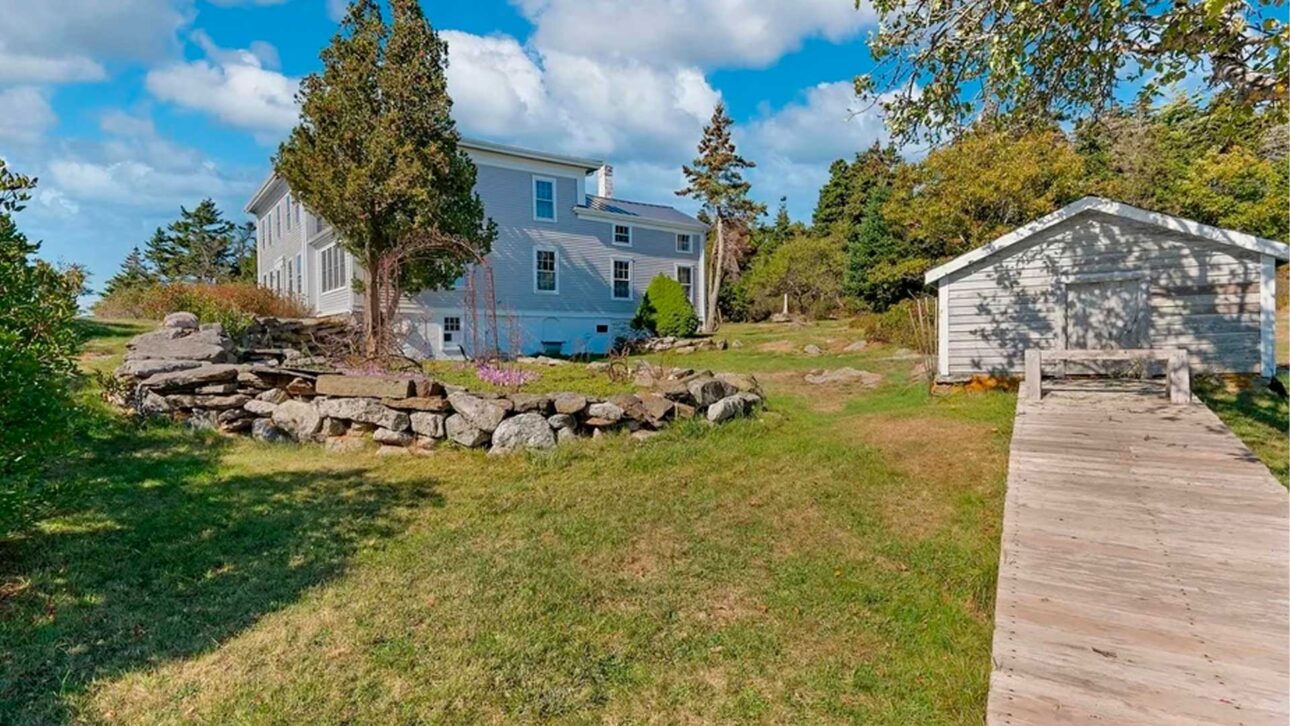
The main house was built in 1862 and is about 311 m², according to data released by real estate portals in the United States. The property features five bedrooms, three bathrooms, and spaces oriented towards the coastal landscape.
The residence preserves historical features but has received improvements over the years. As reported by Bangor Daily News, the current owners used the house seasonally and made important updates, such as improvements to the pier, roof, and water system.
One of the most symbolic points of the property is the independent art studio, an element directly linked to the memory of Stephen Etnier. For buyers interested in art, architecture, and history, this space helps differentiate the property from other luxury coastal homes.
The area also includes a boathouse, old stone structures, perennial gardens, an old orchard, seaside meadows, and trails in a wooded area. The ensemble creates an atmosphere of natural retreat, with space for walking, contemplation, and nautical activities.
Property is not just luxury, but a preserved piece of the Maine coast
The listing draws attention because the property is protected by a conservation program, according to the description of the listing echoed by Realtor.com. In practice, this means the area has restrictions and care aimed at preserving the natural environment.
This point is important because the real estate market in coastal areas of the United States has valued properties that combine exclusivity with preservation. In the case of Gilbert Head, the buyer does not just acquire a house but also the responsibility of maintaining a historically sensitive space.
The Bangor Daily News reported that the island is not entirely private, but has few residents and features conservation agreements that limit new developments. Therefore, the privacy comes less from full ownership of the island and more from isolation, restricted access, and low occupancy.
Another distinguishing feature is the location. The property is located at the southern tip of Long Island, in a visually striking position at the entrance of the Kennebec River. According to broker Poe Cilley, from Vitalius Real Estate Group, the house functions almost as a landmark for those navigating the region.
Price of $3.85 million places the property among high-standard coastal retreats
The asking price for the property is $3.85 million, about R$ 19.4 million. The conversion may vary according to the exchange rate of the day, taxes, transaction costs, and any maintenance expenses.
In the high-standard market, such properties are usually evaluated by factors that go beyond the built area. Location, privacy, historical value, water access, environmental conservation, and land rarity directly contribute to the price formation.
According to Realtor.com, the listing is under the responsibility of Poe Cilley, from Vitalius Real Estate Group. The offer highlights the former connection with Stephen Etnier, the deep-water granite pier, and the existence of access and parking on the mainland.
This last point is relevant. Even though the house is accessible by boat, the existence of mainland support reduces part of the logistical complexity, something important for buyers who wish to use the property as a seasonal home or family retreat.
Market of islands and isolated properties continues to attract buyers seeking privacy
Coastal properties with restricted access tend to attract buyers looking for privacy, contact with nature, and an experience different from urban routine. In the case of Gilbert Head, the combination of a historic house, studio, and preserved landscape increases the appeal of the listing.
The interest also follows a broader trend in the luxury market: properties with their own history tend to stand out when they offer a clear narrative. Homes of artists, architects, writers, and cultural figures often spark curiosity because they combine material heritage and memory.
Even so, this type of property requires planning. Maintenance in a coastal area, transportation by boat, preservation of the historical structure, and environmental care can raise annual costs. Therefore, the buyer profile tends to be someone willing not only to acquire but also to conserve.
In the case of the former residence of Stephen Etnier, the sale places a rare piece of the Maine coast on the market. The property combines history, art, nature, and isolation, four elements that explain why a property from 1862 continues to attract attention more than 160 years later.
Sale shows how historical properties can be valuable for the history they carry
Gilbert Head’s house does not attract attention just for the land or the view. What makes the sale more relevant is the connection between the physical space and the trajectory of Stephen Etnier, an artist whose work directly engaged with maritime landscapes.
This type of property usually occupies a particular position in the market. It is not sold just as a residence, but as a place where the landscape, architecture, and biography of the former resident blend together.
For those who follow architecture, decoration, and the luxury real estate market, the sale reinforces an interesting question: to what extent can the history of a house weigh as much as its location? In the case of this property in Maine, the answer seems to lie precisely in the combination of artistic memory and coastal rarity.
Would you pay millions to live in a historical property, isolated and accessible only by boat? Leave your comment and tell us if, for you, the connection with a famous artist adds value to a property of this type.





