






 Portuguese
  Spanish


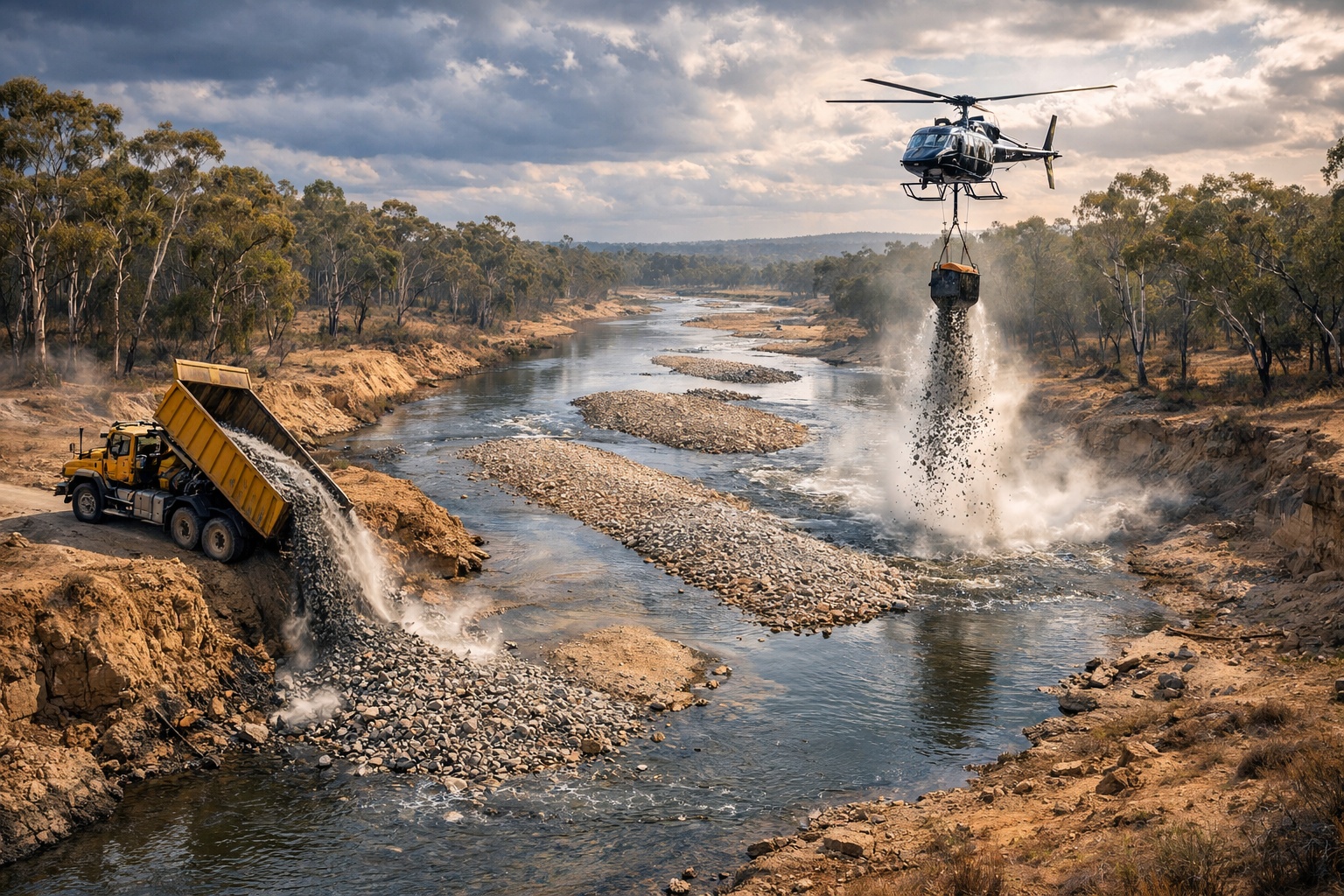


Australia Dumps Large Volumes of Gravel into Degraded Rivers to Recreate Natural Bars, Restore Spawning, and Reverse 150 Years of Erosion in the Murray-Darling.
According to reports from the Murray–Darling Basin Authority (MDBA) and the NSW Department of Primary Industries (Fisheries), much of the southeast Australian rivers have lost their natural gravel structures and have transformed, over more than a century, into deep, smooth channels that are poor in habitat. The transformation began in the late 19th century with the gold rush, which caused fine sedimentation, aggressive silting, and gravel extraction for urban works. In the 20th century, dams, dredging, and rectifications altered the hydrological regime, reduced the energy of the current, and prevented the river from moving its own sediments.
Without gravel, rivers have lost bars, backwaters, pools, and riffles, fundamental elements for native species such as trout cod, Murray cod, Macquarie perch, and river blackfish, which depend on shallow, rocky stretches for spawning, protection, and foraging.
Why Dumping Gravel Has Become an Ecological Engineering Solution
The solution adopted by Australian authorities follows an ecological concept called gravel augmentation. The logic is simple and based on fluvial geomorphology:
-
Scientists Convert Food Waste into Aviation Fuel, Successfully Test 50% Blend with Conventional Kerosene to Cut Emissions and Promote Sustainable Flights

-
OnePlus N6 Smartphone to Launch in India with 8,000mAh Battery and 45W SuperVOOC Charging, Lasting Up to Three Days
-
Scientists Plan to Release Air Bubbles Underwater to Protect Antarctica’s “Doomsday Glacier” from Melting

-
Chinese R6000 Drone Combines Airplane and Helicopter Features, Carries Up to 12 People for Multiple Missions


- Add gravel to the river
- Allow the current to redistribute the material
- Form bars, banks, and pools without concrete works
- Restore hydrodynamics and habitats without altering the main course
The goal is not “river asphalting”, but rather to reactivate the river’s role as a natural engineer. This method is documented as effective in countries such as Australia, USA, Switzerland, and Germany, especially in dammed rivers or those with sediment deficits.
The Scale of the Project in the Murray-Darling
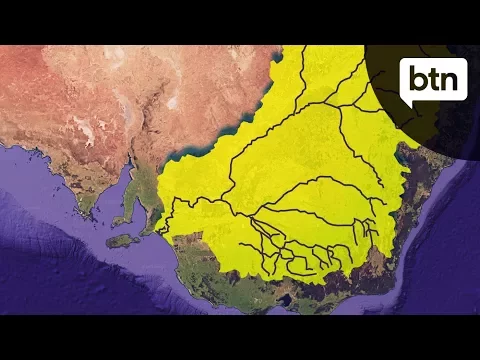

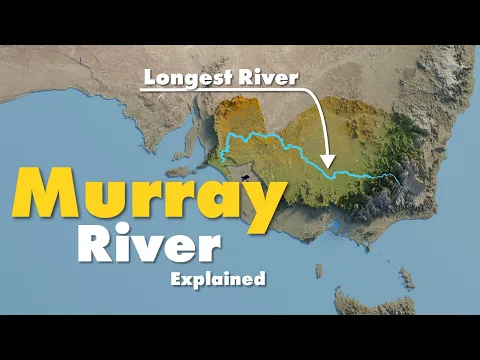
The Murray-Darling Basin is the largest hydrological system in Australia, covering over one million km², with about 40% of the country’s agricultural production depending directly or indirectly on its water and soil.
Within it, the gravel augmentation program focuses on stretches of rivers:
- Murray
- Ovens
- Goulburn
- King
- Mittagong/Central Highlands
In stretches such as the Lower Ovens River, documents from the Victorian Environmental Water Holder (VEWH) and the North East Catchment Management Authority (NECMA) report that hundreds of thousands of tons of gravel have been mobilized since the 2000s to reconstruct critical bars and riffles for native fish.
These structures are formed by calibrated mixtures of:
- pebbles
- gravel
- coarse sand
- material moved by the river
The exact volume varies by stretch and year, but environmental reports indicate annual values that can exceed tens of thousands of cubic meters, totaling hundreds of thousands over complete cycles.
How the Project Is Executed in Practice
The Australian method adopts three main steps:
Extraction and Sorting of Material
The gravel does not come from industrial crushing but from riverine deposits, secondary channels, or nearby quarries, to maintain granularity and shape similar to natural.
Transport to the River
The transport involves:
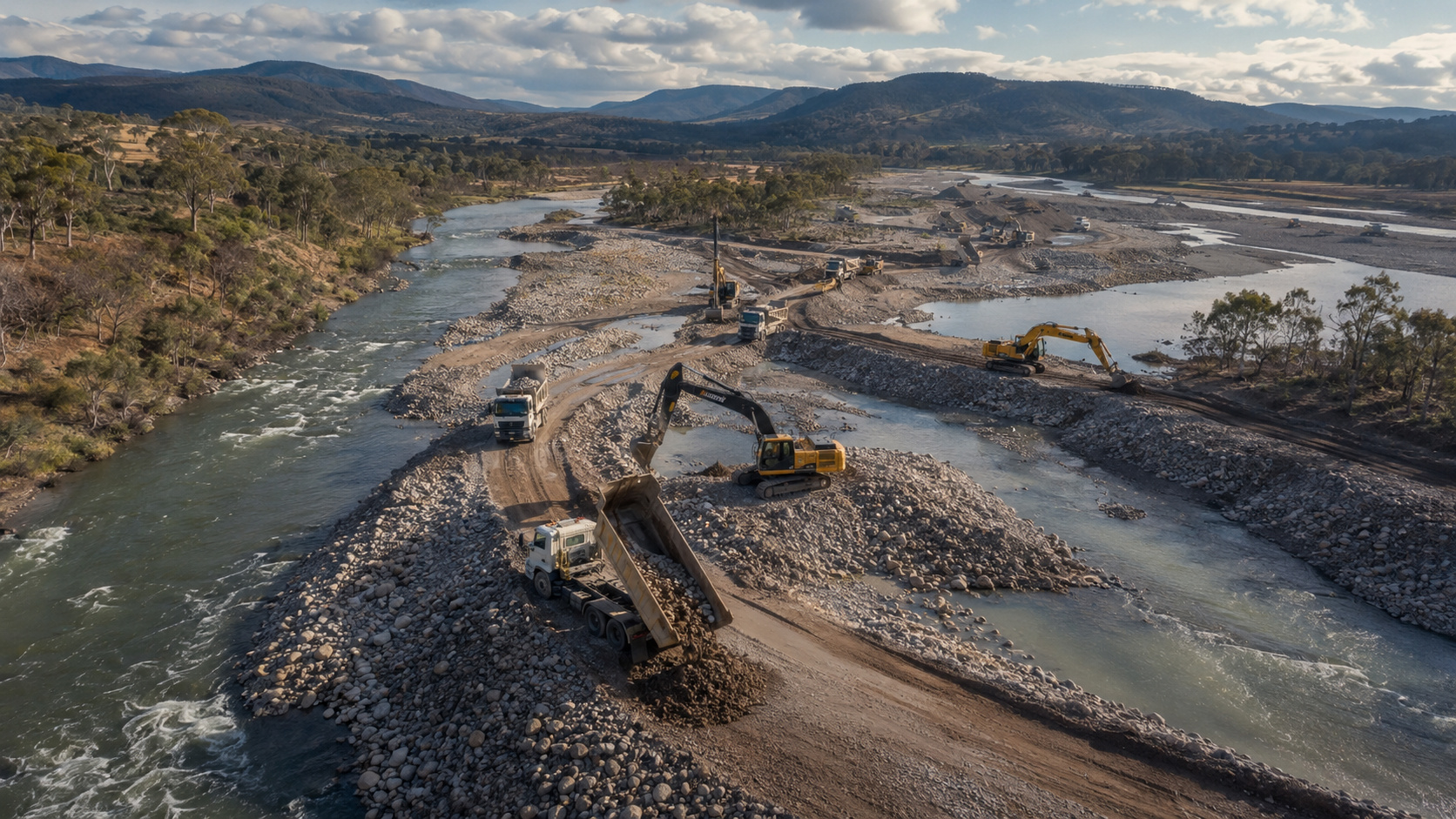
- dumper trucks
- tractors
- loaders
- excavators
that dump the material directly on the banks or in exposed beds.
Redistribution by the Current
The work does not attempt to “model the river”. The river does the geomorphological work:
- carries part of the gravel
- deposits it in low-energy points
- creates bars, riffles, and rapids
This is applied geomorphology: the river rebuilds itself when it receives missing inputs.
Why This Improves the Lives of Fish
Native species from southeast Australia are adapted to coarse and mobile substrates, which are rare in rivers impoverished by fine sediments and erosion.
The most cited benefits in technical reports include:
Spawning
Fish such as Murray cod use gravels and crevices to protect eggs and fry from flow and predators.
Shelter
Rocks create physical complexity for:
- hiding embryos
- reducing predation
- protecting juveniles from extreme currents
Foods
Benthic insects recolonize rocky areas, forming the trophic base for fish.
Temperature
Water passing through riffles increases oxygenation and reduces stagnation zones.
Sedimentation
Gravel barriers fine sediments and reduces siltation.
Monitoring results in restored stretches of the Ovens and Goulburn have shown increases in:
- habitat structure
- benthic diversity
- use of restored areas by native fish
especially during periods of higher flow.
The Goal Is to Reverse a Century and a Half of Erosion
The Australian literature refers to this phenomenon as “sediment starvation + channel incision”. The channel becomes deep, straight, smooth, and biologically poor.
The institutional goal of the program is not aesthetic, but rather to:
- recreate river complexity
- increase ecological resilience
- reconnect margins and floodplains
- reduce erosion and fine sediments
- recover threatened species
This is a global movement: what decades of hydraulic engineering have erased, now ecological engineering tries to rebuild.
Restoration Is Not Dam: It Is Nature Engineering
The Australian logic moves away from the traditional model of containment, dredging, and channelization. Instead of disciplining the river, the goal is to restore lost natural mechanisms.
This transforms gravel into ecological infrastructure.
Instead of concrete, it uses:
- hydraulic forces
- geomorphology
- hydrological cycles
- species behavior
This is an epistemological shift: engineering begins to mediate the river, not replace it.
The Australian case shows that restoring a river is not just planting trees on the banks and waiting for miracles. Sometimes it is necessary to replace the river’s physical raw material — which, in the Murray-Darling, means industrial-scale gravel.
The image of trucks dumping hundreds of thousands of tons of material in the bed is visually striking and at the same time scientifically grounded.
What should be a symbol of destruction — machines, dump trucks, excavators — becomes an instrument of geomorphological restoration, returning to the river its ability to sculpt itself. It is engineering, but it is also an ecosystem.





Qué quieren que les diga. Creo que el desequilibrio que produce el hombre con sus acciones sin pensar en las consecuencias es algo irrecuperable.
Me parece importante que ésta técnica de restaurar los ríos, también debe aplicarse a quebradas y todo el ecosistema que el ser humano en diferentes partes del planeta a destruido a través del tiempo; con el afán de buscar oro y piedras preciosas, para satisfacer la vanidad y el poder del dinero. Destruir el ecosistema es una tarea fácil; reconstruirlo es mucho más costoso y no todos los países tienen esa conciencia. Yo he comenzado la tarea de hacer una ” Joyería contemporánea de madera” , para concientizar el hecho de que ella es amigable con el medio ambiente, más hermosa, más natural y muchísimo más restaurativa que debería contar con el apoyo estatal de todas las naciones. Mis felicitaciones a Australia por ser ejemplo digno de seguir; aunque lo verdaderamente importante sería la prohibición tajante de la minería en todo el planeta.
Lleven castores a la zona, son los mejores ingenieros, saben dónde, cómo, ****ándo y ****ánto hay que hacer.