Portuguese
  Spanish


Understand how regulation impacts the daily use of these vehicles, what the permitted limits are, the legal requirements, and what you need to know to avoid fines and circulate safely
With the accelerated growth of electric mobility in Brazil, many questions have arisen among users of electric bicycles, mopeds, and self-propelled vehicles. After all, can they circulate on sidewalks? What is the speed limit? Do you need a driver’s license? These questions have become increasingly common as these vehicles gain space in cities.
Given this scenario, new rules have been established to organize the use of these means of transport and ensure greater safety in traffic. The information was disclosed by “g1”, which detailed the main changes and provided important clarifications for users.
Furthermore, the regulation seeks to clearly differentiate each type of vehicle, which facilitates inspection and avoids misinterpretations. Therefore, understanding these rules is essential for anyone who already uses or intends to acquire one of these vehicles.
-
Piauí Governor Enacts Law Requiring State Contractors to Reserve Jobs for Former Inmates with Minimum Wage and Verification Before Payment

-
Providing Your Tax ID at Supermarkets: A Routine Step That Can Unlock Discounts and Rewards but Also Reveals Your Shopping Habits

-
Germany Changes Noise Regulations, Extending Quiet Hours Beyond 10 PM
-
Judge Labels Noise as “True Torture,” Orders Neighbor to Pay $3,800 After Sounds Worsen Autistic Teen’s Condition



Difference between electric bicycle, moped, and self-propelled vehicle
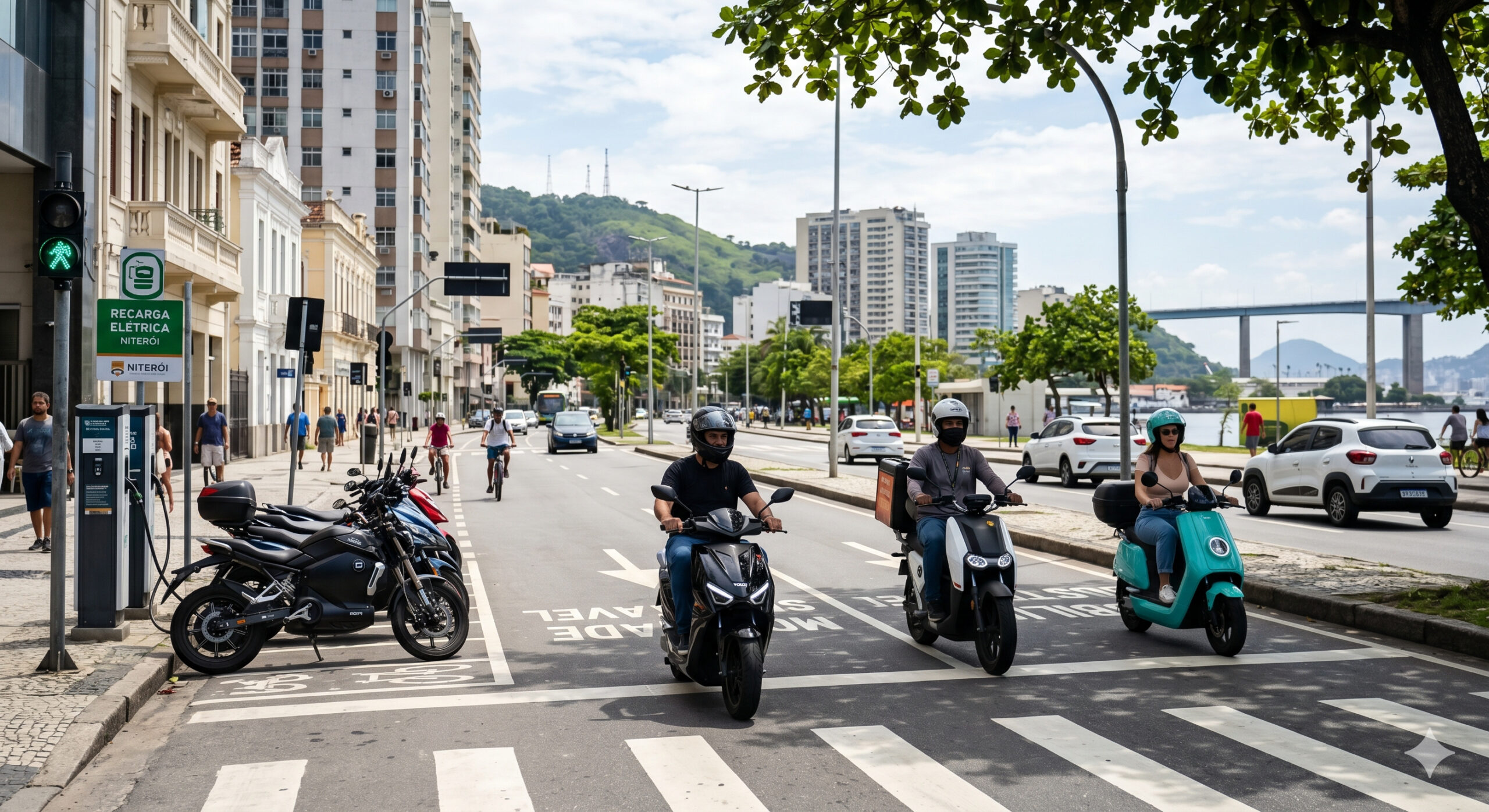
First of all, it is fundamental to understand the differences between the main types of electric vehicles. This is because each category has specific circulation rules, legal requirements, and technical limits.
The so-called self-propelled vehicles are those that have their own propulsion system. They must have one or more wheels, an accelerator, and a motor with a maximum power of up to 1000 W (one thousand watts). In addition, the maximum manufacturing speed cannot exceed 32 km/h, the width must be up to 70 cm, and the wheelbase cannot exceed 130 cm.
This group includes electric scooters, electric skateboards, hoverboards, motorized unicycles, and even bicycles with accelerators.
On the other hand, electric bicycles have pedal assist and do not have an accelerator. That is, the motor only works when the user pedals. In addition, they also follow the limit of 32 km/h and power of up to 1000 W.
Meanwhile, mopeds are more robust vehicles. They do not have pedals, have an accelerator, and can reach up to 50 km/h, with a maximum power of 4 kW (four kilowatts). Precisely for this reason, they have stricter rules.
Where each vehicle can circulate and what the speed limits are

Now that the differences are clear, the main question arises: where can these vehicles circulate?
Electric bicycles and self-propelled vehicles can travel on sidewalks, bike paths, and urban roads, as long as they respect local rules. However, there is an important detail: when circulating on sidewalks, the speed limit is only 6 km/h, ensuring pedestrian safety.
In addition, these vehicles can also circulate on streets with a regulated maximum speed of up to 40 km/h, which greatly expands their use in the urban environment.
On the other hand, mopeds cannot circulate on sidewalks or bike paths. They must travel exclusively on streets, respecting roads with a limit of up to 40 km/h. Furthermore, they also cannot circulate on expressways.
Another relevant point is that these rules can be adjusted by city halls. Therefore, it is always important to check local legislation to avoid problems.
Legal requirements, mandatory equipment, and penalties
In addition to circulation rules, legal requirements also vary according to the type of vehicle.
Mopeds, for example, require license plates, registration, and driver’s licenses. The driver must have a Category A license or specific authorization. Additionally, the deadline for regularization was until the end of 2025 for those who already own the vehicle.
Electric bicycles and self-propelled vehicles, on the other hand, do not require a driver’s license, registration, or license plates, which facilitates access and popularization of these means of transport.
Regarding mandatory equipment, mopeds must have:
- electronic speed limiter
- bell
- front, rear, and side night signaling
Furthermore, helmet use is mandatory for both driver and passenger.
On the other hand, electric bicycles must have:
- speed limiter
- bell
- front, rear, side, and pedal night signaling
- left rearview mirror
- tires in good condition
It is worth noting that the speedometer can be replaced by mobile applications.
Finally, those who fail to comply with the rules will be subject to the penalties provided for in the Brazilian Traffic Code, ranging from medium to very serious infractions, in addition to fines.
Do you think these new rules help or hinder the daily use of electric bicycles?