






 Portuguese
  Spanish


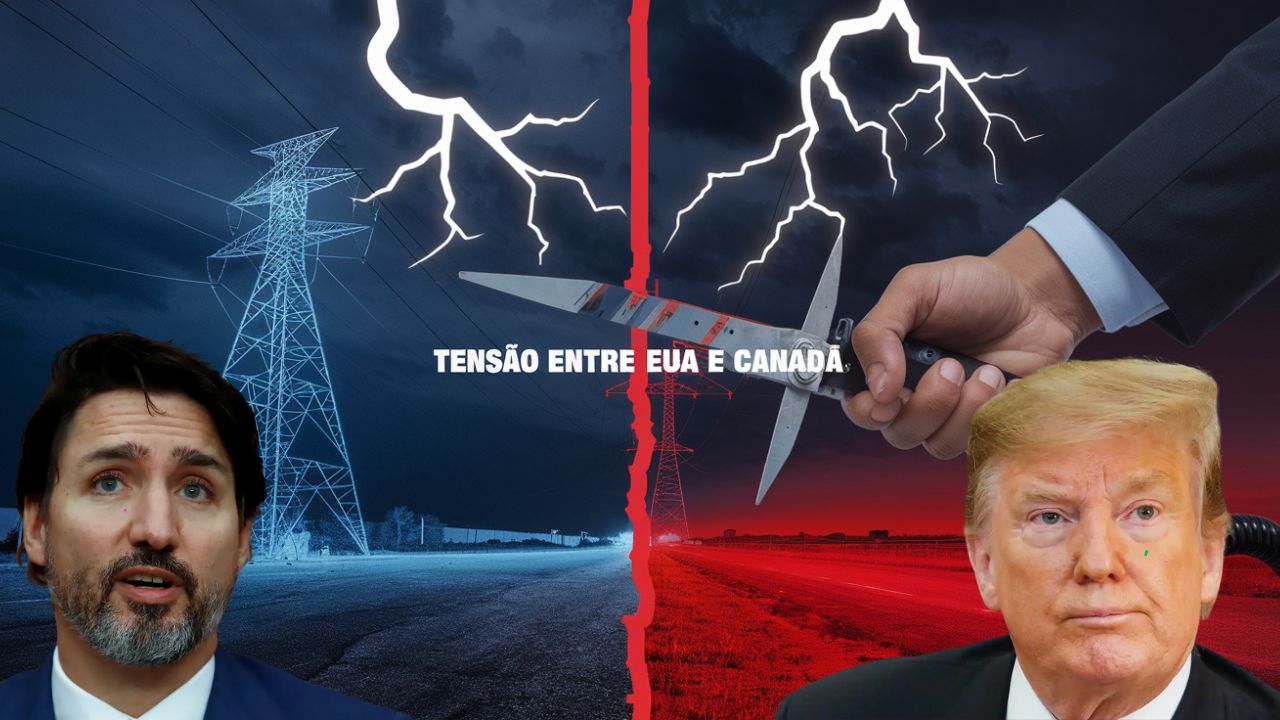


In an unexpected turn, Canada is ready to cut energy supplied to the United States if Donald Trump decides to impose drastic tariffs at the border. Tension between Canada and the US increases after stinging statements by Doug Ford, Premier of Ontario.
In a move that could shake the North American economy, Canada has declared that it is prepared to cut up to 85% of the energy supplied to the US if former President Donald Trump proceeds with imposing a 25% tariff on all Canadian products. This threat comes in response to Trump’s statements about implementing comprehensive taxes aimed at pressuring the reduction of migrant and drug flow at the border.
Serious Threat: Energy Cuts at Stake
Doug Ford, Premier of Ontario and leader of the opposition Conservative Party, stated that Canada’s largest province will not hesitate to use energy as a retaliation tool. “We will make our list and I am sure that the other provinces will do the same. But we will go all the way, depending on how far this goes. We will get to the point of cutting off their energy,” Ford stated after a meeting with Prime Minister Justin Trudeau and other provincial counterparts.
The Canadian threat is particularly serious considering that 60% of US crude oil imports come from Canada, and an impressive 85% of American electricity imports are also supplied by the northern neighbor. Approximately CAD 3.6 billion in goods and services cross the border daily, becoming an essential pillar of trade between the two countries.
-
Owner of Havan Visits Paraguay to Discuss Lower Taxes, Local Suppliers, and International Expansion with President

-
Brazilian Construction Retail Chain Closes After 60 Years, Begins Liquidation Sale Across Five Cities

-
Brazil Approves Landmark Bill Requiring Workplace Adaptations for Autism Inclusion

-
Brazil’s Micro-Entrepreneur Program May See Major Changes: Income Cap Could Increase to R$ 130,000, Annual Inflation Adjustments, and Allow Hiring of an Additional Employee



Economic Impact and Global Responses
Grace Lee, Ford’s spokesperson, highlighted that Ontario supplied 1.5 million households in the US in 2023 and is a major energy exporter to states like Michigan, Minnesota, and New York. “We will use every tool in our toolbox to fight back. We cannot sit by and roll over. We simply will not do that as a country,” Ford emphasized.
The US response has not been clear yet, with Trump’s transition team not immediately commenting on the Canadian threat to cut energy. Meanwhile, the Canadian government, led by Justin Trudeau, warned that the tariffs would be “absolutely devastating” for Canada’s economy and would bring significant hardships for Americans, including increases in the prices of food, clothing, automobiles, and other essential goods.
Economists are already signaling that the 25% tariffs will likely be passed on to consumers, exacerbating inflation and affecting millions of Americans. The Association of Distributors of Products in Washington warned that prices for fresh fruits, vegetables, and other essential products would see substantial increases, especially harming US farmers.
Besides the economic implications, the energy dispute between Canada and the US highlights the complex interdependence between the two countries, which together facilitate about CAD 3.6 billion in daily trade. Any interruption in energy supply could have far-reaching repercussions, affecting everything from households to large industries in the US.
With negotiations still uncertain and the possibility of escalation still present, energy remains at the center of one of the tensest trade relations between Canada and the US in recent years. The unfolding of this crisis will determine not only the future of bilateral relations but also the well-being of millions of consumers and businesses on both sides of the border.


