Portuguese
  Spanish


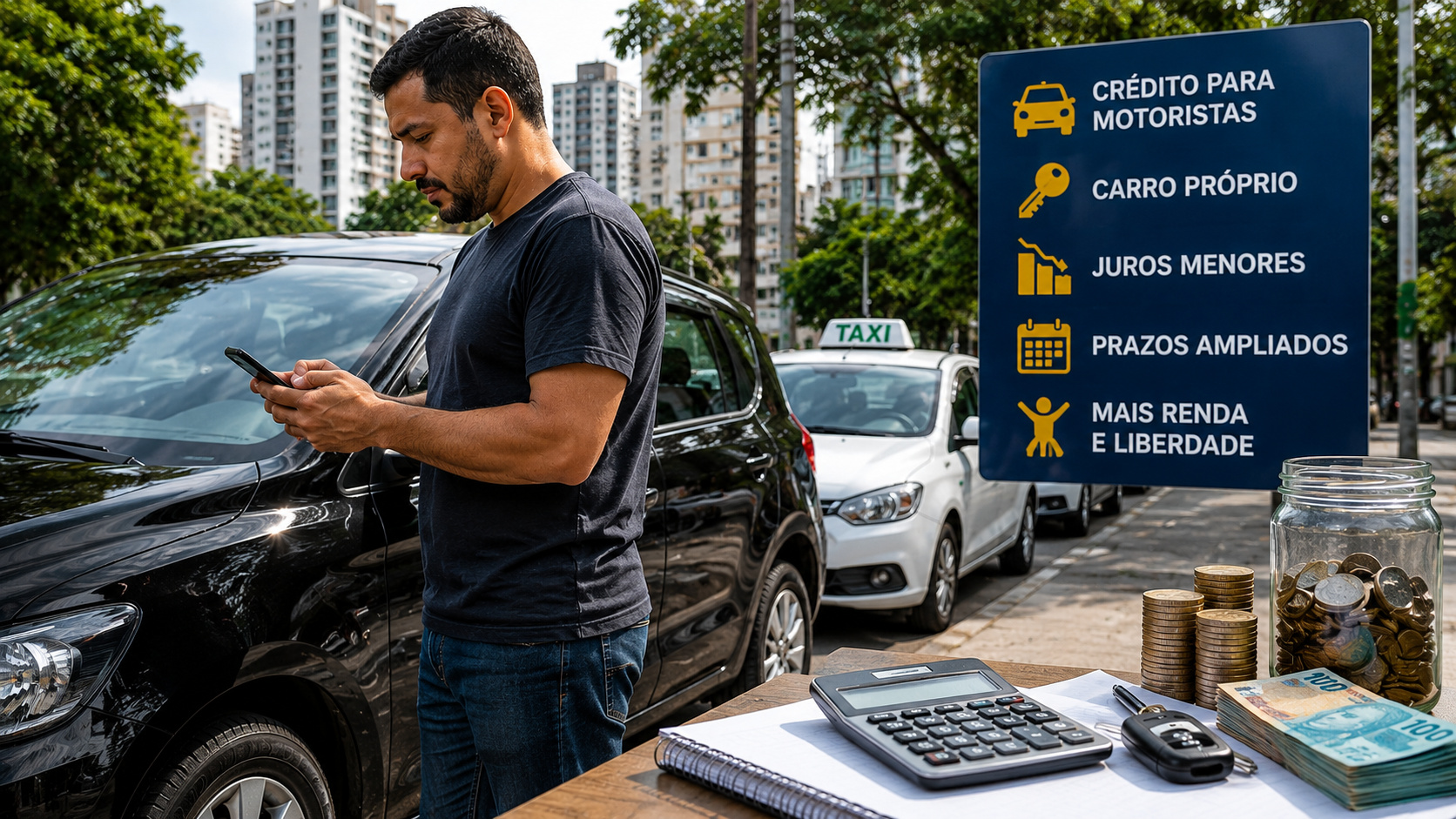

New financing line announced by the federal government promises to facilitate the purchase of own cars for Uber, 99 drivers and taxi drivers, while seeking to reduce the impact of vehicle rental, increase the monthly income of professionals, and transform the routine of thousands of workers who daily depend on app-based transport and taxi services to support their families throughout Brazil
The federal government is preparing a new credit line aimed at Uber, 99 drivers and also taxi drivers.
The initiative was announced in May 2026 by the Minister of the General Secretariat of the Presidency, Guilherme Boulos, during an interview with EBC’s Bom Dia, Ministro program.
According to the government, the objective is to allow these professionals to purchase their own vehicles under more accessible conditions.
-
Brazil’s 2026 Tax Refund: Record 9.58 Million Filers in Largest Payout Ever, But a Key Detail on Priority Recipients Draws Nationwide Attention

-
Itaú Alters Hybrid Work Model, Increasing Office Days from 2028, Prompting Employees to Adjust to New Routine
-
Facing Labor Shortage, Japan Plans to Invest $34 Million to Attract Foreign Workers in Construction, Healthcare, Industry, and Commerce

-
Brazilian City Makes Remarkable Leap, Becomes 4th Wealthiest in the Country with GDP of R$ 134.1 Billion




With this, the proposal seeks to reduce dependence on rented cars, one of the main costs faced by many workers in the sector.
Financing targets app drivers and taxi drivers
The new program is expected to serve thousands of drivers across Brazil.
As Guilherme Boulos stated, the credit line was designed for workers who daily depend on their car to generate income.
Currently, many drivers operate under strong financial pressure caused by vehicle rental.
Consequently, by buying their own car, the driver can reduce fixed expenses and increase the amount that remains at the end of the month.
Model follows Move Brasil’s experience
The new financing line was inspired by the Move Brasil program.
Launched by the federal government in January 2026, Move Brasil made R$ 10 billion available in credit for the renewal of the truck fleet.
According to information from BNDES and the Ministry of Development, Industry, Commerce and Services, the program moved thousands of operations in a short time.
In this way, the government intends to apply similar logic to individual transport, with lower interest rates and longer terms.

Lower interest rates and extended terms should weigh on the decision
Among the main expected points are more flexible payment conditions.
At the same time, the financing should offer reduced interest rates, precisely to facilitate the purchase of vehicles by self-employed professionals.
Still, the final access criteria have not yet been detailed.
The government is expected to inform, in the coming days, which documents, requirements, and steps will be necessary to apply for the credit.
Program could change the routine of those who make a living driving
With more drivers owning their own cars, the government expects a positive impact on the transport sector.
Similarly, the measure could improve the financial stability of professionals who currently depend on rental companies.
The Minister of Labor and Employment, Luiz Marinho, is also following the discussions about the program’s rules.
Therefore, the expectation is that the details will be released in the first half of 2026.
What could this credit mean for drivers?
For app drivers and taxi drivers, buying their own car can mean more control over their earnings.
Meanwhile, the government bets that the measure will help strengthen a category increasingly present in Brazilian urban mobility.
After all, with lower interest rates, longer terms, and a focus on those who work every day in traffic, can this financing ease the burden on Uber, 99, and taxi drivers?