






 Portuguese
  Spanish


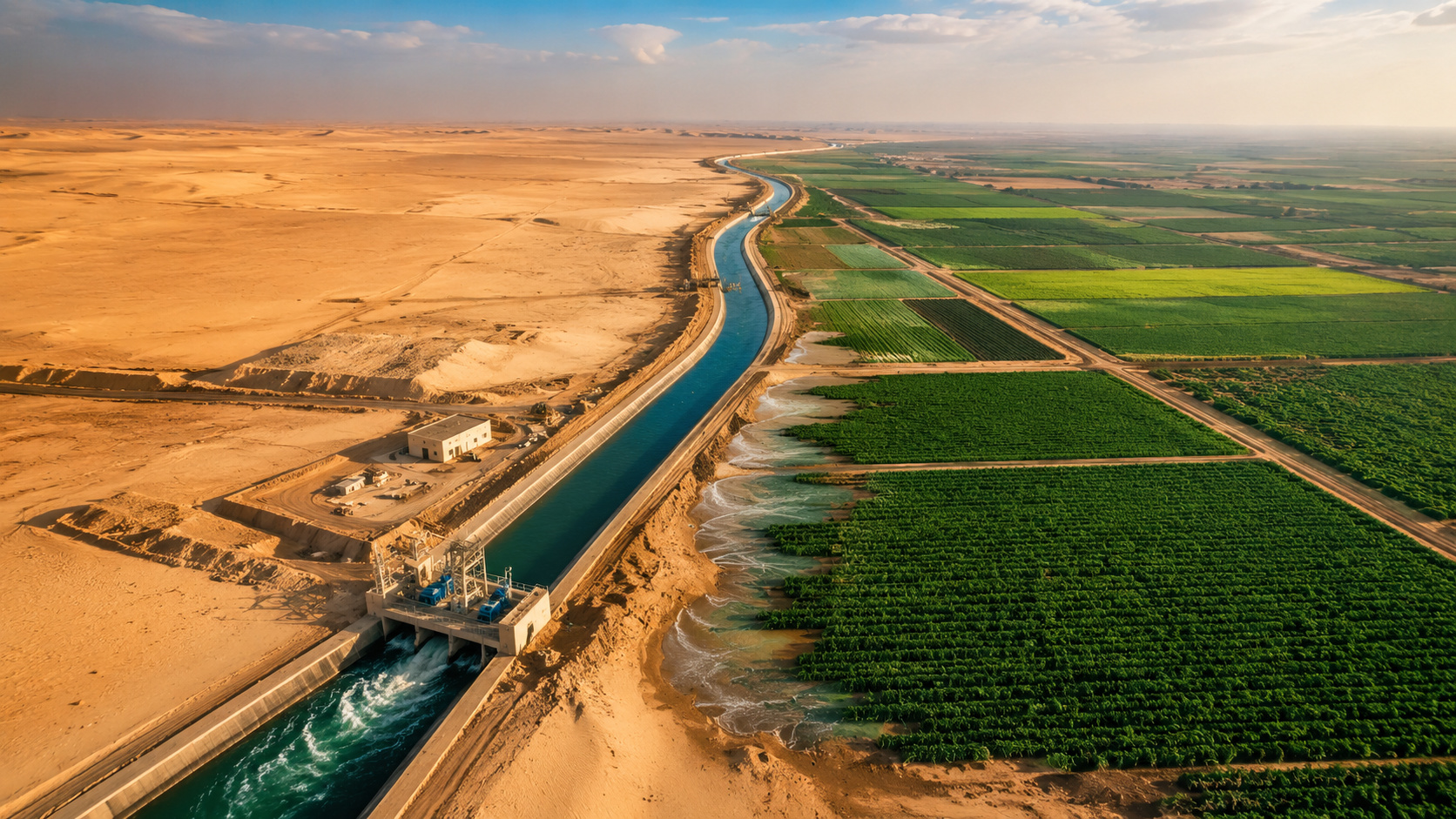


The new artificial river in the desert has become one of Egypt’s boldest bets to expand crops, strengthen food security, and reduce pressure on food, but the use of water in dry areas raises doubts about waste, public cost, and real return for the population
Egypt wants to turn sand into farmland with a new artificial river in the desert, bringing water to dry areas through large irrigation projects.
The investigation was published by The Guardian, a British newspaper. The project involves food security, pressure on water resources, public costs, and doubts about the real benefit for those who feel the burden of food prices.
The promise is to create green fields where the desert once predominated. The criticism is direct: in the Nile Valley, water can be used multiple times in the agricultural system. In the desert, some of it can disappear into the soil before returning to the productive cycle.
-
Billionaire says the most valuable skill will help overcome job elimination caused by AI, following Bill Gates’ fears

-
A Dutchman created a ‘box’ that makes trees grow in the desert almost without water and without irrigation: the invention has already brought seedlings to dozens of countries and achieves up to 90% survival where common planting did not exceed 10%.

-
Abandoned warehouse hid a giant collection of rare computers, with over 2,000 artifacts from the 1930s to the 1980s.
-
Scientists warn that melting ice is triggering an alarming chemical transformation in preserved areas, and the first signs are already concerning researchers worldwide.




New artificial river in the desert puts water, food, and public money at the center of the dispute
The river project, Future of Egypt/New Delta, aims to expand agricultural areas in the western desert. The idea is to bring water to dry regions and make space for new crops.
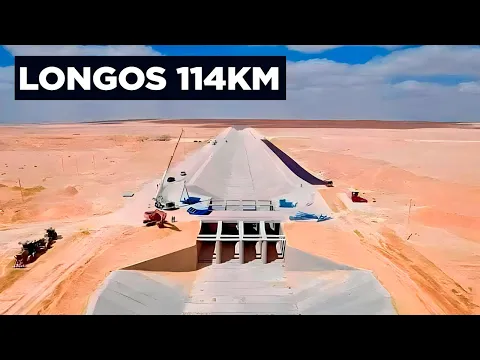

This type of project draws attention because it changes the landscape and creates a strong image of modernization. Where there was sand, irrigated areas prepared for agricultural production now appear.
But the central question remains open. Transforming desert into planting area requires constant water, heavy infrastructure, and soil capable of sustaining production. For this reason, the new artificial river in the desert has become a symbol of an ambitious and controversial gamble.
Water may not return to the system as it does in the Nile Valley
In the Nile Valley, water used in agriculture can circulate through canals, fields, and nearby areas, being reused throughout the system. This dynamic helps reduce losses and improves resource use.
In the desert, the scenario is different. Water can infiltrate dry soil and not return to the productive cycle in the same way. This is one of the most sensitive points of the debate.
The risk is not just in taking water far away. The problem is spending an essential resource in areas where production may require much more effort. In a country pressured by food demand, every lost drop matters.
The Guardian, British newspaper, registered doubts about productivity, salinization, and social return
The Guardian, British newspaper, brought expert criticism on productivity, salinization, and real benefit for the poorest population.
Salinization is when the soil becomes loaded with salts. In simple terms, water helps to irrigate, but it can also leave residues in the soil. Over time, this can harm plants and reduce production capacity.
This risk is significant in desert areas because the soil already has low natural fertility. Thus, the project needs to prove that it can generate food efficiently, without turning expensive water into unproductive farmland.
Future of Egypt/New Delta tries to respond to pressure for food security
Food security is one of the plan’s main justifications. Egypt seeks to expand agricultural production and reduce vulnerability in the face of rising food prices.
The idea seems simple: produce more food within the country itself. However, the chosen path raises doubts. Planting in the desert can be expensive, require a lot of water, and not guarantee cheaper food for the population.
Therefore, the debate goes beyond engineering. The central point is whether the Future of Egypt/New Delta improves people’s lives or merely creates a high-cost green showcase.
NASA Earth Observatory showed by satellite the advance of agricultural areas in the desert
NASA Earth Observatory, the American space agency’s observatory, recorded by satellite the visible advance of agricultural areas linked to the project. The images show the physical change in regions previously marked by the desert.
This record helps to understand the dimension of the transformation. Irrigated fields emerge in dry areas and create a powerful image of nature’s control.
But the green landscape does not end the discussion. The main issue remains efficiency. The project needs to show if the water used there generates sufficient production and if this production helps to relieve pressure on food.
Artificial river impresses, but doesn’t eliminate doubts about cost and efficiency
The artificial river is the element that draws the most attention. It represents the attempt to bring water to a region where nature did not create an aquifer.
The work impresses with its scale and visual impact. At the same time, it concentrates criticism on public cost, use of water resources, and investment priorities.
There is also debate about the role of the Armed Forces in the economy. The project involves power, infrastructure, and agricultural production, themes that make the discussion even more sensitive in Egypt.
The promise of cheap food depends on more than planting in the desert
Creating new agricultural areas can help a country produce more. However, greater production does not automatically mean cheaper food for the population.
For this to happen, farming needs to be efficient, water needs to be well used, and the benefits need to reach the domestic market. Without these points, the new artificial river in the desert could become an impressive work, but limited in social outcome.
Egypt’s case shows an increasingly common dilemma: how to produce food in a world with more contested water, pressured soils, and governments seeking quick answers.
Egypt is betting on engineering, irrigation, and large-scale works to transform sand into farmland. The question is whether this bet will strengthen food security or increase pressure on an already essential resource.
Do you think it’s worth risking scarce water to create farms in the desert, if the promise is to produce more food, or could this type of project cost too much to deliver little?





الغرب لا يرغب ان تنتج مصر غذائها
Egypt can use Chlorella algae to recover the land. Bioremediation