






 Portuguese
  Spanish


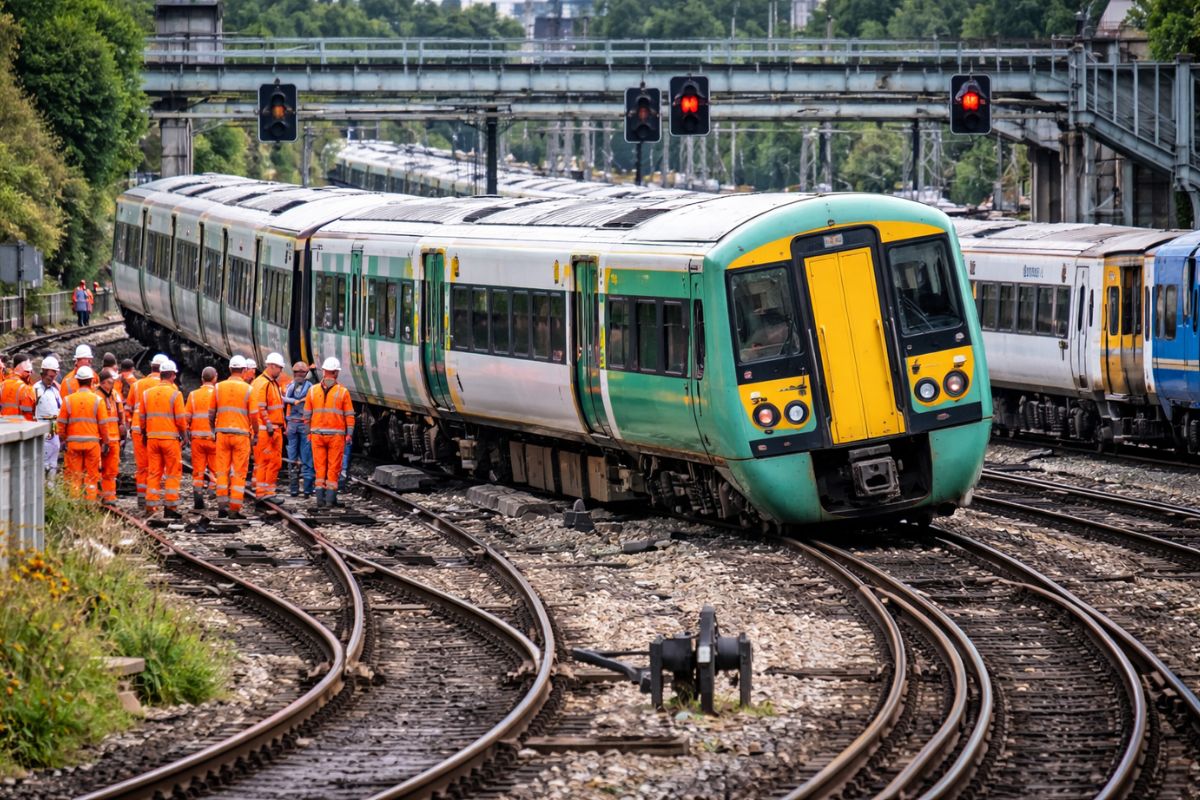

Railway Chaos in the United Kingdom: Derailment and Signal Failure Disrupt Southern, Thameslink and Gatwick Express Services. Check Affected Routes and the “Do Not Travel” Alert
Wednesday morning (4) began with a paralyzed scene for thousands of passengers in the United Kingdom. Govia Thameslink Railway (GTR), the country’s main train operator, issued a severe “do not travel” warning after a succession of critical incidents, such as the derailment of a train affecting the networks of Southern, Thameslink, and Gatwick Express.
Railway Chaos: Train Derailment and Failures Stop Southeast England
The logistical chaos was caused by two simultaneous issues. First, a Southern train derailed within the Selhurst depot in southeast London. Although Network Rail confirmed that the train remained upright and there were no injuries, the accident physically blocked the exit of dozens of other trains from the yard. In practice, this drastically reduced the operational capacity of the lines serving the capital and the south coast.
Simultaneously, a systemic signaling failure between Norwood Junction and London Blackfriars forced the interruption of several main routes. The trains that were able to run had to travel at reduced speeds for safety, resulting in accumulated delays that exceeded 90 minutes during peak hours.
-
Real Estate Agent Buys Marvel Movie Subway Car for $5,000 and Converts It into Themed Airbnb
-
Real Estate Agent Buys Marvel Movie Subway Car for $5,000 and Converts It into Themed Airbnb
-
Former Roma and Fiorentina Player Filipe Gomes Returns to Brazil to Found Empório do Galeto, Aiming for $10 Million Revenue by 2026
-
Canada Builds 6.2-Hectare Containment Box to Trap 615,000 Cubic Meters of Toxic Sediment in Lake Ontario


Suspended Routes
The list of services suspended “until further notice” includes vital connections for trade and tourism:
- London Bridge to East Grinstead
- Brighton to Cambridge
- Bedford to Three Bridges
- Orpington to Luton
For those relying on Gatwick Express to reach the airport, authorities advise adding at least an extra hour to the scheduled travel time, as the network is operating under a funnel of heavy traffic and last-minute cancellations.
The End of the Private Era and the Transition to GBR
This new collapse in infrastructure, like the train derailment, occurs at a moment of historic political transition. The British government is in the final stages of nationalizing operators under the banner of Great British Railways (GBR). Just last weekend, West Midlands Trains transitioned to state control, and GTR is next in line, scheduled to be taken over by the public sector on May 31, 2026.
GTR currently carries about 18% of all passengers in the country. Critics of the current system argue that the private franchise model has failed to ensure the necessary investment in maintenance, while supporters of nationalization hope that the new unified management of GBR will be able to better coordinate the operation of tracks and trains to prevent an isolated derailment in a depot from paralyzing the entire southeast of the country.
Network Rail and GTR have publicly apologized but warned that disruptions are expected to extend throughout the day as technical teams work on re-railing the train in Selhurst and repairing the digital signaling systems.
Public Transport, United Kingdom, Railway Crisis, Urban Mobility, GTR






