Portuguese
  Spanish


Hamilton Port used environmental dredging and a containment structure to isolate contaminated sediments in Lake Ontario. The 6.2-hectare box received 615 thousand cubic meters of toxic sludge. The final cover of the work is scheduled for 2027. The project shows how old industrial pollution requires long and careful solutions.
Canada built a 6.2-hectare engineering box within Hamilton Port, in Lake Ontario, to contain 615 thousand cubic meters of contaminated sediments. The toxic sludge accumulated at the bottom of the water after decades of industrial pollution.
The problem was not visible on the surface. The contamination was mixed with the sludge and sand at the port’s bed, where the material could spread if removed without control. Randle Reef, the portal of the port’s decontamination project, outlined the steps used to trap this pollution within a closed area.
The work began in 2015 and has already completed the sediment containment phase. The final environmental cover is still scheduled for 2027, meaning the site’s recovery is ongoing.
-
NASA Plans Telescope That Can Be Repaired by Robots 1.5 Million Kilometers from Earth
-
U.S. City Faces Dilemma as Study Warns of Sinking Land and Rising Seas: Invest in Flood Defenses, Restore Wetlands, or Relocate?

-
4,000-Year-Old Stone Towers Discovered Across Sardinia, Puzzling Archaeologists About This Mysterious Civilization
-
8-Year-Old Finds 900-Year-Old Viking Bronze Buckle on Swedish Beach While Fossil Hunting

The contaminated sludge remained hidden at the bottom of Hamilton Port for decades
What needed to be treated was not floating garbage. Contaminated sediments are sludge, sand, and small particles accumulated at the bottom, capable of holding industrial residues for many years.
In Randle Reef, the pollution formed from industrial activities that began in the 19th century. The area contains toxic compounds called polycyclic aromatic hydrocarbons, linked to health risks and water quality issues.
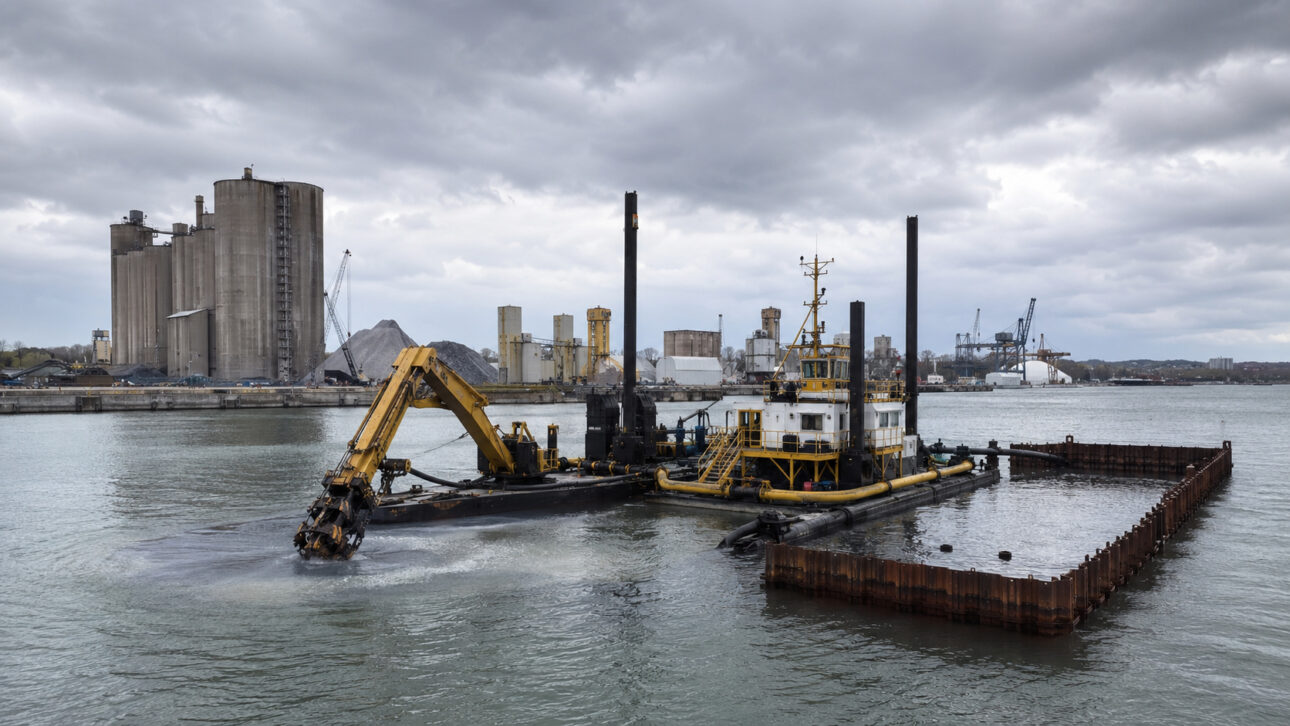
Handling this type of sludge requires care. When the bottom is disturbed, the particles can return to the water and reach other parts of the port. Therefore, the Canadian project did not treat the dredging as a common land removal.
A 6.2-hectare box was assembled in the water to contain industrial pollution
The first stage created a submerged containment structure over the most contaminated area of the port. It functions like a large vault built on the waterbed itself, designed to keep the hazardous sludge in a confined space.
The structure received two steel walls and was formed by 3,400 steel beams, ranging from 23 to 33 meters in size. The pieces were driven into the bed to form a barrier capable of holding the contaminated sediments.
The solution avoided the direct removal of the most hazardous sludge. Instead of moving this material elsewhere, engineering sealed the area where it was already accumulated and created space to receive sediment removed from neighboring parts.
Environmental dredging in Lake Ontario had a different purpose than common dredging
Environmental dredging is the controlled removal of material from the waterbed to prevent or reduce pollution. It differs from dredging used to deepen channels and facilitate ship passage.
In the Port of Hamilton, the contaminated sediments surrounding the structure were removed and placed inside the containment box. The work aimed to reduce the risk of spreading toxic sludge through the water during cleaning.
Part of the material that remained outside the box received an isolation cover. This layer creates a separation between the contaminated sludge and the water, reducing the chance of direct contact.
615,000 cubic meters of contaminated sediments underwent environmental control
Randle Reef, the portal of the port’s decontamination project, detailed that the 615,000 cubic meters of contaminated sediments received different solutions within the Randle Reef area. The volume includes sludge that was already on site and material removed from nearby areas.
The containment structure received the majority of the treated sediment. The dredging stage around the box was also completed, and the remaining contaminated material outside it underwent isolation on the port’s bed itself.
The result does not mean that the sludge disappeared. It was contained and separated from the water, which is precisely the goal of an environmental project of this type.
Final cover planned for 2027 still completes the area’s recovery
The last stage of the project foresees an environmental cover formed by several layers over the engineering box. This protection reinforces the isolation of the sediments and helps prevent the sludge from coming back into contact with the water.
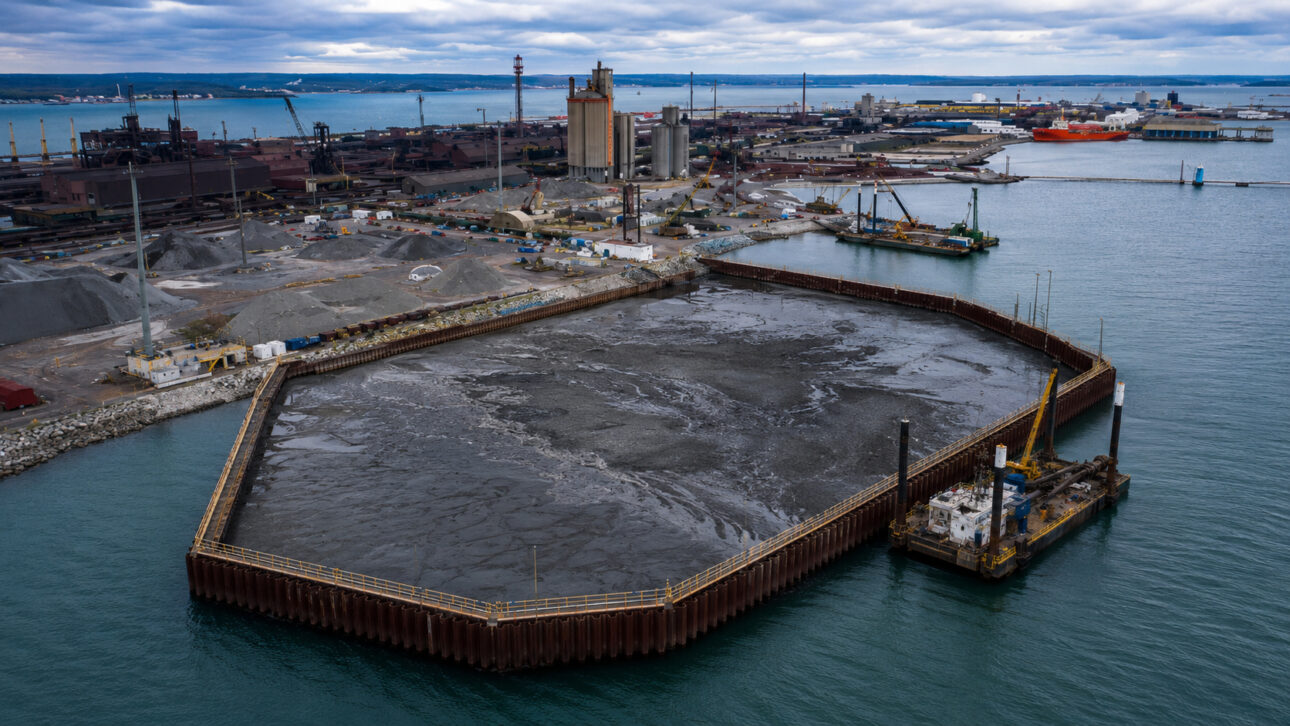
The final coverage is scheduled to be completed in 2027. Structural adjustments are still needed to support this phase of the work, which concludes the physical recovery of the area.
After completion, the site will undergo long-term monitoring. This monitoring is important because old industrial waste may continue to require attention even after the installation of barriers.
Port gains chance to recover space without spreading toxic mud
The containment paves the way for the area to have new port uses in the future. The gain comes not only from the removal of the surrounding mud but from the creation of a safe place to keep the contaminated material without letting it circulate through the water.
The case of Hamilton shows that a contaminated port does not recover just by machines removing mud from the bottom. It is necessary to identify the material, build barriers, dredge carefully, and monitor the area for many years.
The Canadian project brought together engineering, environmental dredging, and industrial pollution control to deal with a problem left for more than a century. The 6.2-hectare box began to store 615,000 cubic meters of toxic mud in a controlled area of the Port of Hamilton.
The final coverage planned for 2027 will be decisive in reinforcing the protection of Lake Ontario. The project shows that recovering a port requires preventing the problem from just being moved from one point to another.
Do you believe that ports with old industrial pollution should prioritize containment works before expanding channels and navigation areas? Leave your opinion in the comments and share this publication.