






 Portuguese
  Spanish


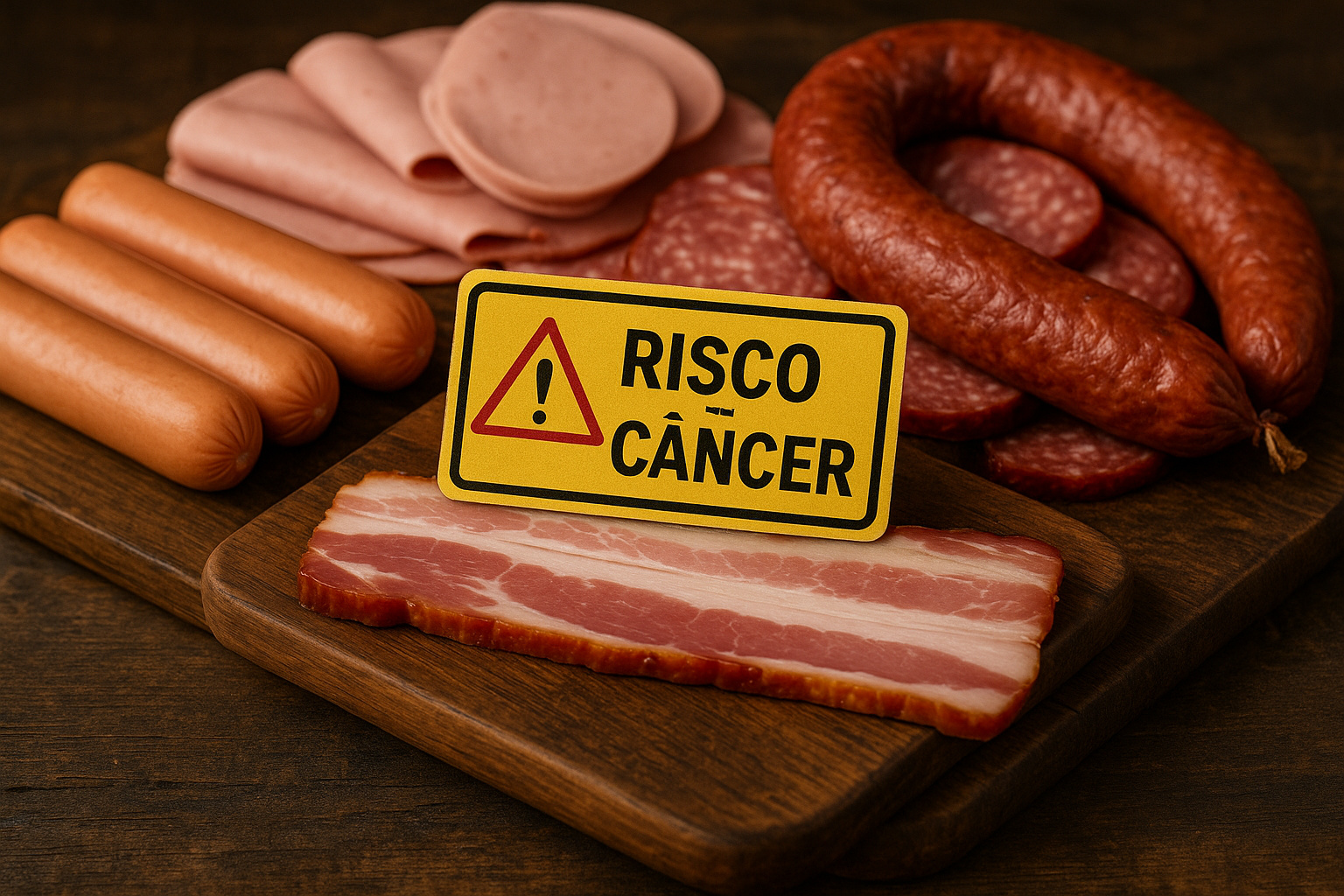


Global Study Shows That Consumption of Bacon, Sausage, and Hot Dogs Increases Risk of Serious Diseases Even in Small Daily Portions
A study published in September 2024 by the scientific journal Nature Medicine has reignited the international community’s alarm about the impact of consuming processed meats, such as hot dogs, sausages, bacon, ham, and salami.
According to the International Agency for Research on Cancer (IARC), linked to the World Health Organization (WHO), these foods are part of the Group 1 of carcinogenic agents, the same category as cigarettes and asbestos. This means that there is strong scientific evidence that they cause cancer in humans, especially colorectal cancer.
Researchers emphasize that there is no amount considered safe for consuming this type of food, as even small daily portions significantly increase health risks.
-
What is a red flashlight used for, after all? See why it is so commonly used at night.

-
He has never read a line of code, but he already knows how to work: the French company UMA presented in Paris the Northstar, its first AI-powered humanoid robot designed for factories and warehouses, capable of copying tasks just by observing an employee in action.

-
A young Kenyan engineer collects plastic waste from the streets and transforms it into robots that translate physics lessons into sign language in real-time, a machine made with old bottles that teaches what was missing to deaf children left out of science.
-
What is the dark substance found in the sand of Ipanema Beach? Civil Police conduct an examination, collect samples of the material, and initiate an investigation to identify the composition, clarify the origin, and verify if there was an environmental crime.




Scientific Investigation Reveals Increasing Risks

The survey gathered over 60 studies conducted between 2000 and 2023 and showed that the daily consumption of processed meats significantly raises the risk of serious diseases.
Among the key findings are:
- +11% in the risk of type 2 diabetes
- +7% in the risk of colorectal cancer
Therefore, according to specialists, a hot dog consumed daily is enough to significantly elevate risks.
Doctor Clayton Macedo, from the Brazilian Society of Endocrinology and Metabology (SBEM), stated in an interview that the effects seem “modest” on an individual level. However, on a population scale, the impacts become alarming, as they affect millions of people.
Comparison with Other Harmful Eating Habits
The study also compared the effects of processed meats with other frequently consumed items, such as soft drinks and trans fats.
According to the analysis:
- A can of soda per day (350 ml) increases the risk of diabetes by 8% and the risk of ischemic heart disease by 2%.
- The daily consumption of trans fats, between 0.25% and 2.56% of total calories, is linked to a 3% increase in the risk of heart problems.
Despite the dangers of soda and trans fats, processed meats led the risk indices. They have established themselves as the main factor of global concern.
Impacts on Public Health
Although they are common and affordable products, experts warn that the long-term impacts are devastating.
According to a report published by the National Cancer Institute (INCA) in August 2024, Brazil registers approximately 704 thousand new cancer cases per year. Among them, colorectal cancer is one of the most prevalent.
In light of this scenario, the WHO highlighted in 2023 that reducing the consumption of processed meats should be a priority for countries.
Prevention Strategies and Medical Recommendations
To reduce risks, specialists recommend replacing processed meats with fresh meats, vegetables, and whole grains. This change can represent a significant reduction in cancer, diabetes, and cardiovascular disease rates.
According to the Pan American Health Organization (PAHO), Brazil is among the countries that consume the most of this type of food in Latin America.
More than 34% of the population reported frequent consumption in a 2024 survey. This data reinforces the need for urgent public policies and medical guidance to reduce the harmful eating habit.
Therefore, the recommendation from health authorities is clear: the lower the consumption, the lower the health risks.
What Is at Stake for Brazilian Health?
The research reinforces that the choice between maintaining practical habits or preserving long-term health needs to be made urgently by the population.
Although the consumption of processed meats is common in Brazil, scientific evidence proves that the impact on health is severe.
In this scenario, public health governance will play a fundamental role in guiding the population. Educational campaigns should encourage the adoption of healthier eating habits.
Meanwhile, the individual decision also becomes crucial: to what extent is it worth maintaining a cheap and practical consumption that compromises health?


