






 Portuguese
  Spanish
  3 min of reading
  7 comments


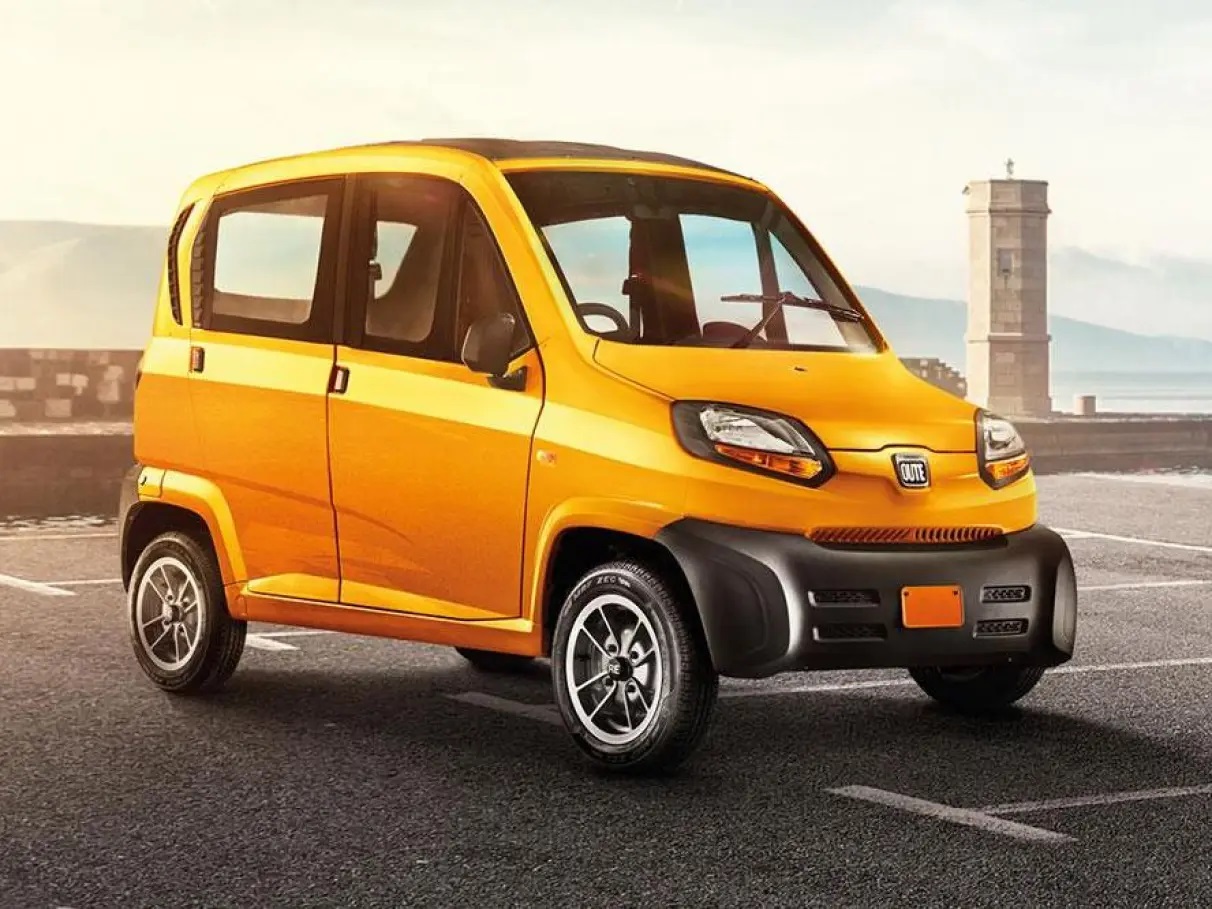


Bajaj Announces Car With Motorcycle Engine For Less Than R$ 20 Thousand. It Is A Car With Consumption Of 35 Km/L That Surprised Most Consumers. Check Out All The Details About The Economic Car That Weighs Only 400 Kilos.
The Indian automaker Bajaj, globally known for its motorcycles, expanded its operations to the Brazilian market at the end of 2022, bringing models that won the preference of many consumers due to their economy and reliability. However, Bajaj also stands out in the Indian market with the Bajaj Qute, an economic car with a compact and affordable motorcycle engine that redefines urban transport. Equipped with a motorcycle engine, the Qute is classified as a quadricycle, being the first vehicle produced in India to meet the stringent safety standards required in Europe.
This innovation combines low fuel consumption with practicality, making it an ideal solution for cities with heavy traffic and limited space.
Understand The Objective Of The Launch Of The Car With Consumption Of 35 Km/L For The Price Equivalent To R$ 20 Thousand!
With so many electric microcars for sale in the Chinese market, it can’t be said that Bajaj’s economic car is the cheapest in the world.
-
Uber Faces Shareholder Scrutiny as Board Accused of Ignoring Safety, Compliance, and Harassment Warnings Amid Over 3,500 U.S. Lawsuits

-
Ferrari’s First Electric Car Divides Fans, Priced at $630,000, Amid Concerns Over Limited Editions; Brand Clarifies It’s Not Just for Future Perks
-
BYD Dolphin Mini: The Electric Car That Defies Depreciation, Losing Only 3.58% in a Year and Becoming the Best-Selling Retail Model Under $22,000

-
Electric Car JAC E-JS4 Loses $19,000 in Value in One Year, Leading Record Depreciation of Used Cars in Brazil Due to Expensive Battery and New Models


The motorcycle engine car was presented in 2013, but its production only started in 2017 for export, and it wasn’t sold in India until 2019. Its launch depended on the Indian government granting its registration as a quadricycle.
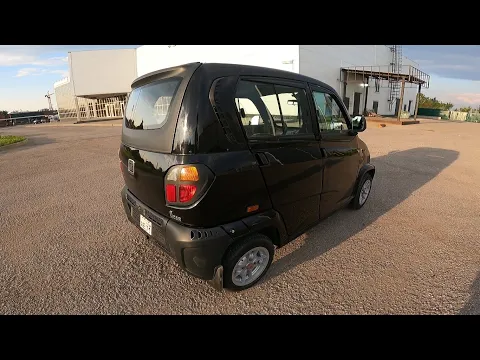

The goal of the car with consumption of 35 km/l would be to help India get rid of the classic ‘rickshaws’, microtaxis that can be motorized tricycles or even human-powered, common in the populous cities of the Asian country. Its development was supported by Renault and Nissan.
Bajaj itself still produces rickshaws today, however, the proposal of the car with motorcycle engine is to offer some protection to passengers, as there are doors on the vehicle. There is also a small front trunk that can hold up to 20 kg and an internal trunk with a capacity of 191 liters.
Bajaj Economic Car Also Runs On LPG
In India, the car with consumption of 35 km/l costs the equivalent of 2,900 dollars, or about R$ 19,000. It is slightly more expensive than a rickshaw from the brand, which costs starting from 2,800 dollars (R$ 17,300).
The economic car weighs about 400 kilos and measures 2.75 meters in length, 1.31 in width, and 1.65 in height. Its low weight is also linked to its structure, which features a tubular chassis covered by a plastic body.
Thus, its engine is also very small, being a 217 cc gasoline single-cylinder with 20 horsepower and a 5-speed automated transmission, all installed at the rear of the economic car. The maximum speed of the motorcycle engine car is 70 km/h, but the declared consumption is 35 km/l. The model is offered in versions using Liquefied Petroleum Gas (LPG) and CNG (Compressed Natural Gas), but the power is reduced to 14 horsepower.
However, it cannot be said that the car with consumption of 35 km/l is successful in India. Over the last 5 years, only about 3,600 units have been registered in India. Meanwhile, exports surpassed 31,500 units, with Turkey, Ghana, Egypt, Guatemala, and Mexico as the main destinations.
Understand Why Microcars Have Not Thrived In Brazil
In the foreign market, this type of economic car is very common, as there are regulations that allow their circulation more broadly. In Brazil, there is still no legislative openness that exists in other markets.
Regular cars need to meet energy efficiency requirements, equipment, and crash tests. They are required to have airbags, electronic stability controls, ABS, and other equipment.
Typically, microcars do not have these features, as they are designed for more limited drivability, more limited use, and a more affordable price. Citroën, for example, is bringing its Ami vehicle to market, but is directing this product to companies and condominiums.





Antigamente 9 em cada dez carros eram o vigoroso fusquinha. Em qto os mais caros ficavam entre 30 e 70 mil.
Mas o número total de veículos rodando ñ eram tantos pois basicamente só haviam três ou quatro fabricantes de veículos nacionais. Já pensaram hoje um carro na faixa de 20 a 30 mil competindo espaço com os mais caros e outros fabricantes?
Carros realmente populares e menos tecnológicos baixarias o preço, isso as montadoras e os governantes não querem. Seria menos dinheiro no bolso deles
Infelizmente se vier aq para o Brasil vai custar uns 30 ou 35 mil mais impostos q vão tachar e toda a burocracia q vai ter pra se adquirir um desses
Podes ter certeza q se vier vai vender que nem água!
Se vier nessa faixa de preço o estoque acaba num piscar de olhos!!