






 Portuguese
  Spanish
  3 min of reading
  11 comments


At Event, Brazilian Students Present Car That Achieves 715 Km/L and Could Revolutionize the Automotive Sector. Shell Event Drives New Studies and Investments in the Hydrogen Car Market.
The Shell Eco-Marathon, the main automotive engineering competition among university students in the country and Latin America, took place a few months ago, and for the first time, two teams focused on a hydrogen car. However, combustion and electric cars are still the majority. At this event, Brazilians presented a car that achieves 715 km/l.
Learn How the Competition That Drives New Technologies for the Automotive Sector Works
Many of the students at the competition are still not even 20 years old and are already working on amazing projects, such as the car that achieves 715 km/l. The Eco-Marathon is divided into four categories, according to the energy matrix of each project: internal combustion, electric battery, hydrogen cell, and urban concept.
Shell does not charge an entry fee; however, it is up to the universities and students to seek sponsors to finance not only the project but also the travel and accommodation in Rio de Janeiro. In addition to student transportation, there is also the transfer of vehicles to the Pier. A student from Universidad Capitán Ustáriz in Bolivia stated that a truck transported the prototype from Cochabamba to the Brazilian border.
-
Uber Faces Shareholder Scrutiny as Board Accused of Ignoring Safety, Compliance, and Harassment Warnings Amid Over 3,500 U.S. Lawsuits

-
Ferrari’s First Electric Car Divides Fans, Priced at $630,000, Amid Concerns Over Limited Editions; Brand Clarifies It’s Not Just for Future Perks
-
BYD Dolphin Mini: The Electric Car That Defies Depreciation, Losing Only 3.58% in a Year and Becoming the Best-Selling Retail Model Under $22,000

-
Electric Car JAC E-JS4 Loses $19,000 in Value in One Year, Leading Record Depreciation of Used Cars in Brazil Due to Expensive Battery and New Models


The vehicle passed through the Federal Revenue and was loaded onto a Brazilian truck, which made the final transfer to Rio, where the revolutionary marathon for the automotive sector takes place. Meanwhile, the students traveled by plane, making a stop in São Paulo.
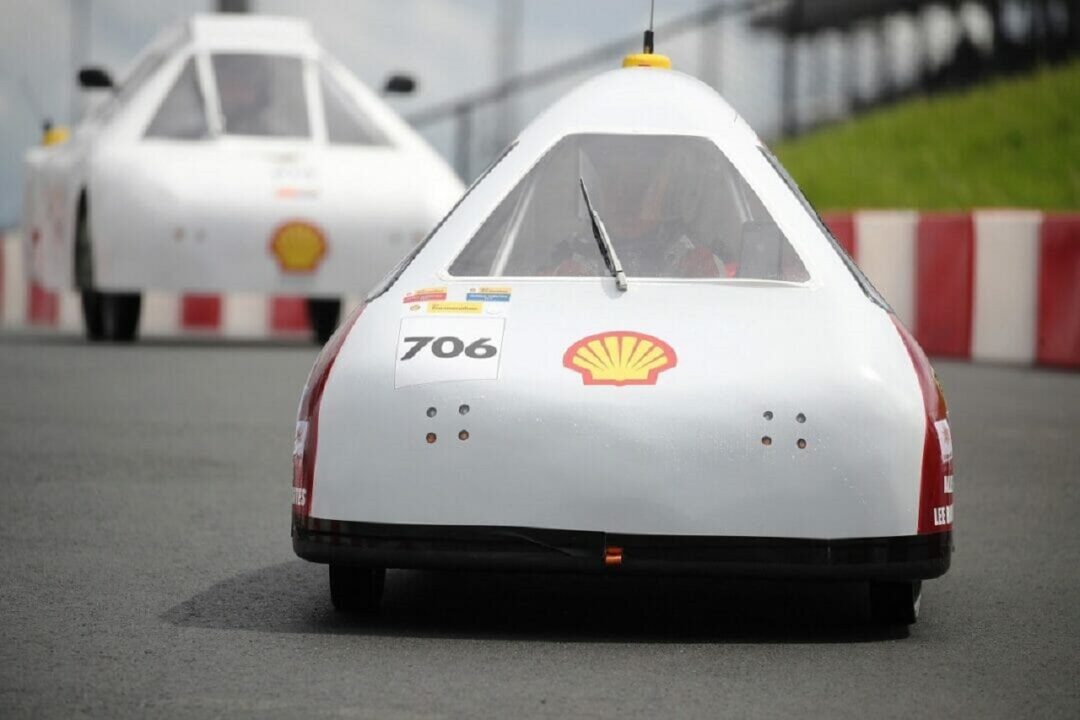
The event functions like a race. The universities have designated areas that serve as pits, where they leave vehicles, computers, tools, and mechanical components. The first goal is to pass the technical inspection. This is considered the most difficult part, according to information from Shell.
What Criteria Did the Hydrogen Car Have to Meet?
The hydrogen, battery, or gasoline car must meet various technical criteria to have a chance to conduct the consumption test on the track. According to Norman Koch, global manager of the Shell Eco-Marathon, it is during the inspection that about 15% of competing students are disqualified.
Shell’s technicians evaluate the weight, dimensions, visibility, brakes, design, mechanics, electronics, horn, emergency button, and even the effort required to enter and exit the vehicle. The driver undergoes physical and psychotechnical evaluations and is required to wear gloves, a suit, and a helmet approved by the International Automobile Federation (FIA).
The first test is for braking. The prototype is placed on a ramp, and the driver needs to test both the front and rear brakes. A technical inspector commented that this is usually one of the harshest tests, as almost all vehicles use borrowed bicycle systems.
The braking test was one of the major challenges for the Bolivian team. Shell requires that the system of the hydrogen, battery, or gasoline car be independent for the front and rear, aiming to increase redundancy and safety.
Brazilian Students Develop Car That Achieves 715 Km/L
The Bolivian team bravely fought to put the first hydrogen car in history onto the track at Eco-Marathon Brazil. However, the best result was with combustion engines. The Federal Institute of Education of Rio Grande do Sul, from Erechim, developed a car that achieves 715 km/l and could revolutionize the automotive sector.
The second place went to the Federal Technological University of Paraná, which recorded 647 km/l. Among the prototypes with electric motors, the Federal University of Minas Gerais won by achieving 367 km/kWh.
The leadership of the Minas Gerais team was nearly threatened, as the Federal Institute of Southern Rio Grande reached 364 km/kWh and secured second place.





PARABÉNS SUCESSO EM SEUS OBJETIVOS, QUE DEUS ABENÇOE A TODOS VCS.
PARABÉNS PARA A EQUIPE BRASILEIRA, NUNCA PAREM DE ORGULHAR O SEU PAÍS PRECISAMOS DE PESSOAS COMO VOCÊS. DEUS OS ABENÇOE ✝️E ABENÇOE O BRASIL 🇧🇷🇧🇷🇧🇷.
Cadê as informações técnicas dos vencedores???