






 Portuguese
  Spanish


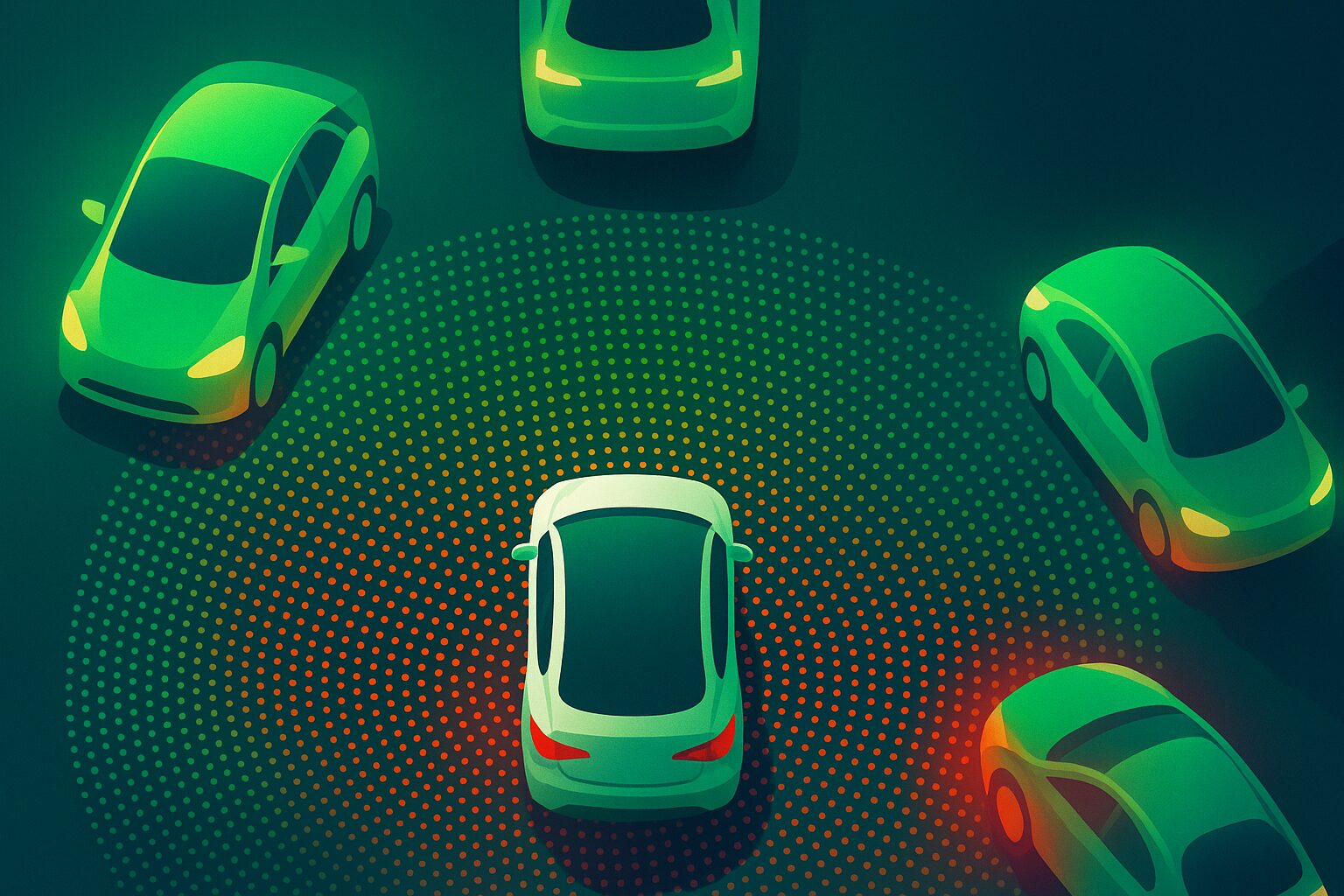

New Technology Allows Self-Driving Cars to Share Navigation Experiences Without Direct Connection or Central Server, Preserving User Privacy and Improving Efficiency on the Roads.
Researchers have developed a new way for self-driving cars to share information with each other without needing direct connections or central servers.
The system, called Cached-DFL (Decentralized Federated Learning in Cache), promises to revolutionize how these cars communicate and learn from the experiences of other vehicles, increasing safety and efficiency on the roads.
How Cached-DFL Works for Self-Driving Cars
The Cached-DFL system allows self-driving cars to share artificial intelligence models with each other indirectly and without transmitting personal data from drivers.
-
2027 Toyota Corolla Cross Unveiled: New Design, Enhanced Fuel Efficiency, Reduced Maintenance Costs, Advanced Technology, Connected Services, and Up to 10-Year Warranty

-
Fiat Cronos Precision 2018: Affordable Sedan with Spacious Trunk and Reliable Maintenance
-
Volkswagen to Cut Production by 1 Million Cars by 2030, Reducing Jobs and Platforms, Focusing on More Profitable Models

-
Toyota Launches First 100% Electric Car in Brazil: bZ4X with 343 HP, All-Wheel Drive, 361 km Range, Priced at $419,990 BRL, Limited to 99 Units



Each vehicle stores information in AI models trained with navigation data, traffic conditions, traffic signals, and other elements of the journey.
Unlike the traditional method, where data goes directly to central servers, Cached-DFL distributes this information among the cars themselves, as if creating a social network among the vehicles.
They do not need to know each other, be close, or give direct permission to share data.
They only need to be within 100 meters of each other to access each other’s navigation profiles.
According to Dr. Yong Liu, a professor at the Tandon School of Engineering at New York University, this new approach creates a network of shared experiences. “A car that has only driven in Manhattan can now learn about road conditions in Brooklyn from other vehicles, even if it has never been there,” he explained.
Simulated Environment Tests
To validate the proposal, scientists conducted tests with 100 virtual self-driving cars driving in a Manhattan simulation.
The vehicles followed semi-random patterns and had their AI models updated every 120 seconds.
During the tests, the cars cached data until they found another vehicle within a radius of up to 100 meters, allowing for efficient and decentralized information exchange.
This technique differs from common models, which require immediate connection to servers and do not allow local storage.
The results showed that this frequent and rapid communication between cars significantly improved accuracy and learning speed.
Moreover, it allowed each vehicle to learn from real experiences of other vehicles, even in different locations on the map.
Safety and Privacy as Priorities
One of the major advantages of Cached-DFL is that it eliminates the need to send personal data to external servers.
This reduces the risks of leaking sensitive information and maintains user privacy.
The system also distributes processing power among the vehicles, which decreases the reliance on powerful and central servers. For Dr. Jie Xu from the University of Florida, this makes the solution more scalable. “Each vehicle only exchanges model updates with those it encounters. This approach avoids communication overload as the network grows,” he stated.
Expansion to Other Devices
The next step for researchers is to test the system in the real world. They also want to expand the compatibility of Cached-DFL among different car brands and integrate communication with other connected devices, such as traffic lights, satellites, and traffic signals.
This evolution is called “vehicle-to-everything” (V2X) communication. The idea is for vehicles to connect not only with each other but also with everything in their environment, further enhancing navigation capacity and safety.
The researchers believe that this technology can be applied not only to cars but also to satellites, drones, robots, and other devices that need to make decisions based on real-time data.
A New Path for Autonomous Driving
Cached-DFL represents an important advancement in making self-driving cars more efficient and safe. The proposal allows them to learn from each other in real-time, without relying on central servers and without compromising driver privacy.
Javed Khan, an executive at Aptiv, emphasizes the importance of the model. “By locally caching models, we reduce reliance on central servers and enhance real-time decision-making, crucial for safety-critical applications such as autonomous driving,” he stated.
The research was presented at the Conference of the Association for the Advancement of Artificial Intelligence on February 27 and has been available in the arXiv database since August 26, 2024.
With the upcoming tests, scientists hope to validate the system in real conditions and advance toward a future where autonomous vehicles learn collectively, safely, and decentralized.








