






 Portuguese
  Spanish


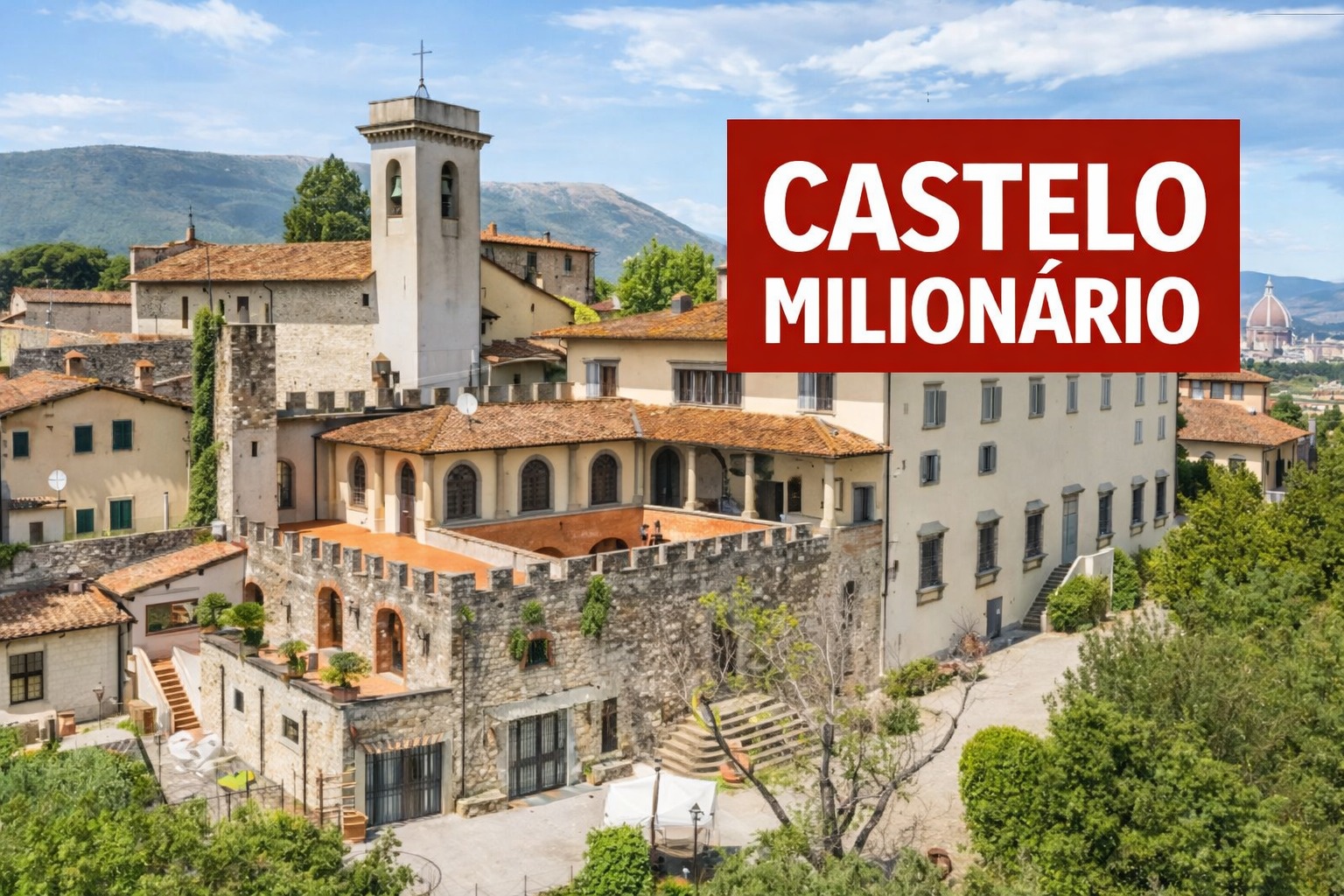

Fortified Property In The Hills Near Florence Combines Centuries Of Legacy, Vaulted Halls, Central Courtyard, Historical Collection And A Enigma Involving Renaissance Painting Discovered By The Current Owners During Careful Restoration
In times marked by geopolitical uncertainties, a silent movement is gaining momentum among the very wealthy. It’s not just about changing addresses, but redefining lifestyles. Some seek sun and lighter tax regimes in Dubai. Others prefer to trade square meters for the compact glamour of Monaco. A third group, interested in a denser cultural experience, has turned its eyes to Italy.
A Refuge In The Tuscan Hills
It is in this imagination that Villa Ginori emerges, a fortified construction positioned on the slopes of Florence.
The property carries centuries of history and is now on the market for 10 million euros, about R$ 61 million.
-
SpaceX launch turned Falcon 9 into a giant jellyfish in the night sky, with a colorful plume illuminated by the Sun at high altitude, confusing observers and showing how a routine flight can become a rare spectacle of atmospheric physics over Earth.

-
Spain places 9 bison in a fenced area of 400 hectares to test a new barrier against fire, but scientists warn that, although they control the underbrush, there is no evidence that the animals can reduce large fires.

-
YOU LOOK AT SUGAR EVERY DAY, BUT THERE IS A BAN ON IT THAT ALMOST NO ONE KNOWS; UNDERSTAND WHY MAKING IT AT HOME IS NOT ALLOWED IN BRAZIL

-
Arrival of the São Francisco River waters in Rio Grande do Norte marks a historic chapter, boosts development, and symbolizes social justice for millions of Northeasterners.




Its origins date back to 1134, when the castle, then isolated at the top of a hill, was erected by papal decree.
Over the centuries, the landscape around it has changed. A more modern city has blossomed in the plains below, while the villa has remained as a sentinel.
Located just 10 kilometers from Florence, it maintains a constant connection with the urban center.
From the property, it is possible to see the Duomo in the distance, a visual reference that reinforces the contrast between the dynamics of the city and the serenity of the hills.
Between Tradition And Imposing Presence
The pale yellow mansion owes its name to the influential Ginori family, known for their roles as porcelain manufacturers, bankers, and political figures.
The villa dominates an ancient village at the top of the hill, which houses an 8th-century church and a museum. The complex occupies about 2,200 square meters and includes three residential units spread across different levels. In the center, a courtyard organizes social life and serves as a hub for community living.
The history of the property reflects the transformations of Tuscany itself. After passing through the hands of counts, bishops, and Florentine aristocrats, it ceased to be just a defensive stronghold and took on the contours of a luxurious residence after the founding of the Grand Duchy of Tuscany in the 16th century.
“Under the Ginori family, the villa evolved over the centuries and styles, transitioning from a signore house to a suburban villa-farm,” states Arianna Giovannini, a broker from the luxury real estate agency Building Heritage.
Architecture That Crosses Centuries
Much of the original features have been preserved. Vaulted ceilings with frescoes, monumental stone fireplaces displaying the family’s starry coat of arms, and local sandstone staircases compose the historic atmosphere.
The most emblematic spaces, according to Giovannini, include the ballroom, with high ceilings and an ancient fireplace, as well as the study on the first floor, a mezzanine space that evokes a timeless feel.
“Everything is perfectly organized between the reception and living areas and the more private quarters,” describes the broker.
The balance between grandeur and warmth helps explain why properties of this type continue to attract interest among international buyers.
Preserved Heritage
The current owners are descendants of the local businessman who acquired Villa Ginori in the 1970s as a family residence. They report that living there has always been seen as a rare privilege.
The logic follows the tradition of wealthy families in Tuscany, who value gathering different generations in the same spacious environment, ensuring privacy without giving up proximity.
Some historic furniture remained in the house after the owners’ move. Among them are ceramics from the so-called Collezione Ginoriana and portraits displayed in the main hall.
Other elements have been restored by specialists or acquired from Florentine antiquarians, reinforcing the sense of continuity.
There is also the possibility of negotiating the acquisition of this collection along with the property. This alternative prevents future owners from needing to start from scratch in furnishing the vast rooms, maintaining the aesthetic coherence of the property.
The Enigma Of Bronzino
Not everything, however, will accompany the sale. A painting attributed to Agnolo Bronzino, the official portraitist of Cosimo I de’ Medici in the mid-16th century, was found on the property.
Entitled Petrarch, the work’s value has been considered unknown, although works by the artist can reach up to US$ 10 million (R$ 53.6 million).
After a careful restoration process, the painting has been stored in a safe. The reason for its presence in the villa also remains unanswered.
Was it a commission, a gift, or just a historical coincidence? The mystery continues to fuel speculation, reminding us that in nearly thousand-year-old residences, the past is never completely closed off.
With information from Forbes.


