Portuguese
  Spanish


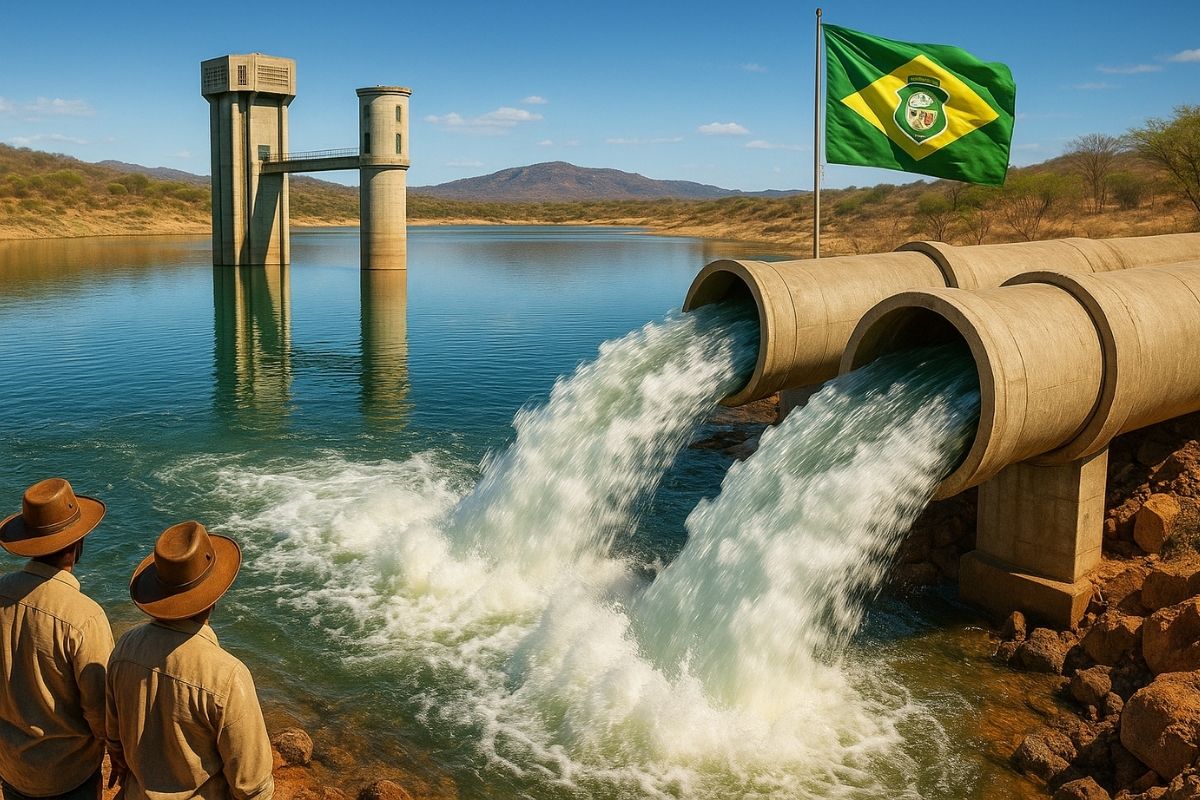


Secretary of Water Resources Ordinance Updates Management Rules for Castanhão, Orós, Banabuiú, and Integration of the São Francisco Transposition
Ceará has taken another decisive step in water management. On September 9, 2025, the Secretary of Water Resources (SRH) published an ordinance that updates the list of the 25 strategic water sources of the state. These reservoirs, rivers, and canals sustain everyone from families in rural areas to large industrial hubs, such as the Pecém Complex, and are considered vital for survival in a state marked by drought.
The measure reinforces that human supply remains a top priority, but establishes strict guidelines for irrigation, industry, and municipal distribution. The decision comes at a time of increasing pressure on water resources, requiring a balance between consumption, agricultural production, and economic development.
Who Depends on Strategic Sources
The strategic water sources serve millions of people and essential productive sectors.
-
Entrepreneur Turns Rio Cemetery Canteen into a Successful Snack Chain Generating $4.9 Million Annually and Expanding to Metro Stations

-
Rare fox feared “extinct” found alive on Caribbean island after over two decades without official sightings

-
21-Year-Old Brazilian Student Turns Homemade Popsicle Hobby into $100,000-a-Month Business

-
Australia Dumps Hundreds of Thousands of Tons of Gravel into Rivers to Restore Natural Barriers and Reverse 150 Years of Erosion




Among them are the reservoirs Castanhão, Orós, and Banabuiú, as well as the Jaguaribe River, the main watercourse in Ceará. Together, these water bodies ensure urban supply, large-scale irrigation, and provide water for industrial enterprises.
According to information published by the Diário do Nordeste, management is conducted through Basin Committees, which deliberate on the allocation of water.
The legal priority is to ensure human consumption and animal hydration, but irrigated agriculture and industry also receive part of the allocation.
How Much and How Use Will Be Controlled
The SRH ordinance reinforces the role of the water use right granting, a mechanism that defines how much, when, and to whom water can be released.
The process undergoes technical analyses that consider water balance, environmental impact, and socioeconomic factors.
According to the SRH’s Water Resource Management Coordinator, Carlos Campelo, “uncontrolled use would compromise the water security of populations and the survival of strategic sectors like agriculture and industry”.
Regulation thus seeks to protect the balance between supply and demand in a context of climate vulnerability.
Where the São Francisco Transposition Fits In
The transposition of the São Francisco River is another fundamental pillar to reinforce water security in Ceará.
The water is integrated through the Cinturão das Águas do Ceará, a network of channels that redistributes the resource to strategic reservoirs.
This infrastructure helps reduce the impacts of prolonged droughts, enhancing the water resilience of the state.
Experts highlight that the connection with the São Francisco allows diversifying supply sources and ensuring greater regularity in supply, even during periods of scarce rainfall.
Why Management is Critical for the Future
The 25 strategic water sources are important not only for human consumption.
Irrigated agriculture is one of the engines of the Ceará economy, especially in the production of fruits and vegetables destined for the domestic market and export.
Activities such as shrimp farming and the Pecém Complex also depend on a continuous and regulated water supply.
With growing demand and intensifying climate change, every drop becomes strategic to ensure social and economic stability.
Therefore, managing these sources has shifted from being merely a technical topic to a central survival issue for the state.
The challenge for Ceará is to reconcile economic growth with water security without compromising population access.
The new ordinance makes it clear that strict control over the 25 water sources is essential for the region’s stability.
Do you believe that Ceará should prioritize human consumption even more, even if it reduces water for industry and agriculture? Or is it possible to balance the three sectors? Share your opinion in the comments — we want to hear from those who live this in practice.