






 Portuguese
  Spanish
  5 min of reading
  0 comments


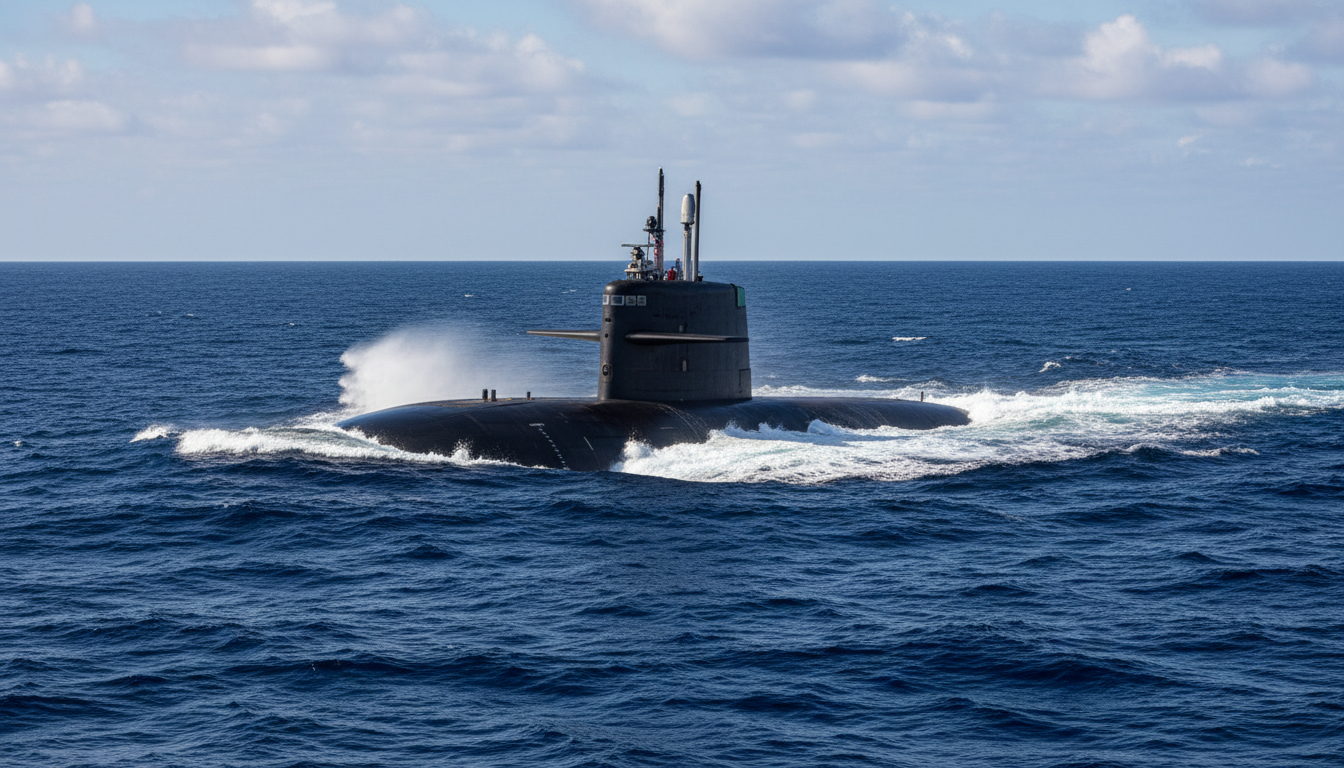
The United States is building the largest nuclear submarine in its history — and it is already delayed
The United States Navy is assembling at the shipyards in Groton, Connecticut, the Columbia-class (SSBN-826) — a class of nuclear submarines that will be the largest and most expensive the country has ever built.
According to a report by 19FortyFive, published in March 2026, the first submarine of the class — the USS District of Columbia — is already between 12 and 16 months behind schedule compared to the original timeline.
However, the program cannot simply be canceled or indefinitely postponed: the Columbia-class is designed to replace the Ohio-class, which have served as the main platform for American nuclear deterrence since the 1980s. The scale of the program is comparable to projects like the Nevada nuclear tunnel, where the US also spent billions on defense infrastructure.
-
Israel finds Hezbollah militarized tunnel over 200 meters long under village, with 4 missile launch shafts, 12 chambers, anti-tank missiles, drones, and weapons depots at a depth of 25 meters.

-
The military spaceplane that almost took the Cold War into orbit: Boeing X-20 Dyna-Soar was designed to re-enter above Mach 20, fly for up to 40 hours, land like a plane, and transform Titan rockets into a gateway to a new era of orbital warfare.

-
FAB bets on national drones and increases investments to strengthen the Brazilian aerospace industry

-
Ukraine launches largest drone attack on Moscow since 2022, Russia claims to have intercepted nearly 200 aircraft near the capital, Kapotnya refinery targeted again, and offensive reignites alert about war reaching the Russian energy heart just a few kilometers from the Kremlin.


Thus, the largest naval defense program in the United States combines two paradoxes: it is too big to fail and too complex to meet deadlines.
Additionally, each unit of the Columbia-class costs approximately $15 billion — more expensive than most aircraft carriers of other countries.

The numbers that make the Columbia the most impressive submarine ever designed: 170 meters, 20,815 tons, and 16 nuclear missiles
The Columbia-class will be 170.7 meters long — more than a football field and a half — and will displace 20,815 tons submerged.
Consequently, it will be significantly larger than the current Ohio-class, which were already the largest submarines operated by the American Navy at 170 meters and 18,750 tons.
Additionally, each Columbia will carry 16 Trident II D5 ballistic missiles, each capable of carrying multiple nuclear warheads with an intercontinental range of over 12,000 km.
Similarly, the submarine will be powered by a new generation S1B nuclear reactor that, for the first time in the history of the American Navy, will not require refueling during the entire operational life of the vessel — estimated at over 40 years.
Therefore, once the Columbia-class leaves the shipyard, it will not need to return to port to refuel the reactor — eliminating months of maintenance that the Ohio-class required every 20 years.
In this sense, the “life-of-ship” reactor is one of the most significant technological innovations of the program — and one of the reasons why the cost per unit is so high.
The delay of 12 to 16 months: the largest submarine in the US was already born with scheduling problems
According to analyses by 19FortyFive and the Government Accountability Office (GAO), the first Columbia-class was supposed to be delivered by the end of 2027, but now the forecast is 2028 or early 2029.
On the other hand, the reasons for the delay are multiple: a shortage of skilled labor in the shipyards, supply chain issues for critical components, and technical challenges in integrating the new reactor with the propulsion systems.
Likewise, the shipyards in Groton (General Dynamics Electric Boat) and Newport News (Huntington Ingalls) are overwhelmed — as they need to maintain and modernize the existing Virginia-class submarines while assembling the Columbia.
Consequently, the Navy faces what experts call a “submarine industrial capacity crisis”: the demand for new submarines exceeds the country’s production capacity.
Above all, the delay is not just a scheduling issue — it is a national security issue, because the Ohio-class that the Columbia is meant to replace are aging and approaching the end of their operational life.
Still, canceling or reducing the program is not an option: without the Columbia, the US would lose the submarine leg of the nuclear triad — the quietest and hardest to detect pillar of American deterrence.

The Ohio-class is dying: the race to replace them before they become too old to sail
The 14 Ohio-class submarines were commissioned between 1981 and 1997 and have a projected lifespan of 42 years.
In fact, the first Ohio has already begun to be decommissioned, and the last will go out of service around 2039.
However, the plan is for the 12 Columbia-class to be delivered between 2028 and 2042, at a rate of one per year — which leaves a minimal overlap margin between the retirement of the Ohio and the entry of the Columbia.
As a result, any further delay in the Columbia program could create a vulnerability window in which the US would have fewer strategic nuclear submarines than deemed necessary to maintain deterrence.
Despite this, the Navy claims the program is “under control” and that corrective measures are being implemented to reduce the delay.
Consequently, the Columbia-class has become the most monitored and criticized defense program of the Pentagon — precisely because its failure would compromise the most secretive pillar of the American nuclear arsenal.
The total plan: 12 submarines, $180 billion, and 4 decades of construction
The Columbia program foresees the construction of 12 submarines over the coming decades, with a total estimated cost that could exceed $180 billion — making it the most expensive naval program in US history.
Additionally, each submarine will have a crew of 155 sailors, will operate for over 40 years, and will spend most of that time submerged on secret patrols that can last months without the submarine needing to surface or communicate with the surface.
Similarly, the exact location of each Columbia on patrol will be one of the best-kept secrets of the American government — because the effectiveness of submarine nuclear deterrence depends precisely on the enemy not knowing where the submarines are.
Therefore, the Columbia-class is not just a war machine — they are mobile nuclear vaults that silently navigate the oceans, invisible to satellites and almost undetectable by sonar.

The paradox of the Columbia-class: too big to fail, too complex to deliver on time
The Columbia-class is a reminder that even the world’s largest military power faces industrial and logistical limits when it comes to naval engineering megaprojects.
However, the program continues to be classified as “priority number one” by the US Navy — above aircraft carriers, frigates, and destroyers.
The largest nuclear submarine in American history costs more than the GDP of 50 countries, requires technologies that did not exist when it was designed, and is already delayed before touching the water — but it simply cannot be canceled, because without it the US loses the quietest and most feared pillar of its nuclear defense.
The question the Columbia-class poses to the world is simple: how far can technological complexity go before it becomes impossible to meet its own schedule?








Be the first to react!