Portuguese
  Spanish


Anthropic CEO Predicts That Artificial Intelligence Could Replace Half of Office Jobs, with Rapid and Widespread Impact on the Labor Market.
The advancement of artificial intelligence worries specialists and entrepreneurs. One of them is Dario Amodei, co-founder and CEO of Anthropic. In an interview with the website Axios, he made an alarming prediction: AI could eliminate half of the entry-level jobs in offices.
Anthropic is an artificial intelligence company, founded in 2021 by former employees of OpenAI, including Dario Amodei (former Vice President of Research at OpenAI). The company is headquartered in San Francisco, United States.
Four Stages of an Announced Crisis
Amodei describes the problem in four phases. First, companies like OpenAI, Google, and Anthropic itself will continue developing increasingly sophisticated language models. These systems will start performing tasks with efficiency equal to or greater than that of humans.
-
She heard for decades that space was not a place for women, became a pioneer in aviation, was part of the Mercury 13, and at 82, finally traveled with Jeff Bezos before dying at 87.

-
Scientists investigate microplastics in the airways of patients with sleep apnea and reveal a new focus for research on environmental pollution, human exposure, and possible impacts on breathing quality.
-
For the first time, scientists have seen the ocean floor open up in real-time—plates moving apart by two meters in a few days and 160 million cubic meters of lava emerging on the seafloor.
-
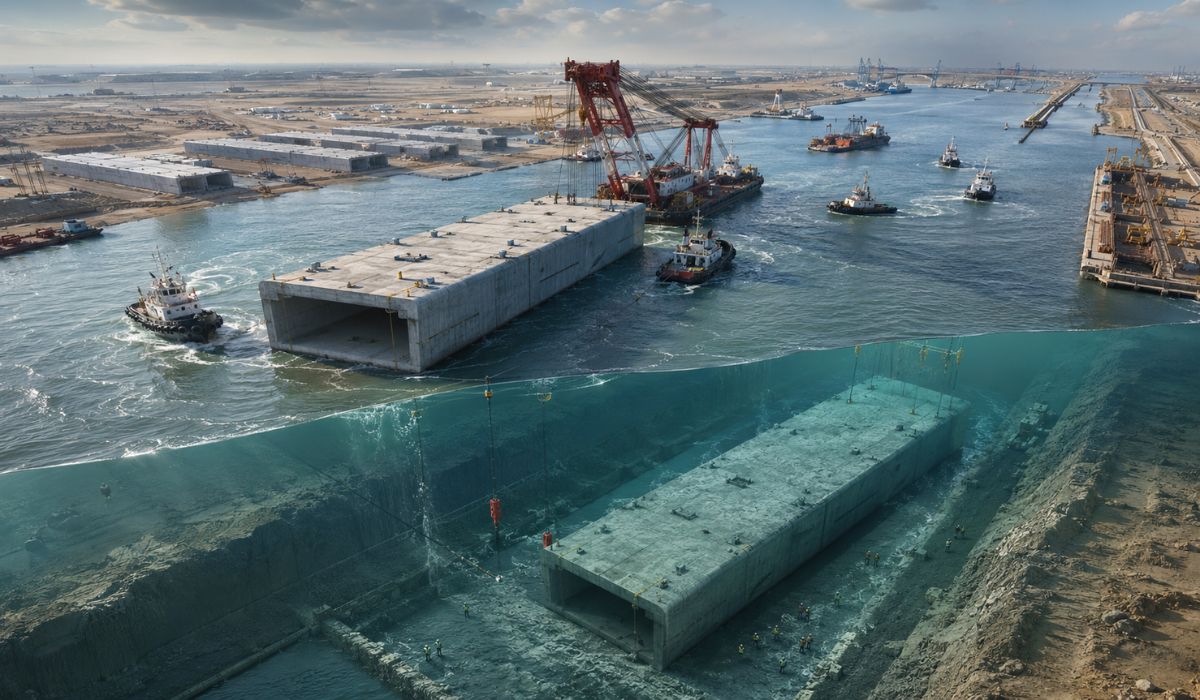
Iraq floats and sinks under an arm of the Euphrates 10 giant concrete boxes of 46,000 tons and 125 meters each to assemble a 2.4 km submerged tunnel and open a new land route between Asia and Europe.




In the second stage, according to the CEO, governments will remain inert. Even with the growth of this technology, there will be no actions to regulate AI or inform the public about the risks. For Amodei, the fear of losing ground to China and causing instability in the labor market will lead authorities to avoid intervening.
The third stage occurs with workers still uninformed. People, in Amodei’s words, “have no idea what’s happening” and do not realize the advancement of AI and the danger it poses to their jobs.
Finally, the collapse would come. Suddenly, companies would massively adopt language models and replace human employees. “The public only realizes when it’s too late,” Amodei stated during the conversation.
Scary and Promising Possibilities
To emphasize his point, the CEO of Anthropic presented extreme examples. He mentioned a scenario where cancer would be cured, the economy would grow 10% per year, the public budget would be balanced, but 20% of the population would be unemployed.
“As producers of this technology, we have a duty to be honest about what is to come. I don’t think this is on people’s radar,” Amodei highlighted.
Amodei’s position raises questions. If he truly believes that his company can cause such a negative impact, why doesn’t he halt development? Anthropic is valued between $30 billion and $40 billion, making his statements even more relevant.
Critiques of the Apocalyptic Vision
Contrary to Amodei’s claims, many computer science experts disagree with this catastrophic view. Despite advancements, current language models still have clear limitations. Among the most common issues are hallucinations, exaggerated responses, and errors in generalization. Additionally, there is a phenomenon known as the law of diminishing returns: each new version of AI brings smaller improvements compared to previous ones.
Today, even the most advanced models have a limited impact on work efficiency. The gains achieved are not as significant as some industry executives suggest.
The Role of Industry Leaders
For some analysts, entrepreneurs like Amodei not only exaggerate the risks but also benefit from this narrative. By presenting AI as an uncontrollable threat, they end up encouraging lawmakers to leave self-regulation in the hands of the tech companies themselves.
In the United States, this approach has worked. Congress, fearing the supposed dangers, prefers to delegate control of AI to large corporations, avoiding direct intervention.
Workers Are Already Seeing the Risks
Despite Amodei’s statements, some workers have already begun to see the potential negative effects of AI. Fear is greater among vulnerable groups, who suffer from discrimination and hold the most precarious positions in the labor market. It is precisely these professionals who may be most affected by potential mass layoffs caused by automation.
In practice, what seems to influence unemployment more today is not the actual capacity of technology, but the climate of euphoria surrounding it. Many employers make cut decisions based on the expectation that AI will replace employees, even if the technology has not yet reached that level.