






 Portuguese
  Spanish


Fossil preserved in rock at Ghost Ranch, New Mexico, allowed Yale paleontologists to identify a new species of ancient crocodile, with a short snout, reinforced skull, and jaw adapted to capture larger prey 210 million years ago
A newly identified crocodile in 210-million-year-old fossils revealed that ancient relatives of modern crocodiles shared ecological roles in the Late Triassic, with anatomies for hunting and feeding in northern New Mexico.
The species was named Eosphorosuchus lacrimosa after Yale paleontologists reexamined a fossil preserved in rock from the Ghost Ranch Bone Bed. The material has been in the collections of the Peabody Museum of Natural History at Yale since excavations in 1948.
The animal was found alongside Hesperosuchus agilis, another relative of crocodiles. For decades, the two specimens from Ghost Ranch were considered examples of the same type, but new analyses indicated that the Yale individual had a distinct facial structure.
-
Archaeologists Discover 2,300-Year-Old Beer in Sealed Bronze Vessel from Ancient Chinese Tomb

-
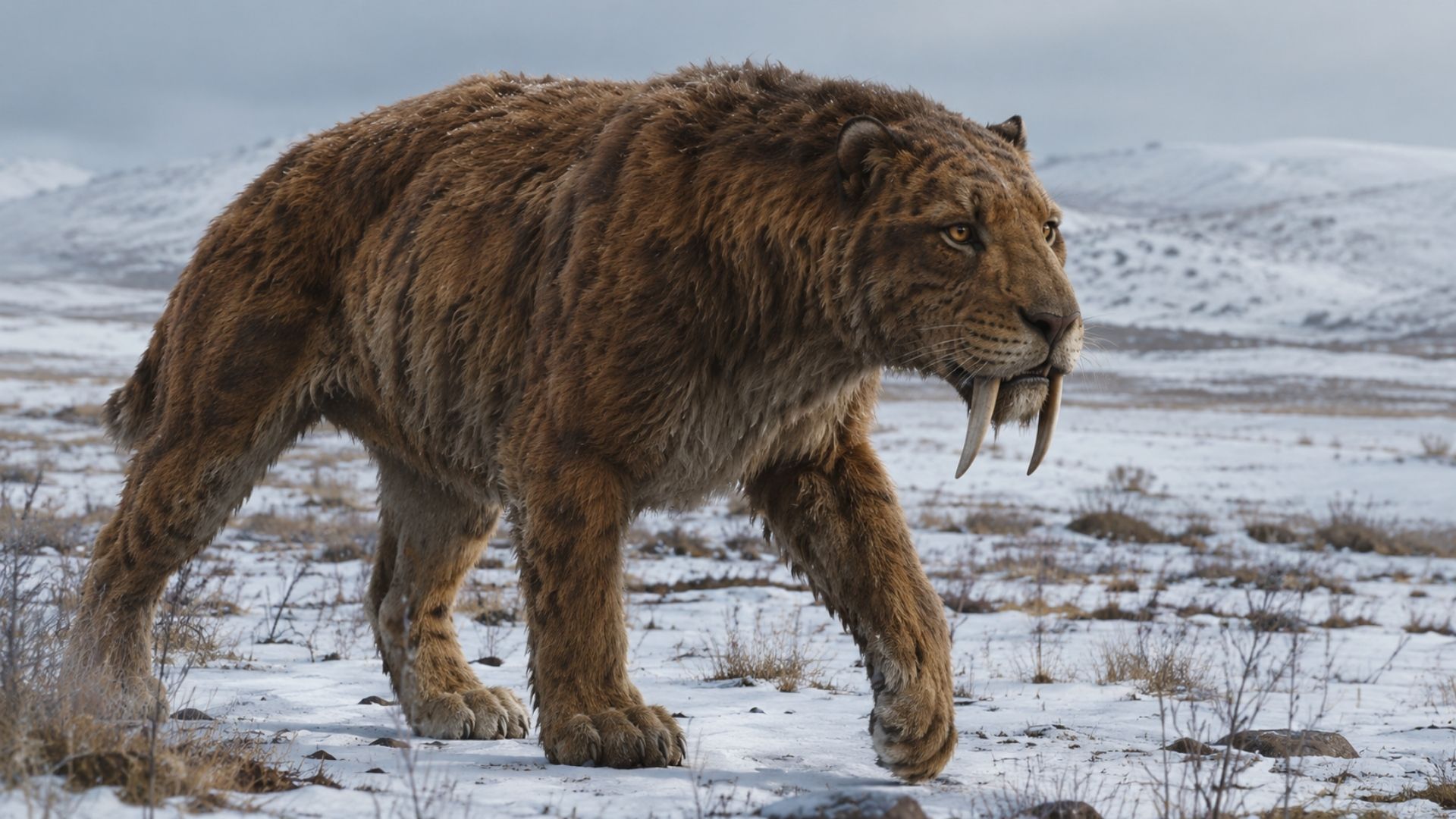
35,000-Year-Old Saber-Toothed Tiger Cub Found Intact in Siberian Permafrost, Whiskers, Claws, and Skin Preserved Since the Ice Age
-
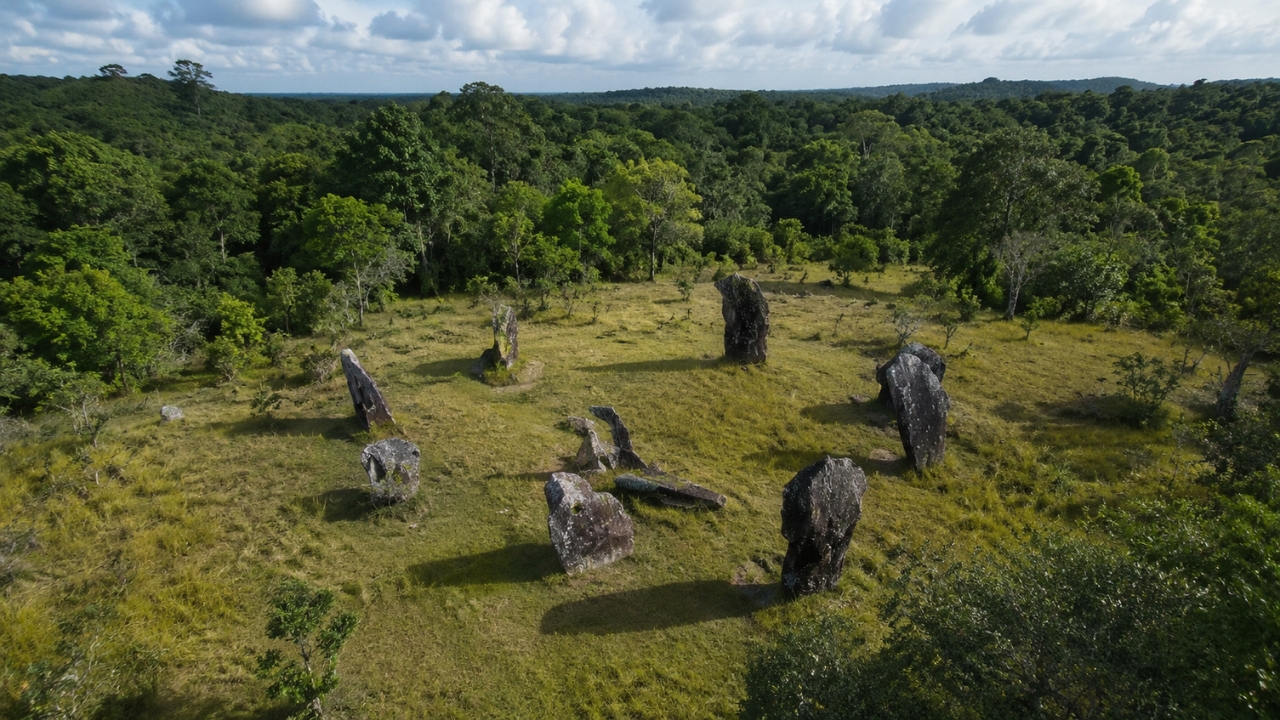
Scientists Uncover “Amazon Stonehenge” with 127 Giant Rocks, Shedding Light on Indigenous Solar Observations Before European Arrival

-
Six-Year-Old Uncovers 400-Million-Year-Old Coral Fossil in Backyard, Revealing a Pre-Dinosaur Ocean World



Short-snouted crocodile had a reinforced skull
Although it was similar in size to Hesperosuchus, compared in the material to a jackal, Eosphorosuchus displayed a different set of features. Its snout was shorter, the skull more reinforced, and the jaw muscles more developed.
These features indicated a bite aimed at closing over large prey. Meanwhile, Hesperosuchus had a long snout, large hind legs, and smaller, thinner arms, and lived on land, hunting near rivers and streams.
The two animals apparently died at the same moment, in a natural disaster, such as a landslide or sudden flood. The bones remained buried together and were preserved by favorable geochemical conditions.
For Bhart-Anjan Bhullar, associate professor at Yale and associate curator at the Peabody Museum, the finding shows the diversification of proto-crocodiles at the beginning of the Age of Reptiles.
The study was published in the journal Proceedings of the Royal Society B: Biological Sciences. Bhullar stated that during the Late Triassic, two reptile dynasties competed: the lineage of crocodiles and alligators and the lineage of birds.
At that time, dinosaurs were slender and delicate animals, walking on two thin legs, almost like herons. Crocodiles were fast, four-legged predators, low and robust, similar to a jackal, a large fox, or a dog.
Ghost Ranch preserved a rare portrait of the Triassic
The place known as Ghost Ranch, in New Mexico, gathers dozens of almost crocodiles, relatives of lizards, fish, and dinosaurs, especially the carnivorous Coelophysis bauri. The collection was discovered and debated in the last century.
Two sections of rock excavated from the Ghost Ranch Bone Bed, together the size of a car, are at the Yale Peabody Museum. The preservation allowed a fossil known for three-quarters of a century to be re-evaluated.
Bhullar reported that he had been observing the fossil for some time. The old interpretation identified the two Ghost Ranch crocodiles as Hesperosuchus, but the Yale animal had a different face, which prompted a new examination.
The research advanced when Miranda Margulis-Ohnuma, a doctoral student in Earth and planetary sciences at the Yale Graduate School of Arts and Sciences, began working with a CT scan of the crocodile.
The CT scan was performed at the Yale Center for Chemical and Biophysical Imaging by Marilyn Fox, former senior preparator at the Peabody Museum and then an undergraduate student in Bhullar’s lab. The technique allowed the fossil to be digitally dismantled, bone by bone.
With this process, Margulis-Ohnuma identified variations compared to known examples of Hesperosuchus. The result led to the definition of Eosphorosuchus, a name formed from Eosphoros, the Greek god called the bearer of the dawn, and soukhos, the Greek word for crocodile.
Fossil specimen shows division between close relatives
Margulis-Ohnuma stated that Eosphorosuchus is one of the few well-preserved relatives of the first crocodiles. The coexistence with Hesperosuchus represents the dawn of functional diversification in the lineage that would give rise to modern crocodiles.
In addition to the unique anatomy and preservation, the specimen demonstrates the potential of existing museum collections to reveal knowledge about the history of life, even when the fossils were excavated decades ago.
The most compelling point for the researchers is the depiction of an ancient ecosystem with enough biodiversity for close relatives to share ecological roles. The difference was in the dietary specialization of each animal.
Bhullar described the set as a time interval of a single moment 210 million years ago. For him, those two individuals had to compete and interact with each other and were probably looking at each other when they died.


