






 Portuguese
  Spanish


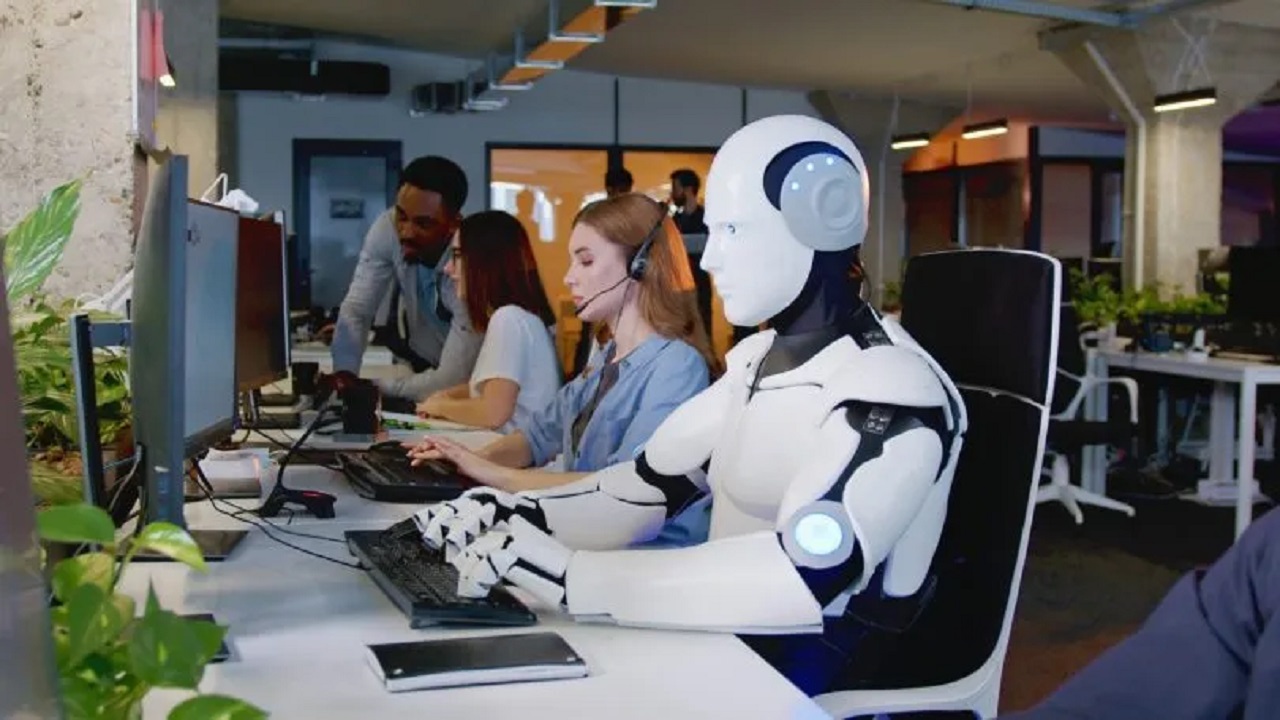

Arvind Krishna, CEO of IBM, Plans to Replace 7,800 Employees with Robots Using Artificial Intelligence (AI).
Arvind Krishna, the CEO of International Business Machines (IBM), a company that operates in the information technology sector, stated that the company intends to halt hiring new employees for jobs that could be performed by AI (Artificial Intelligence). The executive of the multinational plans to replace current employees in non-customer-facing roles.
IBM Plans to Replace 7,800 Jobs with Artificial Intelligence (AI)
This statement was made in an interview granted to Bloomberg. Arvind Krishna believes that 30% of the multinational’s workforce could be replaced by Artificial Intelligence and automation over the next five years.
The estimate by IBM is to replace 7,800 jobs of human employees with AI that can automate certain tasks, including in the human resources sector. The executive did not provide details on whether he plans to implement layoffs; however, he stated that some positions will not be filled when they become vacant.
-
China Develops Custom 140-Ton Electric Mining Truck with 770 kWh Swappable Battery, Deploys 290 Units in Xinjiang’s Largest Zinc Mine

-
Meta to Launch Arena, a New Prediction App Targeting 3.56 Billion Users, Competing with Polymarket and Kalshi

-
Scientist Challenges Famous Human Evolution Theory, Argues Homo Sapiens Evolved Gradually Over Thousands of Years
-
15-Year-Old American Builds Ocean Generator with PVC Pipe and 3D-Printed Propeller for $12, Wins National Prize, Presents at White House, and Makes Forbes 30 Under 30 List




Currently, IBM has about 260,000 employees worldwide, with 10% of this total assigned to roles outside of customer service. If the promise is fulfilled, the number of unemployed could rise to as many as 26,000.
What the labor market fears now is that other companies will follow IBM’s lead, especially if this initiative by the multinational proves successful. However, no timeline or layoff plan has been announced, meaning it may still take months or even years for the multinational to begin the replacement process.
This is not the first situation that the PC manufacturer has faced. Arvind Krishna’s multinational previously announced the layoff of 3,900 people at the beginning of 2023, a number that could rise to 5,000 positions by the end of the first quarter.
Will Artificial Intelligence Change the Labor Market?
The announcement of the replacement of workers with IBM robots is another bombshell in the AI sector, which is seen as a villain in various labor sectors. There is a real fear of rising unemployment globally due to the arrival of AIs in tasks performed by humans, as highlighted by the “godfather of AI” in his resignation from Google. Tasks related to content creation or daily activities could be executed, at least to some extent, by intelligent chatbots like ChatGPT.
Some social sectors are apprehensive about this possibility; however, until now, no company has made its plans to replace workers with AIs as clear as IBM did, under the leadership of Arvind Krishna. It is worth noting that BuzzFeed ended its news division after incorporating content production by Artificial Intelligence in place of journalists.
The IBM experiment could leave a mark on the market. If successful, there is a chance for further advances in the technology sector. If it fails, there may be more caution from business owners in dealing with human resources in their companies.
Understand What Can Be Considered Artificial Intelligence
Artificial Intelligence (AI) is a field of Computer Science that creates algorithms and systems capable of performing tasks with large datasets. Applications include machine learning, facial recognition, data mining, image diagnostics, language models like ChatGPT, and image generators like DALL-E 2 and Midjourney.
Artificial Intelligence enables machines to learn from experiences, adjust to new data inputs, and perform tasks like humans. Many of the AI examples currently discussed rely on deep learning and natural language processing.
With these technologies, computers can be trained to perform specific tasks by processing large amounts of data and recognizing patterns within that data.






