






 Portuguese
  Spanish
  3 min of reading
  0 comments


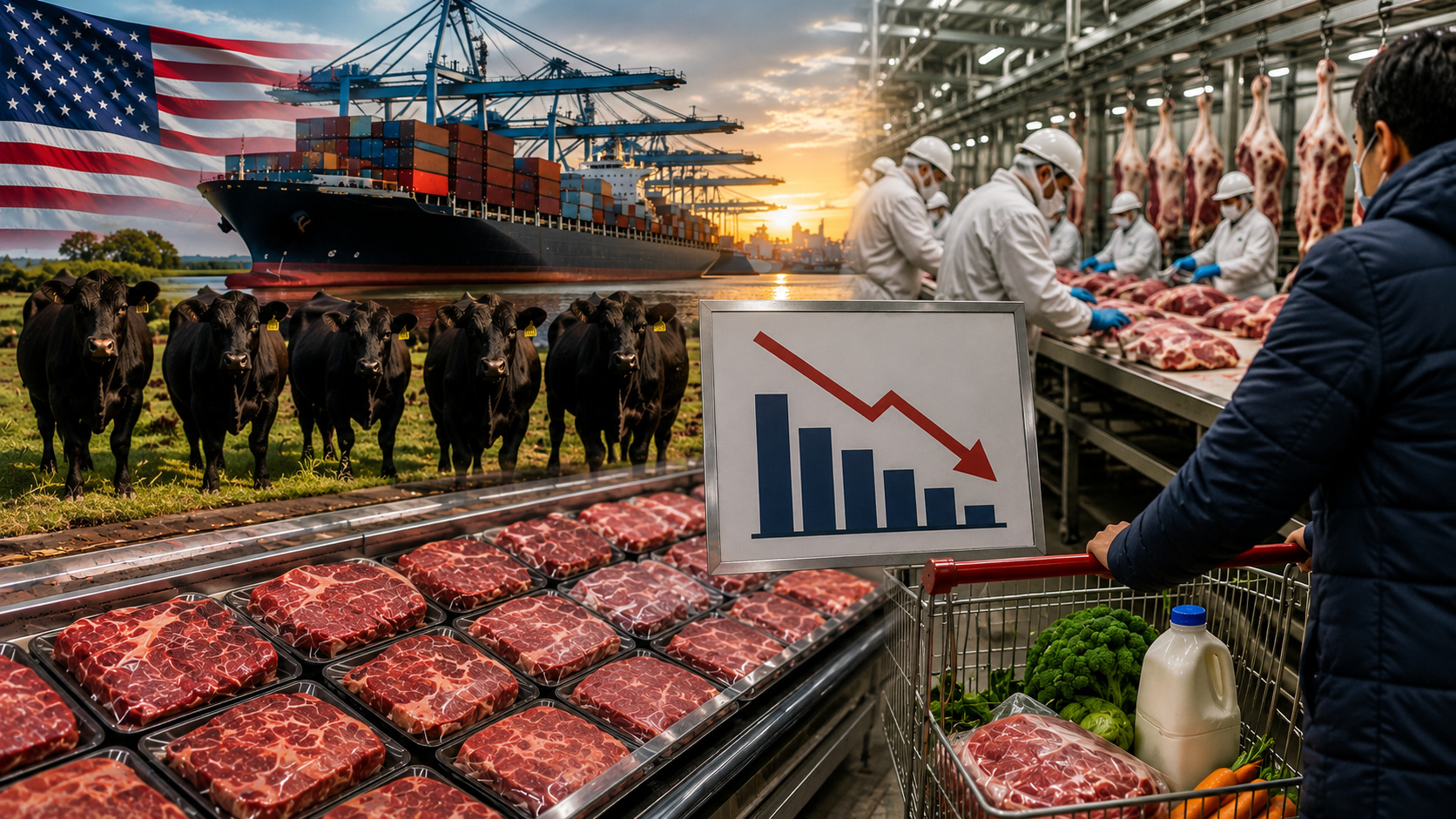
Temporary suspension of tariff quotas expected to facilitate imported beef entry into the United States, expand the supply of cuts and ground beef in the domestic market, ease pressure on food prices, and help the Trump administration tackle one of the biggest inflationary crises in the American food sector in recent years
The United States is expected to announce a new measure to increase the entry of imported beef into the country, in an attempt to curb pressure on food prices.
According to information from The Wall Street Journal, the White House intends to temporarily reduce beef import tariffs starting this Monday, May 11, 2026.
The proposal foresees the suspension of the annual tariff quota applied to imports, a mechanism that raises tariffs when a certain volume of shipments is reached.
-
Brazilian Joins Homeownership Consortium, Faces Decade of Dual Payments Totaling $141,000, Surpassing Traditional Mortgage

-
Land Rover to Halt Production in July, Putting 371 Jobs at Risk, as Chinese Automaker Negotiates to Convert Factory to 100,000 Vehicles Annually by 2027

-
Mexican Pest Threatens U.S. Cattle Herds at Historic Lows, Potentially Boosting Brazilian Beef Exports as Burger Prices Soar

-
Brazilian Freight Bill Progresses in Congress with $5,000 Minimum Wage, 70% Advance Payment, and Fines Up to $1 Million, as Agriculture and Industry Warn of Rising Costs and Legal Uncertainty


As a result, exporting countries will be able to increase sales to the North American market by paying lower tariffs.
Thus, beef cuts and ground beef are expected to enter the United States more easily, at a time of strong inflationary pressure.
Lower tariffs boost demand for imported meat
The easing is expected to benefit exporters who have already been increasing shipments to the United States since 2025.
According to Geraldo Isoldi, market analyst at Terra Investimentos, the sector was already monitoring the movement.
According to him, increased exports to the US would help offset some of the potential losses caused by Chinese safeguards.
In this scenario, Isoldi stated that a tariff reduction “is welcome” at this time.
The analyst also highlighted that meat prices in the United States continue to rise sharply.
Therefore, in his assessment, the country truly needs imported meat to relieve some of the pressure on the domestic market.
Restricted supply sustains price increases
The pressure on beef in the United States is directly linked to the reduction of the North American herd.
According to data from the United States Department of Agriculture, the USDA, the cattle herd reached its lowest level in 75 years.
In addition to the impact of the drought recorded in recent years, many ranchers reduced their production capacity.
During the pandemic, losses also led several breeders to reduce their herds.
With lower domestic supply, protein prices continued to rise even after the slowdown of other foods.
While eggs and milk lost inflationary momentum, beef maintained significant increases.
Ground beef, for example, accumulated an increase of about 40% in the last five years.

Plan also targets American ranchers
However, the Trump administration’s plan is not limited to beef imports.
According to The Wall Street Journal, the administration is also expected to announce measures aimed at ranchers in the United States.
Among them are the expansion of credit lines and the facilitation of access to financing for rural producers.
At the same time, the government is expected to reduce some regulatory requirements imposed on the sector.
Among the changes discussed are more flexible rules for electronic cattle identification.
Also under review is the revision of environmental measures related to wolf protection, a topic criticized by North American ranchers.
Government seeks immediate relief and future stimulus
The White House’s assessment is that increased imports could boost meat supply in the short term.
Meanwhile, reducing costs and bureaucracy could stimulate domestic livestock farming in the coming years.
In parallel, the Trump administration also eased tariffs on food, timber, and furniture.
According to the information released, measures involving steel and aluminum also underwent review.
Thus, the strategy combines immediate tariff relief with internal actions to try and reorganize supply in the American market.
The move comes at a time when beef remains one of the main pressure points on food inflation.
With lower tariffs and more meat entering the country, will the United States be able to ease consumer prices without harming its own ranchers?





Be the first to react!