






 Portuguese
  Spanish


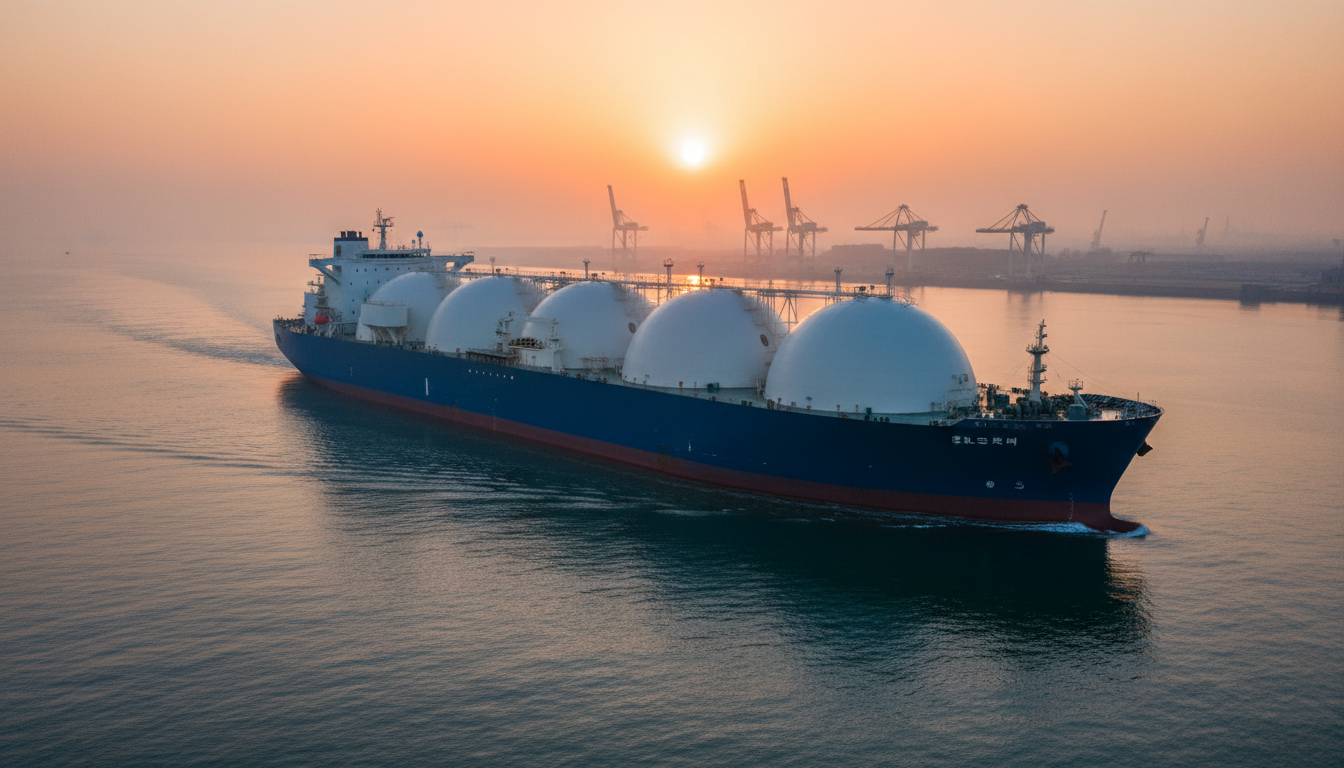

China delivers Celsius Georgetown, the largest LNG ship in the country’s history with 180,000 m³ and 298.8 meters, to Denmark and challenges South Korea’s leadership
In April 2026, China delivered its largest LNG ship in history: the Celsius Georgetown, with a capacity of 180,000 cubic meters and 298.8 meters in length, according to Maritime Executive. The ship was built by China Merchants Heavy Industry (Jiangsu), a subsidiary of the China Merchants Group, and delivered to Celsius Shipping of Denmark.
According to specialized coverage, the Celsius Georgetown is just the first of 6 sister ships ordered by Celsius Shipping from the Chinese. Meanwhile, the delivery of the second ship is expected within the next 3 months. According to the schedule, all 6 ships will be operational by the end of 2027, transporting LNG globally.
The milestone symbolizes a direct challenge to South Korea’s historical leadership in LNG carriers — a segment until now dominated by Hyundai Heavy Industries, Samsung Heavy Industries, and Hanwha Ocean. Therefore, industry analysts project that China could close the gap with Korea in 2 to 3 years, according to Maritime Executive.
-
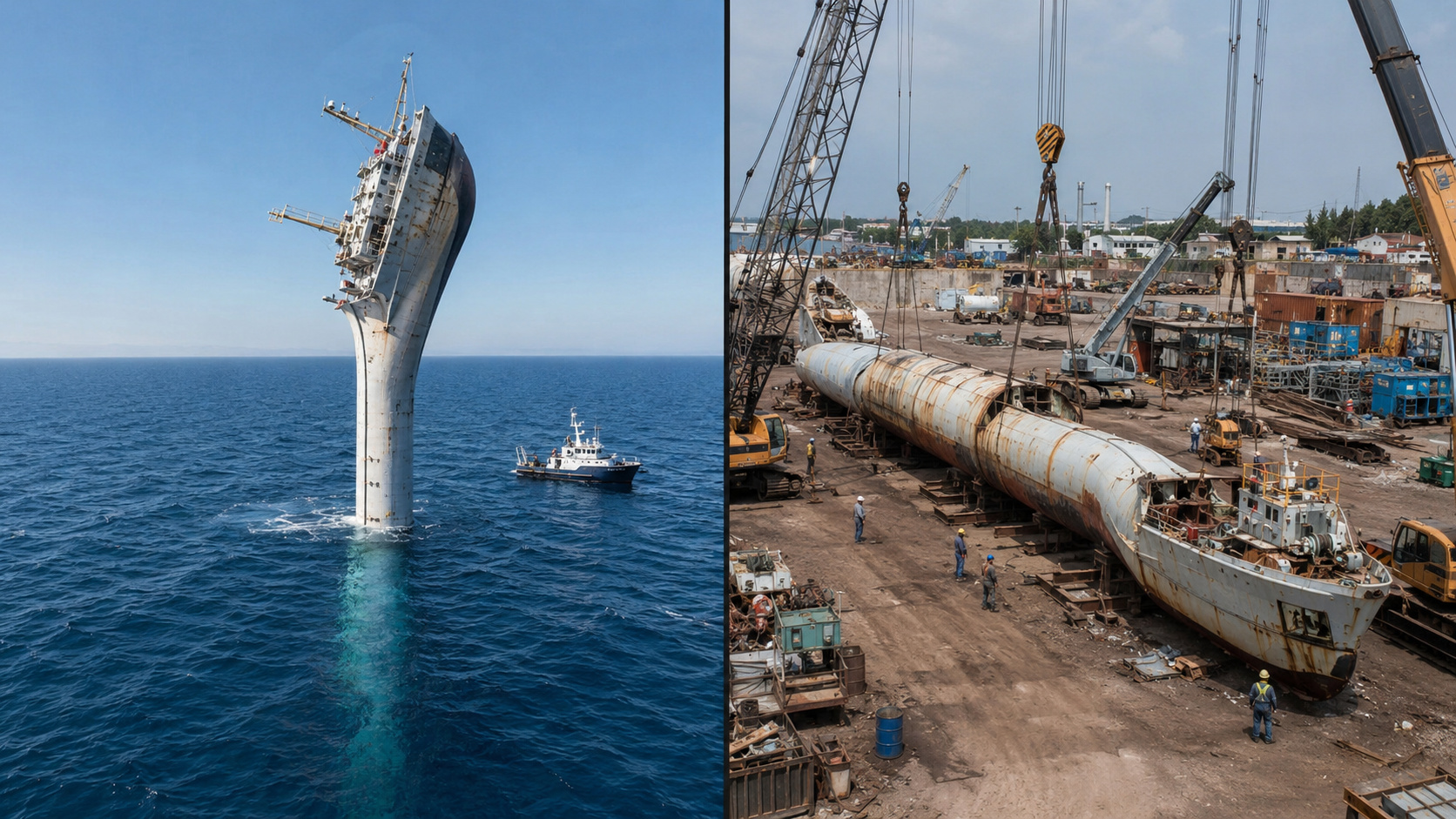
The FLIP: A 108-Meter Ocean Laboratory That Stood Vertically for 60 Years, Dismantled in 2023

-
North Korean Fiasco: Launch of the Largest Warship Ends in Sinking

-
While giant ships still burn heavy fuel and the maritime sector races against climate targets, Maersk and Vale are starting to bet on ethanol as a new route to reduce emissions at sea.

-
China begins construction of the world’s largest LNG ship, a 344-meter giant capable of supplying 4.7 million homes for a month, carrying 271,000 m³ of gas, and placing QatarEnergy in the largest naval order ever recorded in world history.


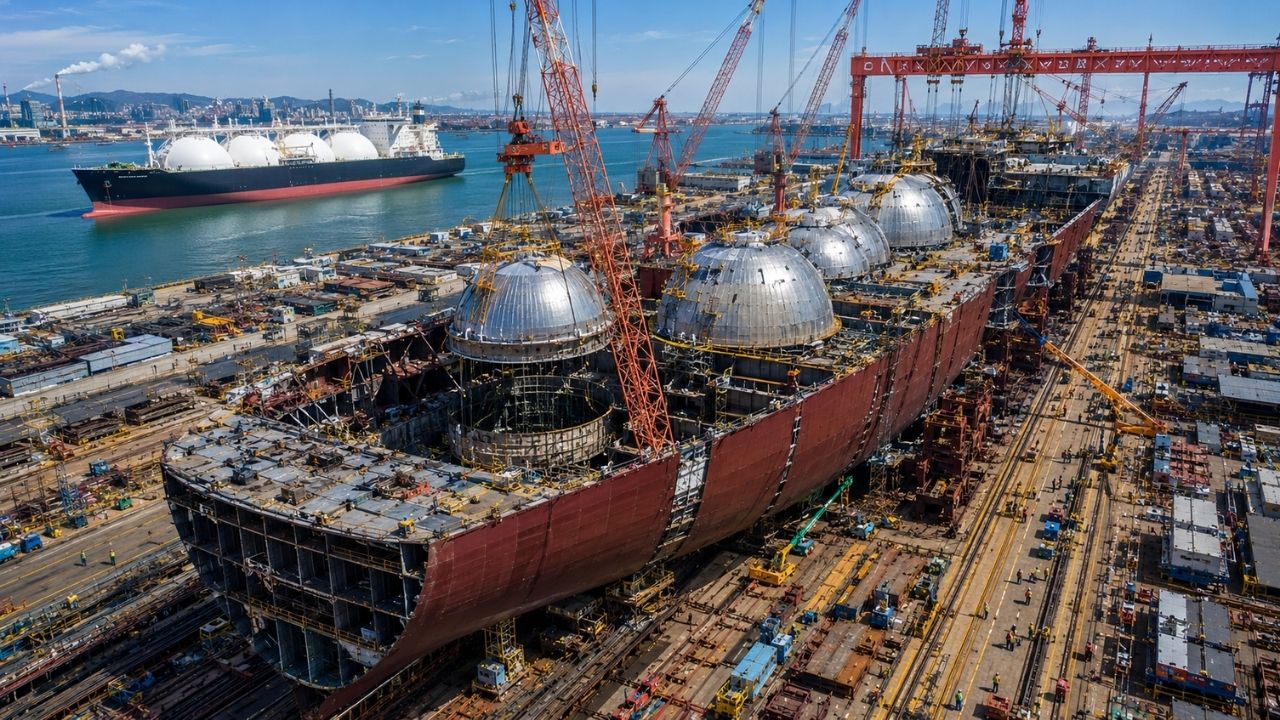
Celsius Georgetown: membrane technology and NO96 tanks
The Celsius Georgetown uses NO96 membrane-type tank technology, a standard licensed from the French Gaztransport & Technigaz (GTT). Firstly, this technology allows storing LNG at a cryogenic temperature of -162°C with insulation made of invar and balsa wood. Secondly, it ensures a lower boil-off rate — less than 0.1% per day.
According to technical specifications, the ship is 298.8 meters long (LOA), 45 meters wide (beam), 27 meters maximum draft, and has a payload capacity of 180,000 m³. In comparison, this is equivalent to the volume of 72 Olympic swimming pools in liquid LNG.
Meanwhile, propulsion is dual-fuel with a two-stroke low-speed engine that can burn both the boil-off gas from the LNG itself and low-sulfur fuel oil. Consequently, the ship meets the strict limits of IMO 2020 and Tier III emission rules. Similarly, it has a hybrid scrubber system for exhaust gases on European coastal routes.

China Merchants Heavy Industry: the Chinese shipyard that dared to challenge Korea
China Merchants Heavy Industry (Jiangsu) is located in the eponymous province, south of Shanghai. Firstly, it is a subsidiary of the state giant China Merchants Group — with over US$ 250 billion in assets. Secondly, it was originally specialized in bulk carriers and petrochemical products.
According to the sector, China Merchants’ entry into LNG carriers began only in 2022, with the first order from Celsius Shipping. Meanwhile, the shipyard invested US$ 1.5 billion in dock modernization and technical training. As a result, it took only 4 years to deliver the Celsius Georgetown — an impressive feat.
Meanwhile, China now has 5 main shipyards capable of building 180,000 m³ LNG carriers: Hudong-Zhonghua (CSSC), Jiangnan Shipyard, China Merchants Heavy Industry, Dalian Shipbuilding Industry, and CSSC New Continent Shipbuilding. On the other hand, there are 3 more new shipyards under construction to begin operations by 2028.
The geopolitics of LNG: why China, Korea, and Qatar compete at sea
The global market for LNG carriers is worth more than US$ 180 billion in construction until 2030, according to Clarksons Research. Firstly, there are 440 dual-fuel ships currently in operation. Secondly, there are more 764 ships under construction or on order. Consequently, the combined global fleet reaches 1,204 vessels.
According to the IEA (International Energy Agency), global demand for LNG is expected to double by 2035 — driven by Asia (China, Japan, Korea, India) and Europe (replacing Russian gas). Similarly, new export projects in Qatar (North Field East/South), the USA (Plaquemines, Corpus Christi), and Australia support growth.
Meanwhile, Korea still holds 70% of global orders for LNG carriers in 2025. On the other hand, China is rapidly growing — in 2024 it captured only 12% of orders; in 2025, 22%. Consequently, the projection for 2027 is a 30%+ Chinese market share. Similarly, Chinese costs are 10-15% lower than Korean.
- 180,000 m³ — capacity of the Celsius Georgetown
- 298.8 meters — total length (LOA)
- 45 meters beam, 27 meters draft
- 72 Olympic swimming pools — equivalent in liquid LNG
- 6 sister ships of the same class ordered
- -162°C — temperature of LNG in the tank
- 0.1%/day — minimum boil-off rate
Celsius Shipping: the Danish company that bet on China
Celsius Shipping is one of the world’s leading LNG shipowners, headquartered in Copenhagen. Firstly, it was founded in 2014 as a spin-off of Celsius Tankers focused exclusively on LNG. Secondly, it currently operates 14 LNG ships, with 6 more under construction in China and 4 in Korea.
According to Celsius, the decision to order 6 ships in China was motivated by 3 reasons: 15% lower price than Koreans, competitive deadlines of 4 years, and supplier diversification. Meanwhile, the company plans to double its fleet to 30 ships by 2030, meeting post-Russian European demand.
Consequently, Celsius is an example of a Western shipowner trusting Chinese shipyards for a critical energy fleet. In comparison, Shell, Total, and BP still predominantly prefer Koreans. Therefore, Celsius’s bet is seen as a market test — if successful, others may follow.
Impact for Brazil: Lula da Sierra’s gas and Petrobras
For Brazil, the delivery of the Celsius Georgetown has practical implications. Firstly, the country has 5 active regasification terminals: Pecém (CE), Bahia (BA), Açu (RJ), Sergipe (SE), and Guanabara (RJ). Secondly, Petrobras imports about 2 billion m³ of LNG/year via spot and contracts.
According to Petrobras, the growth of the global LNG carrier fleet reduces spot freight costs, benefiting consumers. Similarly, in 2022 spot freight reached US$ 300,000/day at the peak of the European crisis. In 2026, it is around US$ 80,000/day. Consequently, natural gas becomes more accessible for Brazilian industry and thermoelectric plants.
Meanwhile, Brazil has its own gas production in the pre-salt — about 50 million m³/day in May 2026. On the other hand, it still depends on imports to meet demand peaks. Therefore, the evolution of the global fleet directly affects the cost of Brazilian thermal energy in prolonged droughts.

The Chinese leap in LNG carriers and the talent war
The Chinese advance is not only industrial — it is also technological. Firstly, China registered 3,500 patents in shipbuilding in 2025, compared to 2,100 from Korea. Secondly, Chinese universities such as Harbin Engineering, Jiangsu University of Science and Technology, and Shanghai Jiao Tong graduate 15,000 naval engineers/year.
According to the industry, average salaries for Chinese naval engineers are 30% lower than Koreans, although technical competitiveness is similar. Similarly, China offers fiscal incentive packages to shipyards via Made in China 2025 and the Belt and Road initiative. Meanwhile, partnerships with European builders (GTT, Wärtsilä) bring complementary know-how.
In comparison, Korea tries to differentiate itself with premium technology — solid-state batteries for hybrid propulsion, autonomous navigation systems, and next-generation tanks like Mark III Flex. Therefore, Korea bets on high margin instead of volume.

Caveat on Chinese quality and durability
Although the delivery of the Celsius Georgetown is a milestone, experts warn about long-term issues. Firstly, LNG ships have an expected lifespan of 25-30 years. Secondly, the quality of steel, welding, and maintenance can only be fully assessed after 5-10 years of intensive operation.
On the other hand, there is a history of failures in Chinese merchant ships built in the 2010s — maintenance rates were 15-20% higher than Koreans. Similarly, insurers like Lloyd’s and Norwegian Hull Club apply higher premiums for the Chinese fleet. Other LNG sector coverage is in the Click Petróleo e Gás archive. Will Celsius Shipping confirm the bet with additional orders to China in the coming years?


