Portuguese
  Spanish



Senatran supervises implementation of the new Brazilian CNH at Detran-SP and targets 1 million São Paulo candidates for first-time licensing
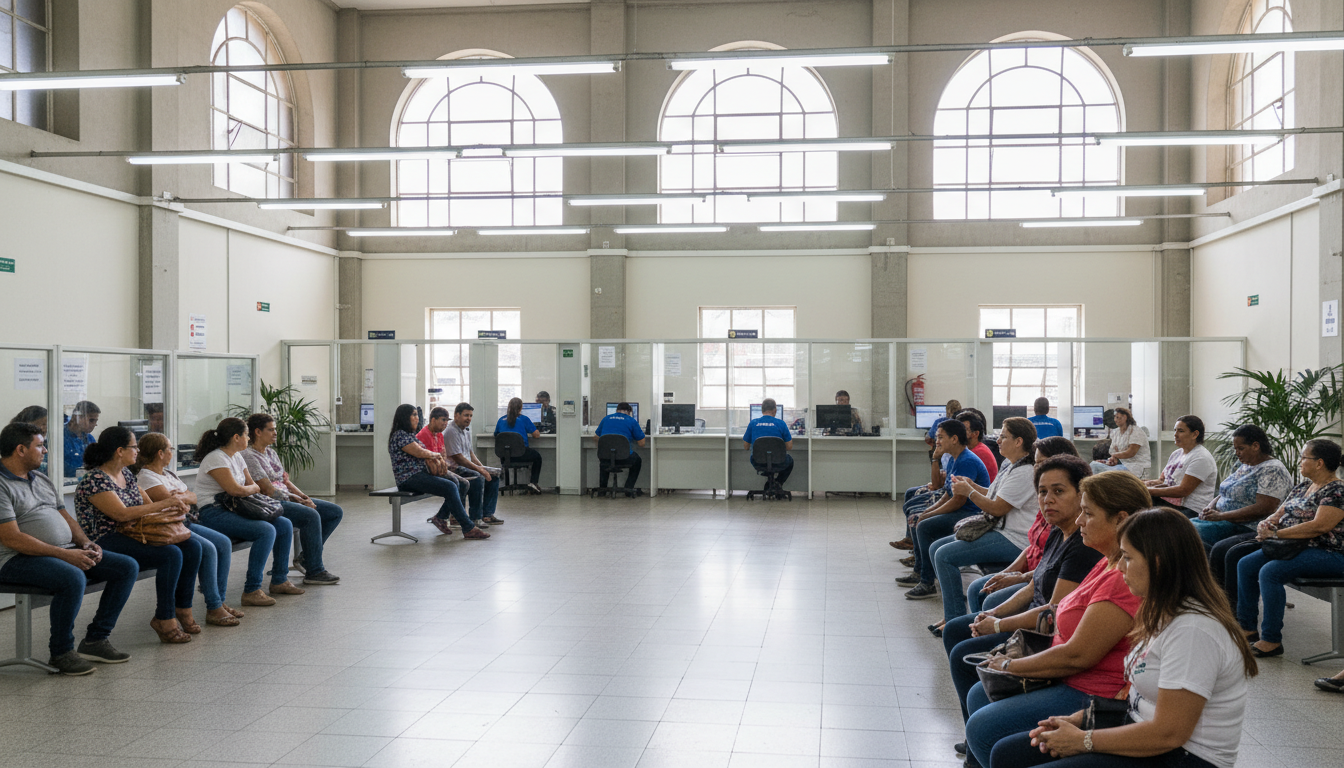
The National Traffic Department (Senatran) conducted a technical visit on April 23, 2026, to Detran-SP, with support from the Office of the Comptroller General (CGU), to oversee the implementation of the new Brazilian CNH — a program that revamps the licensing process in the country. The information was released by the Ministry of Transport.
The Brazilian CNH is regulated by CONTRAN Resolution No. 1,020/2025, published on December 9, 2025, and aims to modernize and simplify the process of obtaining a first-time license. According to Senatran data, the program has already registered 5.6 million applications for first-time licenses nationwide since its launch. São Paulo accounts for 1 million of these applications — more than 17% of the national total.
According to Senatran, Thalya Vitória Rezende, General Coordinator of Traffic Regulation, stated: “The technical visit was precisely to ensure the citizen’s right to a less bureaucratic licensing process”. Meanwhile, complaints reached Senatran about inadequate operations in São Paulo, Rio de Janeiro, and Paraná, prompting the oversight.
-
“Man with Bipolar Disorder Claims ChatGPT Exacerbated Delusions, Leading to Suicide Attempt”

-
U.S. House Approves Bill to Protect Children on Social Media, Limit Addictive Features, and Demand New Measures from Platforms, But Senate Differences Could Stall Progress
-
78-Year-Old Brazilian Farmer Wins Legal Battle for Ownership of 108,000 m² of Land After Decades of Dispute with Federal Government

-
Brazilian Supreme Court Pauses Fines for Workplace Regulation Violations for 90 Days, but Companies Must Still Address Harassment and Overwork



What changes with the Brazilian CNH
The new Brazilian CNH introduces 4 central changes in the licensing process. Firstly, the theoretical course is now free and digital, and can be completed at home via computer or mobile phone. Secondly, the mandatory practical lessons have been reduced to just 2 lessons — previously, there were 20 in-person lessons.
According to the Ministry of Transport, thirdly, the practical test can be scheduled with a personal vehicle, instead of requiring a driving school vehicle. Fourthly, the retest for failed theoretical and practical exams is now free on the first repetition. Consequently, the savings for the candidate can reach R$ 2,500 per license.
Simultaneously, the 12-month deadline to complete the process has been removed — previously, candidates lost everything if they exceeded the deadline. Similarly, the obligation to maintain a link with a driving school for the practical course has been relaxed. Consequently, the program promises to reduce the average CNH cost from R$ 4,000 to R$ 1,500, according to Senatran.

Why Senatran supervised Detran-SP
Detran-SP is the largest in the country, responsible for 40% of CNHs issued in Brazil. Firstly, complaints about delays in scheduling tests reached Senatran. Secondly, candidates reported improper charges for retests that should be free. Therefore, the oversight sought to validate whether Detran-SP was correctly applying Resolution 1,020/2025.
According to the preliminary report, 83% of São Paulo applications followed the new digital flow. Similarly, more than 500,000 candidates have already completed the free digital theoretical course in the state. Meanwhile, Detran-SP reported a 30% reduction in the average time to obtain the CNH compared to 2024.
In comparison, Paraná and Rio de Janeiro will also receive inspections in May and June 2026. Consequently, Senatran hopes to establish a uniform national standard. To understand the scale, there are 27 state Detrans + Detran-DF that need to adapt to the new rule simultaneously.
CONTRAN Resolution 1,020/2025: the legal framework behind the Brazilian CNH
CONTRAN Resolution No. 1,020/2025 was unanimously approved by the National Traffic Council in December 2025. Firstly, it introduces changes to Article 148 of the Brazilian Traffic Code (CTB) that regulate driver training. Secondly, it updates guidelines on theoretical exams, practical exams, and defensive driving.
According to the Contran portal, the resolution was the result of 18 months of public consultation, with participation from Detrans, driving schools, driver associations, and experts. Similarly, the National Confederation of Detrans (CNDET) participated in the final drafting.
Meanwhile, there are 5 more complementary resolutions planned for 2026 detailing operational aspects. Consequently, the complete legal framework will only be consolidated by the second semester. Therefore, some Detrans are still operating in transition between old and new rules.
- 5.6 million first-time license applications in Brazil
- 1 million in São Paulo (17% of the total)
- R$ 2,500 average savings per candidate
- 2 mandatory practical lessons — previously 20
- 04/23/2026 — date of Detran-SP supervision
- Resolution 1,020/2025 — legal framework
Criticism: driving schools lose revenue and threaten to close
The driving school sector is facing a crisis. Firstly, the reduction from 20 to 2 mandatory practical lessons eliminated 90% of the average revenue per candidate. Secondly, the theoretical course moving to digital and free removes another important source.
According to the National Confederation of Detrans, more than 14,000 driving schools operated in Brazil in 2024. Meanwhile, the estimated closure by the end of 2026 is 30% to 40%. Similarly, unions estimate a loss of 40,000 direct jobs among instructors and administrative staff.
On the other hand, the government states that driving schools can adapt by offering optional additional lessons and vehicle rental services for the practical test. Consequently, part of the sector is shifting to an “à la carte” model — candidates pay only for what they need.

Implication for Brazilian drivers
For the individual candidate, the Brazilian CNH brings significant savings. Firstly, the average cost drops from R$ 4,000 to R$ 1,500. Secondly, the average time to obtain a license drops from 6 months to 3 months. Meanwhile, candidates can take the theoretical course on their mobile phones, at flexible times.
According to Senatran, the program aims to reach a portion of the population that did not obtain a CNH due to cost barriers. Similarly, motorcyclists (category A) and private drivers (category B) are the most benefited. Consequently, the expectation is a 30% increase in the total number of licenses by 2027.
Meanwhile, road safety experts express concern about the reduction of practical lessons. In comparison, countries like Germany require a minimum of 25 practical lessons. Therefore, there is debate about whether the new Brazilian model maintains the quality of training or simply reduces the cost.

Note on driver safety and qualification
Although the Brazilian CNH program reduces costs and time, there is an important technical note. Firstly, road safety experts warn that few mandatory practical lessons may compromise driver training. Secondly, Brazil had 33,000 deaths in traffic accidents in 2024, with 80% related to human error.
On the other hand, Senatran argues that studies show that excessive practical lessons do not significantly improve safety. Similarly, models like the American one (which requires fewer lessons) have similar or better rates. Consequently, the controversy is open. Other coverage of changes in Brazilian traffic is available in the Click Petróleo e Gás archive. Will reducing mandatory lessons increase or decrease accidents in the coming years?