






 Portuguese
  Spanish


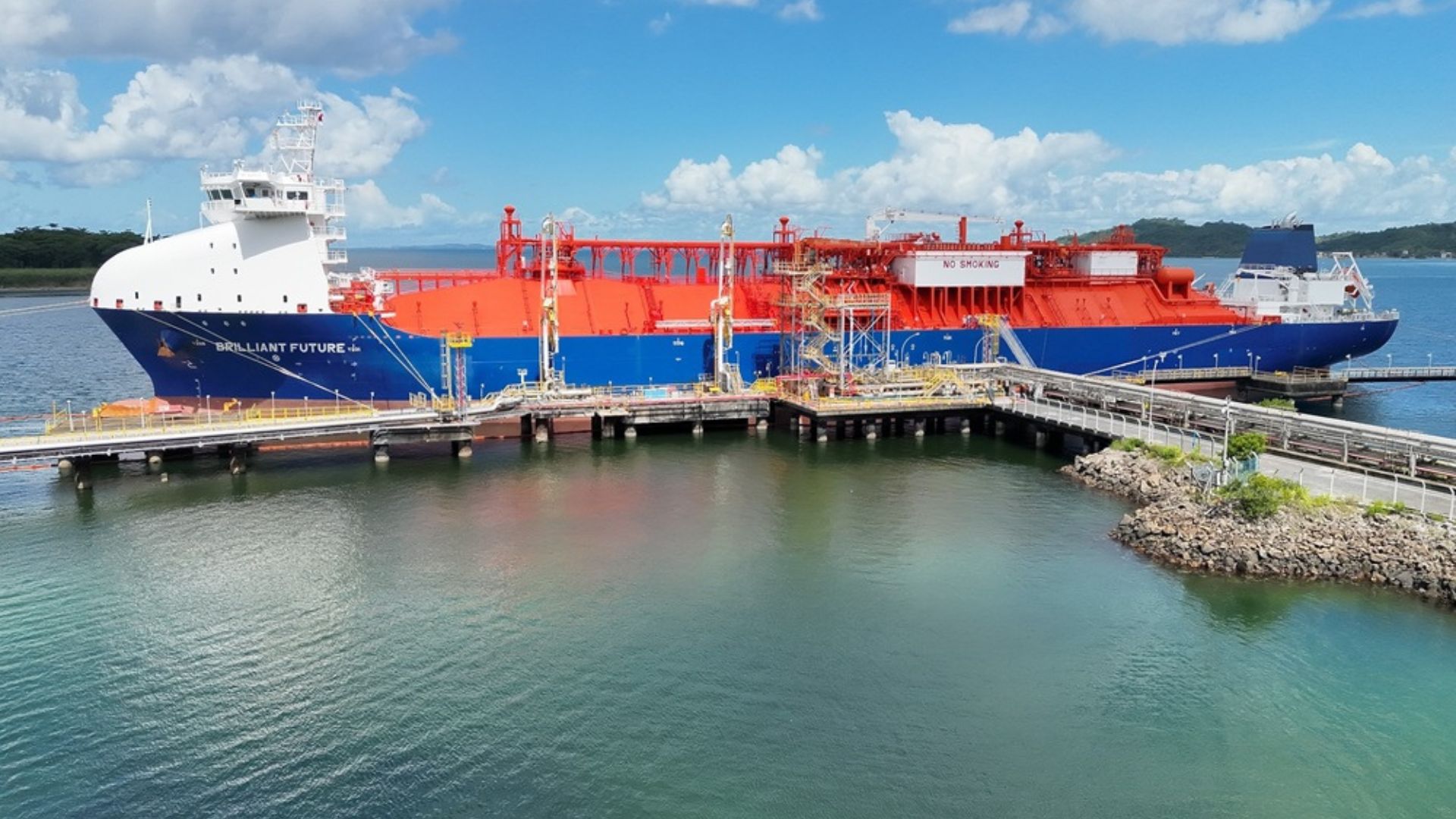

Brilliant Future Ship arrives in Bahia with over 18 thousand tons of ethane and strengthens Braskem’s petrochemical logistics in Camaçari.
In April 2026, the gas carrier Brilliant Future docked for the first time at the Port of Aratu, in Candeias, in the Metropolitan Region of Salvador, carrying over 18 thousand tons of ethane from Texas, USA. The information was released by Braskem on April 27, 2026, in a regional statement about the operation in Bahia. The cargo is destined for the petrochemical units in the Camaçari Industrial Complex, where ethane is used as a raw material in petrochemical production. The most striking point of the operation is the technical complexity: according to Braskem, the product is transported at 90 degrees below zero in a ship designed for liquefied gases.
The operation should not be treated as a simple cargo arrival at the port. It shows how the Brazilian petrochemical industry depends on highly specialized maritime routes, cryogenic ships, imported raw materials, and integration between port, terminal, and industrial complex to maintain competitiveness.
Brilliant Future Ship arrived from Texas with ethane to supply the Camaçari Industrial Complex
The Brilliant Future arrived in Bahia from Texas with over 18 thousand tons of ethane. According to Braskem, the raw material is used in the company’s units in the Camaçari Industrial Complex, one of the main petrochemical complexes in Brazil.
-
The FLIP: A 108-Meter Ocean Laboratory That Stood Vertically for 60 Years, Dismantled in 2023

-
North Korean Fiasco: Launch of the Largest Warship Ends in Sinking

-
While giant ships still burn heavy fuel and the maritime sector races against climate targets, Maersk and Vale are starting to bet on ethanol as a new route to reduce emissions at sea.

-
China begins construction of the world’s largest LNG ship, a 344-meter giant capable of supplying 4.7 million homes for a month, carrying 271,000 m³ of gas, and placing QatarEnergy in the largest naval order ever recorded in world history.




The ship is part of Braskem Trading & Shipping, a unit created in January 2024 to operate in the commercialization, logistics, and international maritime transport of petrochemical products and raw materials. The company states that the initiative aims to reduce costs, increase logistical security, and strengthen competitiveness.
Braskem reported that this proprietary structure could generate savings of over 30% in operations, a fact that makes the arrival of the Brilliant Future relevant not only for the volume transported but for the direct impact on the petrochemical’s international logistics.
Ethane at 90 degrees below zero requires a specialized gas carrier and complex cryogenic operation
Ethane needs to be transported under cryogenic conditions to remain liquefied during the sea voyage. According to Hardi Schuck, leader of Braskem Trading & Shipping, the Brilliant Future transports the product at 90 degrees below zero.
This technical detail is central to the agenda. It is not an ordinary bulk carrier nor a conventional tanker, but a vessel designed for the transport of liquefied gases, with its own tanks and systems to keep the cargo at low temperatures.
Braskem also reported that the Brilliant Future has a flex engine, capable of using conventional fuel or ethane. The company’s priority is to use ethane as fuel, a scenario in which CO₂ emissions reduction can reach 40% compared to the average of existing ships on the market, according to the company.
188-meter vessel uses trilobate-star tanks and increases capacity within the same ship length
The Brilliant Future is 188 meters long and 29 meters wide. Braskem reports that the ship has the capacity to transport 19 thousand tons of product, a scale that allows for more efficient supply to industrial plants.

Another technical differential is in the trilobate-star type tanks. According to Victor Molina, coordinator of Vetting at Braskem Trading & Shipping, this semi-pressurized system optimizes the internal space of the vessel.
The company states that, compared to bilobate tanks, the trilobate-star shape allows for an almost 30% increase in capacity considering the same ship length. This gain is relevant because it increases payload without requiring a proportionally larger vessel.
Braskem states that ethane expands industrial alternatives in Camaçari and increases competitiveness
Carlos Alfano, industrial director of Braskem in Bahia, stated that the ship plays an essential role in supplying raw materials for petrochemical production. According to him, ethane is one of the most competitive raw materials in the petrochemical industry at the moment.
The Correio newspaper reported that one of Braskem’s two petrochemical plants in Camaçari is enabled to operate with naphtha or ethane, while the other, older one, is supplied only with oil derivative.
According to the Correio, this flexibility allows the use of up to 30% gas in the production of petrochemical inputs at the flex unit. This makes ethane relevant because it expands the choice of raw materials in scenarios of cost pressure.
Route between the United States and Bahia began to be prepared years before the arrival of the new ship
The arrival of the Brilliant Future is part of a strategy that did not start in 2026. In 2016, Braskem announced an investment of R$ 380 million to enable the use of ethane gas as a raw material in its operations in Bahia.

At the time, the company reported that the investment would involve adapting the logistics infrastructure at the Aratu Port Terminal, interconnection pipeline, and technological adaptation at the Basic Petrochemicals Unit of the Camaçari Petrochemical Complex.
Braskem also informed in that announcement that the ethane would depart from Morgan’s Point port in Houston, Texas, be liquefied and transported in special refrigerated ships at 90 degrees negative to the Liquefied Gases Terminal at the Port of Aratu.
Port of Aratu functions as an entry point for strategic cargo of the Bahian petrochemical industry
The Port of Aratu appears as a central logistical piece in this operation because it receives the imported cargo before its transfer to the industrial complex. Braskem itself cites the Liquefied Gases Terminal at the Port of Aratu as part of the ethane route destined for Bahia.
The port structure, therefore, does not only act as a discharge point. It is part of a chain that includes international maritime transport, storage, cryogenic systems, pipeline transfer, and industrial consumption in Camaçari.

This integration between ship, terminal, and petrochemical complex shows why modern industrial logistics depend on highly specialized infrastructure, especially when it involves liquefied gases and imported raw materials.


