Portuguese
  Spanish


Hanwha Ocean delivers 2 LNG ships of 174,000 m³ to MISC as South Korea defends leadership against Chinese advancement in the sector
The Malaysian group MISC Berhad held the christening ceremony for two new LNG carriers: Seri Dian and Seri Dayang on May 7, 2026, according to Maritime Executive. Each LNG ship has a capacity of 174,000 cubic meters of liquefied natural gas and was built by the shipyard Hanwha Ocean Co., Ltd., from South Korea.
According to The Star (Malaysia), the two LNG ships will operate under a long-term charter with SeaRiver Maritime LLC, a subsidiary of ExxonMobil. Meanwhile, the group’s president and CEO, Zahid Osman, highlighted that the partnership reinforces operational security and expands the global fleet.
The key point of the delivery is geopolitical: South Korea is trying to maintain its leadership in LNG carriers in the face of Chinese advancement. According to specialized coverage, Chinese shipyards delivered ships of up to 180,000 m³ in the same period, narrowing the gap with the northern Asians.
-
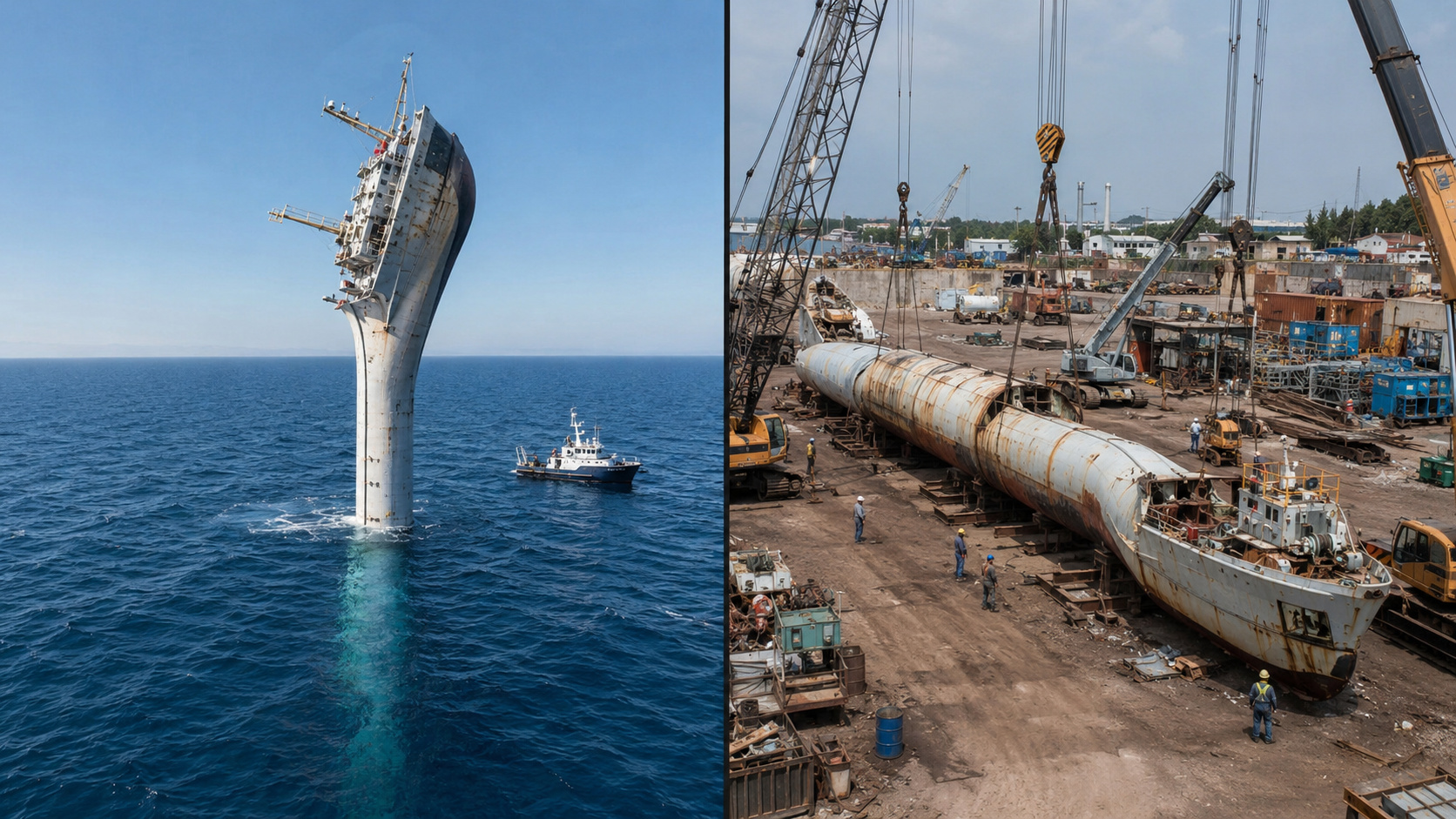
The FLIP: A 108-Meter Ocean Laboratory That Stood Vertically for 60 Years, Dismantled in 2023

-
North Korean Fiasco: Launch of the Largest Warship Ends in Sinking

-
While giant ships still burn heavy fuel and the maritime sector races against climate targets, Maersk and Vale are starting to bet on ethanol as a new route to reduce emissions at sea.

-
China begins construction of the world’s largest LNG ship, a 344-meter giant capable of supplying 4.7 million homes for a month, carrying 271,000 m³ of gas, and placing QatarEnergy in the largest naval order ever recorded in world history.


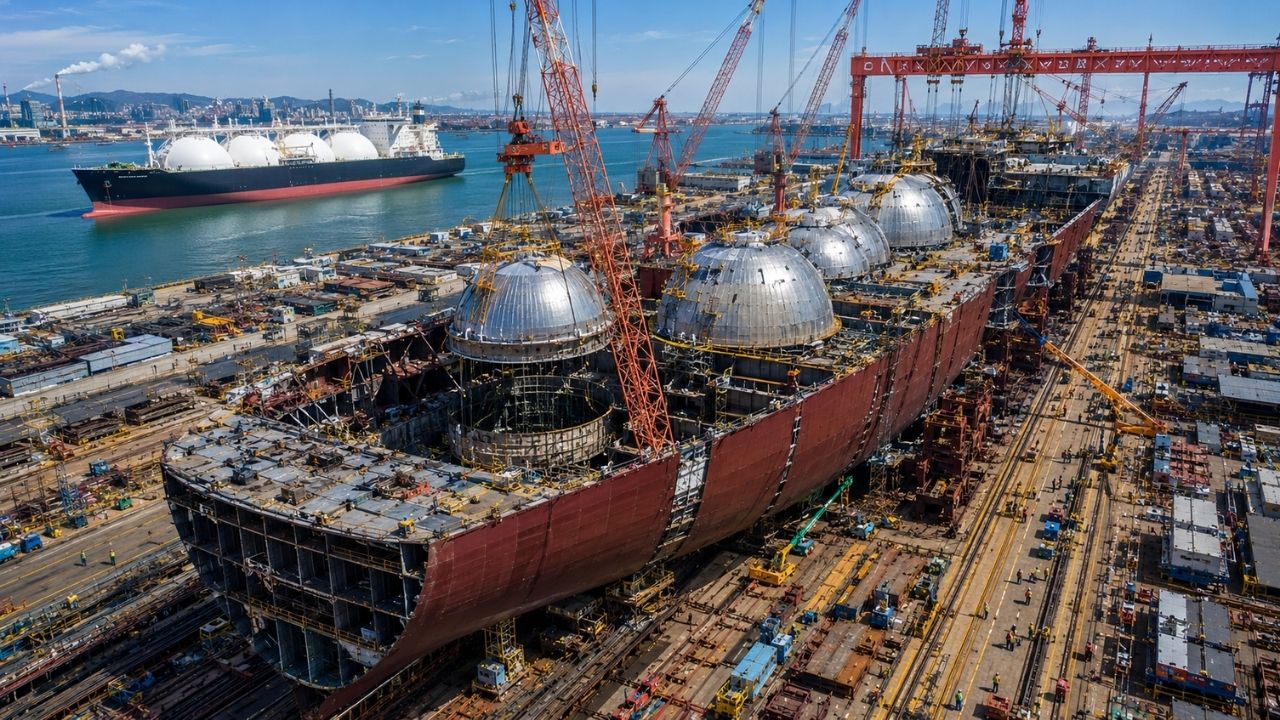
Seri Dian and Seri Dayang: smart technology and energy efficiency
The two LNG ships have membrane-type tanks with advanced cryogenic insulation. Firstly, both operate with dual-fuel engines prepared to burn boil-off gas (BOG) and low-sulfur fuel oil. Consequently, they meet the IMO 2020 limits and Tier III rules for NOx emissions.
According to data released by LNG Industry, the ships also include real-time remote monitoring systems, with sensors in more than 200 points of the hull and cargo. On the other hand, Hanwha Ocean implemented a hybrid exhaust gas treatment system.
To understand the scale, each 174,000 m³ LNG ship can store energy equivalent to 1.1 million barrels of oil. In comparison, this supplies the electricity consumption of a city of 1 million inhabitants for 25 days. Similarly, the transported gas supplies regasification terminals in Europe, Japan, Korea, and China.

The geopolitics of LNG: Korea, China, and Qatar compete for the market
The global LNG carrier industry is dominated by three players: South Korea, China, and (recently) Qatar. In 2025, Korea accounted for about 70% of global orders, according to industry data. On the other hand, Chinese shipyards like Hudong-Zhonghua and China Merchants Heavy Industry have been accelerating deliveries.
According to an analysis by Offshore Energy, there are currently 440 dual-fuel vessels in operation worldwide and more 764 ships on order. In summary, this means private investment exceeding US$ 180 billion in global LNG shipbuilding.
Meanwhile, Qatar has signed contracts for the delivery of more than 100 LNG ships by 2028. Consequently, the race for the global fleet is tripolar: while Korea focuses on high technology, China on volume and price, and Qatar on vertical integration with its gas production.
ExxonMobil and SeaRiver’s strategy as a charterer
SeaRiver Maritime LLC, ExxonMobil’s transportation arm, signed a long-term contract with MISC to operate Seri Dian and Seri Dayang. In other words, ExxonMobil ensures predictability in the transportation of LNG extracted from its fields in Qatar, the USA, and Mozambique.
According to the official announcement, the freights will be used on Atlantic-Asia routes, with stops at terminals like Sabine Pass (USA), Ras Laffan (Qatar), and Futtsu (Japan). Similarly, part of the cargo may serve the European market via the Netherlands and the United Kingdom after bypassing the Strait of Hormuz on alternative routes.
- 174,000 m³ of LNG capacity per ship
- 2 LNG ships delivered simultaneously
- May 7, 2026 — date of the christening ceremony
- Hanwha Ocean — shipyard builder
- SeaRiver/ExxonMobil — long-term charterer
Impact for Brazil and Lula da Sierra’s gas
For Brazil, the expansion of the global LNG carrier fleet matters directly. Firstly, the country operates 5 active regasification terminals: Pecém (CE), Bahia, Açu (RJ), Sergipe, and Guanabara (RJ). Secondly, Petrobras invests in domestic gas production in the pre-salt, but still relies on imports to meet thermal demand.
Similarly, new efficient ships reduce spot freight costs, benefiting Brazilian distributors and the thermal industry. In comparison, in 2022, LNG freight costs reached US$ 300,000 per day at the peak of the European crisis; in 2026, the average cost is around US$ 80,000 per day.
On the other hand, Petrobras is considering entering the LNG spot market to address internal production shortfalls. Consequently, a more modern global fleet makes Brazilian supply more resilient, especially during drought periods when hydroelectricity declines.

Why LNG will still grow for the next 10 years
Despite the energy transition, projections from the International Energy Agency indicate growth in natural gas consumption until 2035, especially in Asia and Africa. Firstly, more than 70 countries use gas for thermal generation as a complement to wind and solar. Secondly, chemical industries and refineries remain dependent on gas as a raw material.
According to analysis, the global LNG supply is expected to double by 2030, driven by new projects in the USA (Plaquemines, Corpus Christi, Rio Grande LNG), Qatar (North Field East and South), and Australia. Similarly, West Africa is gaining relevance with projects in Mauritania and Senegal.

Note on Chinese competition
Although Korea still leads orders, analysts point out that China could close the gap in 2 to 3 years in added value. In other words, Korea’s current advantage is cyclical, not structural. Therefore, MISC and ExxonMobil are likely to diversify their portfolio between Korean and Chinese shipyards in future orders.
On the other hand, Korean labor costs have risen in recent years. Consequently, some analysts project consolidation between Hanwha Ocean and HD Hyundai Heavy Industries by 2028. Further developments in the naval and energy sectors continue in the Click Petróleo e Gás archive. Will the next wave of orders come from China instead of Korea?