Portuguese
  Spanish




Maglev System Promises Faster, Cheaper, and More Sustainable Launches and Could Change the Space Race
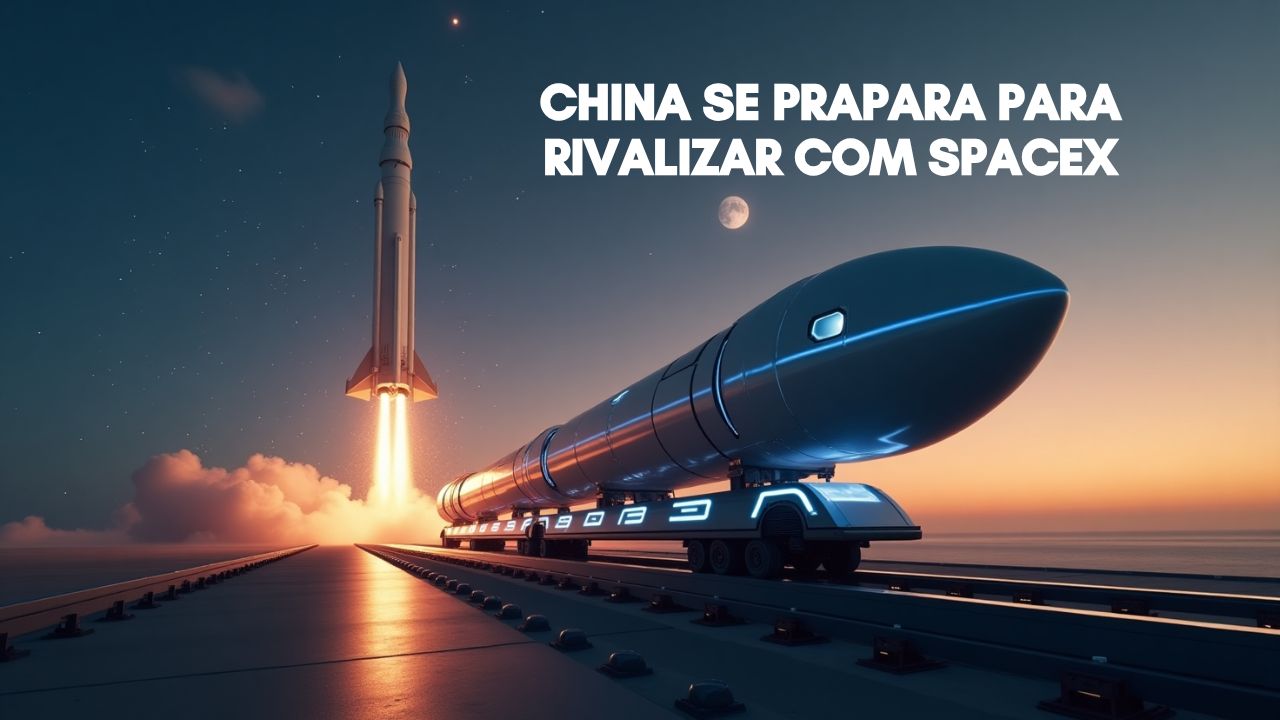
China is preparing for a bold leap in the space race: launching rockets with magnetic levitation to compete directly with companies like SpaceX. The project, led by a private Chinese company, aims to transform the launch concept by employing maglev technology, the same used in bullet trains, to accelerate rockets before ignition. This innovation could reduce costs, increase safety, and elevate the frequency of space missions. The information was published by international portals such as Interesting Engineering, SCMP, and Caliber.az.
China wants to establish itself as an aerospace power and is directly targeting the SpaceX model, known for its rocket reuse and technological advances. To achieve this, it is investing in a platform that uses magnetic levitation (maglev) to propel rockets horizontally at very high speeds before vertical takeoff. According to the South China Morning Post, the idea is to reduce fuel consumption, lessen the impact on engines, and lower the launch process costs. This technology could be the differentiator for China compared to SpaceX’s strategy based on conventional reusable rockets.
How The Maglev System Works For Space Launches
The maglev concept is already known for its use in high-speed trains, like the ones operating in Shanghai. In the space sector, the technology is being adapted to create a horizontal track where the rocket will be accelerated without friction, using magnetic fields, until it reaches supersonic speeds. According to Interesting Engineering, this approach promises not only efficiency but also less structural wear on the aircraft and a quieter and cleaner operation, something that SpaceX also seeks in its projects with more sustainable vehicles.
-
The large jar blender has a rival: Oster Ultra Power bets on 1,000 W, six stainless steel blades, and two portable cups with leak-proof lids.

-
Tesla injected an additional $250 million into the German factory, doubled the battery cell target, and opened its own production line for startups.

-
No more TV stuck on the wall: Samsung The Freestyle+, the new projector with over 400 lumens projects on walls, floors, and ceilings, bringing cinema to any corner of the house.
-
A Japanese governor single-handedly stalled the construction of the world’s fastest train for nine years, and only now has he agreed to allow a tunnel excavated at a depth of 1,400 meters.



China Aims To Test Maglev Platform By 2028 To Compete With SpaceX
The Chinese company Galactic Energy leads the project and hopes to inaugurate the first operational maglev launch platform by 2028. As reported by Caliber.az, the construction of the complex is already at an advanced stage and involves specialists from various fields, including former employees of space agencies. This initiative is part of China’s plans to establish itself as a key player in the new space market, where SpaceX currently reigns supreme in terms of launches and international contracts.
Advantages Over SpaceX’s Current Model
Although SpaceX has revolutionized the sector with reusable rockets, the Chinese proposal with maglev aims at other advantages: lower fuel consumption, reduced launch costs, and a fixed structure with lower maintenance. According to analysis from SCMP, this new approach could allow for more frequent launches with shorter intervals between missions, which would especially benefit commercial projects and small satellites. If it works as planned, China could surpass SpaceX in frequency and accessibility in the medium term.
The competition between SpaceX and the Chinese space program goes beyond technology; it involves geopolitics, economics, and the future of human presence in space. The introduction of maglev as a viable launch option could open new commercial, scientific, and even interplanetary routes. For experts, if China can validate the model, the world will witness a new revolution in access to space. Meanwhile, SpaceX remains a reference, but now with stiffer competition on the horizon.