






 Portuguese
  Spanish


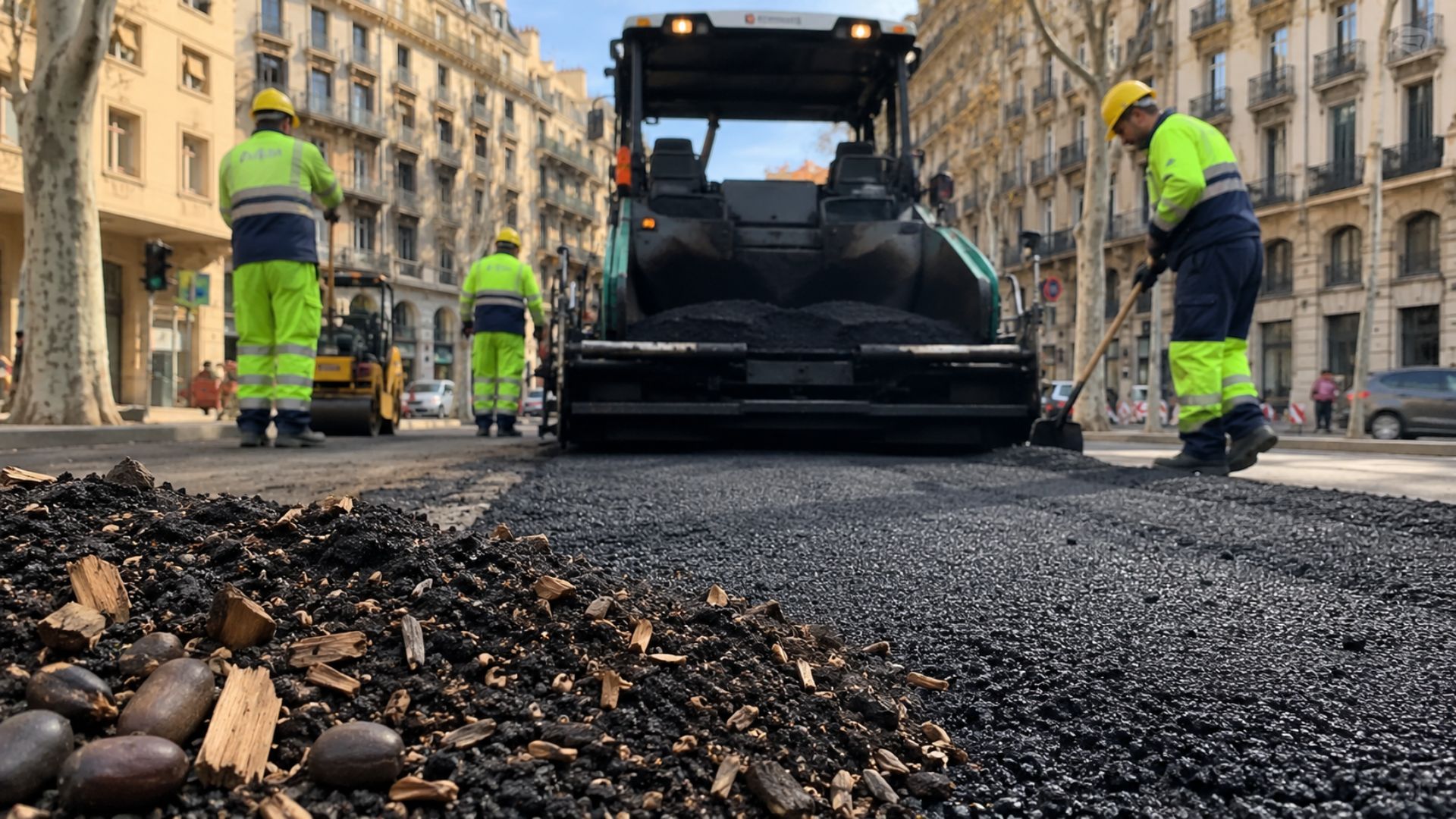

Sustainable paving project transforms organic waste into material for urban streets and positions Barcelona as one of the first major cities in Europe to test asphalt with biochar on a large scale.
Starting in 2026, Barcelona will begin testing pavement with biochar produced from olive pits and wood waste, in a project aimed at reducing the carbon footprint of road works and reusing organic materials that were previously discarded.
Applied in a pilot area on Cerdà Street, in the Eixample district, the solution replaces traditional mineral filler with a carbon-rich additive, incorporated into the asphalt mixture to preserve urban performance and reduce emissions associated with paving.
How asphalt with biochar works in Barcelona
Obtained from the transformation of biomass in a low-oxygen environment, biochar preserves part of the carbon present in plant waste and keeps this material stable for extended periods, a characteristic considered strategic in urban decarbonization projects.
-
Smart Connectivity Transforms Daily Life: High-Speed Internet, 5G Mobility, and Seamless Service Control

-
World’s First Fully Robot-Operated Hotel to Begin Trials with Real Guests in 2026, Full Opening in China Set for 2027

-
Estonia Constructs Bunkers and Trenches on Russian Border to Strengthen NATO Defense and Signal Baltic Readiness

-
Heidelberg’s 670-ton, 25-meter medical machine rotates 360 degrees to target hard-to-reach tumors with ion beams without surgery.


In Barcelona’s case, the technology primarily uses olive pits and pine residues, two abundant wastes in regional production chains that are now part of a mixture specifically developed for urban paving applications.
By preventing this carbon from being released through decomposition or burning of the waste, the process transforms the pavement into a structure capable of storing carbon throughout the entire lifespan of the road.
Emission reduction could reach 76%
According to preliminary data associated with the project, the partial replacement of mineral filler with biochar can reduce the carbon footprint of the pavement by up to 76% compared to conventional asphalt mixtures used in urban works.
Although the technology still relies on petroleum-derived binders to compose the asphalt mass, the change reduces part of the traditionally used mineral inputs and significantly alters the environmental balance of paving.
In addition to emission reduction, the pilot also monitors mechanical resistance, durability, thermal behavior, and the ability to withstand heavy traffic, criteria considered decisive for a potential expansion of the material’s use in other city regions.
Cerdà Street will be an urban laboratory for the test
With about 2,000 square meters, the experiment conducted on Cerdà Street brings together the Barcelona City Council, the BIT Habitat foundation, the Sorigué group, and technical teams responsible for the development and monitoring of the new asphalt mixture.
Chosen to receive the test, the road will allow for the evaluation of the pavement’s behavior under real usage conditions, including climate variations, constant vehicle circulation, daily wear, and maintenance needs throughout its operation.
If the results confirm the technical feasibility of the solution, the city may expand the use of biochar in future roadworks, integrating urban infrastructure, waste management, and climate goals within a single public strategy.
Circular economy enters the center of roadworks
Traditionally reliant on energy-intensive materials and industrial processes with high environmental impact, urban paving is among the most challenging sectors to decarbonize within the infrastructure policies of large cities.
In this scenario, the reuse of agricultural and forestry waste emerges as a circular economy alternative by transforming low commercial value by-products into components applicable to large-scale urban works.
In Mediterranean regions, where there is extensive olive oil production and a constant availability of plant biomass, the experience conducted by Barcelona serves as a practical reference for other road networks interested in reducing emissions.
Even so, the expansion of the technology depends on field performance proof, the continuous supply of organic waste, and the economic viability necessary to incorporate the material into public contracts without compromising technical quality standards.


