





 English
  4 min of reading
  0 comments


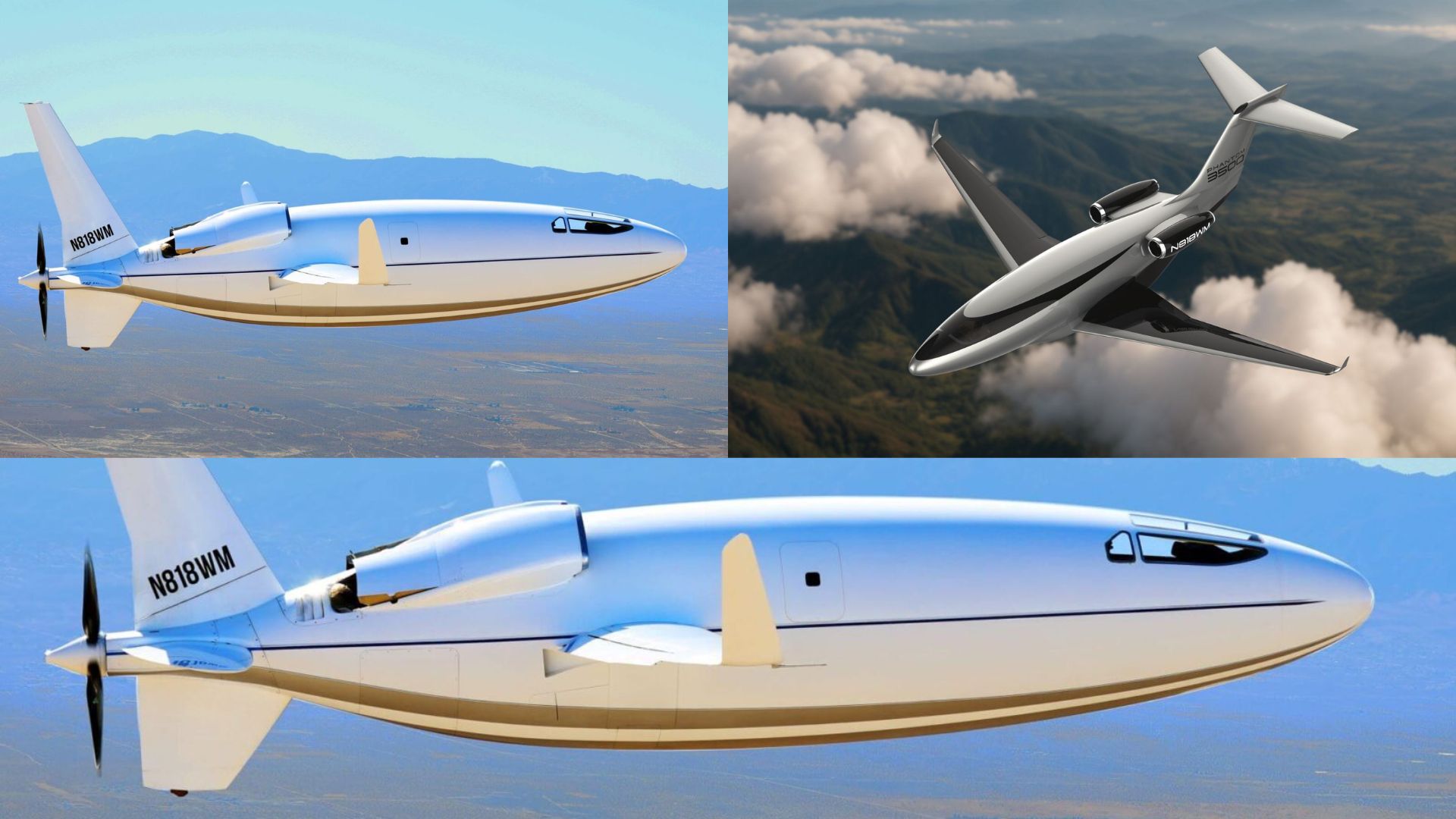
Otto Aerospace project enters decisive phase with promise to drastically reduce fuel consumption in executive aviation, using laminar flow, digital cabin without windows, and operation at high altitudes to increase efficiency, while accumulating billion-dollar orders even before official certification.
With the completion of the Preliminary Design Review of the Phantom 3500, Otto Aerospace has advanced to one of the most important stages of the executive jet development, allowing the program to proceed to engineering detailing, structural component manufacturing, and preparation of the first flight test vehicle, scheduled for 2027.
Announced on May 13, 2026, the milestone confirms that the manufacturer has defined the aerodynamic configuration and main interfaces of the aircraft, providing engineering teams and suppliers with the technical foundation needed to transform the concept into a plane ready for construction and future certification campaigns.
Phantom 3500 enters new development phase
During the Preliminary Design Review, architecture, performance, embedded systems, structures, and the technical maturity level of the Phantom 3500 were evaluated, in an analysis conducted at the end of February at the company’s future facilities in Jacksonville, Florida.
-
Brazil may fall behind, and irreversibly so, in the global technological race involving the implementation of Data Centers and investments in Artificial Intelligence (AI). Much smaller but more agile economies, such as those of Argentina and Paraguay, have taken the lead.

-
Electric scooters have helped reduce cars on the streets, but their batteries also age: Lime has made an agreement with Redwood to recycle used packs in the USA, Germany, and the Netherlands and turn tech waste into raw material for new electric vehicles.

-
While many drivers still fear running out of charge on the road, CATL targets lithium-air batteries with a theoretical density close to gasoline and rekindles the promise of electric cars with a range of over 1,600 km.

-
Researchers created turbulence in the laboratory, reversed the energy flow within the fluid, and opened a new avenue for understanding ocean currents, climate, and sea pollution.


According to Scott Drennan, president and CEO of Otto Aerospace, the plane “crossed the threshold between a promising concept and an aircraft we are preparing to build and fly,” while the company directs the next efforts towards weight goals, strategic suppliers, certification, and operational performance.
Developed as a clean-sheet executive jet, the Phantom 3500 was designed to compete in the super-midsize aircraft segment by betting on aerodynamic efficiency, lower fuel consumption, and reduced operational costs.
Laminar flow technology promises to reduce consumption by 60%
At the heart of the project is the extensive use of the so-called natural laminar flow, a condition where air travels over the aircraft’s surface smoothly and continuously, reducing turbulence, aerodynamic drag, and a significant part of the resistance faced during flight.
To preserve this behavior for as long as possible, Otto Aerospace designed an elongated, smooth fuselage without traditional windows, along with a wing optimized to maintain laminar flow over much of its surface during different phases of operation.
According to the manufacturer, this architecture could reduce fuel consumption by more than 60% compared to equivalent executive jets, in addition to supporting the promise of lower carbon emissions and significantly lower operational costs.
Windowless cabin bets on immersive digital screens
Among the most unusual aspects of the Phantom 3500 is the absence of traditional windows in the cabin, a solution adopted because, according to Otto Aerospace, openings in the fuselage create small disturbances that can compromise the maintenance of laminar flow around the aircraft.

In replacement, the jet will use digital panels integrated with high-definition external cameras, allowing real-time images to be displayed to passengers without altering the external surface designed to maximize aerodynamic efficiency during flight.
In addition to the immersive visual experience, the manufacturer promises a cabin with customizable digital ambiance, while the model is designed to carry up to nine passengers and reach about 3,500 nautical miles of range.
Celera 500L served as the basis for the new jet
Many of the solutions applied to the Phantom 3500 originated from the Celera 500L, an experimental aircraft created by Otto Aerospace to validate concepts of low aerodynamic drag and operational efficiency through an unusually shaped fuselage, similar to a drop.
Between 2018 and 2021, the demonstrator conducted test flights that, according to data released by the company, indicated drag levels up to 59% lower compared to conventional aircraft of similar size, directly contributing to the development of the new executive jet.
Already in May 2026, the company announced a testing campaign involving an unmanned laminar flow aircraft linked to DARPA research, the advanced projects agency of the United States Department of Defense, in trials aimed at validating aerodynamic efficiency in real flight.
Flexjet places billion-dollar order for 300 aircraft

Even without completed certification, the Phantom 3500 has already secured an order of 300 aircraft from Flexjet, an executive aviation company that became one of the first clients of the program and helped reinforce the commercial relevance of the project in the market.
Information published by Aviation Week indicates that the jet was launched with an approximate price of $19.5 million per unit, placing the deal on a billion-dollar scale, although future deliveries still depend on official certification and the advancement of mass production.
Otto Aerospace intends to certify the Phantom 3500 under the FAA rules applicable to the Part 23 category, maintaining a maximum takeoff weight projected at 19,000 pounds and expecting to enter commercial service throughout 2030.
New factory in Florida will produce the Phantom 3500
The final assembly of the Phantom 3500 will be carried out at Cecil Airport in Jacksonville, the location chosen by Otto Aerospace to receive a new industrial facility and also the future transfer of the company’s headquarters to Florida.
With support from state and local public incentives, the structure is expected to concentrate engineering, manufacturing, and assembly activities of the test vehicles, bringing operations related to the certification program and development of the new executive jet closer.
According to the schedule released by the manufacturer, the construction and assembly of the FTV1, the first flight test vehicle, will precede the operational validation campaign of the aircraft, a stage dedicated to performance, safety, and regulatory compliance analysis.









-

1 person reacted to this.