






 Portuguese
  Spanish


Sany’s electric truck tests sugarcane transport in Brazil with 588 kWh battery, swap, and capacity to pull up to 120 tons. Published on May 20, 2026, the operation uses the 6×4 MTB 588SUPER tractor and targets heavy applications in Brazilian off-road agriculture.
A Chinese electric truck from Sany has begun testing in sugarcane transport in Brazil with a 588 kWh battery, swap system, and capacity to pull up to 120 tons. The operation was reported by Agência Transporta Brasil on May 20, 2026.
According to Agência Transporta Brasil and institutional information from SANY of Brazil, the test involved the Sany 6×4 MTB 588SUPER model, its official representation in the country, and a farm of an undisclosed client. The vehicle pulled a 17-axle set, allowed only in off-road sections, in an application aimed at sugarcane harvesting.
Electric truck entered heavy operation in sugarcane fields
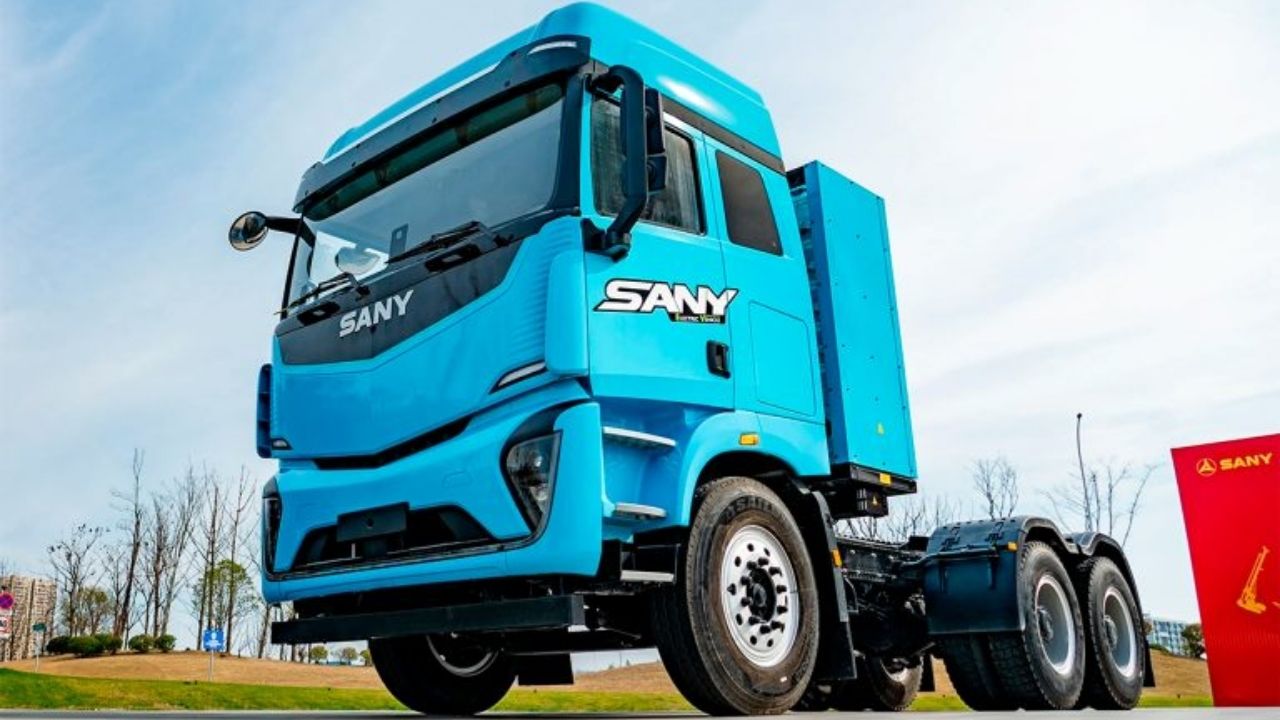
Sany started testing the 6×4 MTB 588SUPER tractor in a rural sugarcane transport operation, a type of application known for requiring strength, endurance, and availability. The use occurred off-road, with a 17-axle set, precisely because this type of composition is not allowed for regular highway circulation.
-
Workers renovating a playground in northern England uncover 176 World War II bombs buried underground; training artifacts still contained explosives.

-
Brazilian Architect Transforms Waste into Sustainable Homes with Solar Power and Rainwater Systems for 40 Years

-
Security Guard Becomes Doctor at Louisiana Hospital Where He Once Worked, Studied Chemistry Between Shifts

-
Woman Rescued from Luxury Complex in Brazil Worked Without Pay for 55 Years, May Be Entitled to Over $300,000




The initiative draws attention for bringing electrification to one of the toughest routines in heavy transport. Instead of appearing only in urban deliveries or light routes, the truck was placed in a sugarcane operation, where weight, terrain, and work pace are decisive factors.
According to Agência Transporta Brasil, the initiative is one of the first in the country using an electric truck in such an operation. The source does not disclose the name of the farm or the state where the test took place, only that the operation was carried out in an undisclosed client’s area.
This detail is important because it prevents expanding the information beyond what was published. What is known, based on the source, is that Sany tested the vehicle in Brazil for sugarcane transport, focusing on extra-heavy applications in agribusiness.
Sany 6×4 MTB 588SUPER has 652 horsepower and 2,800 Nm
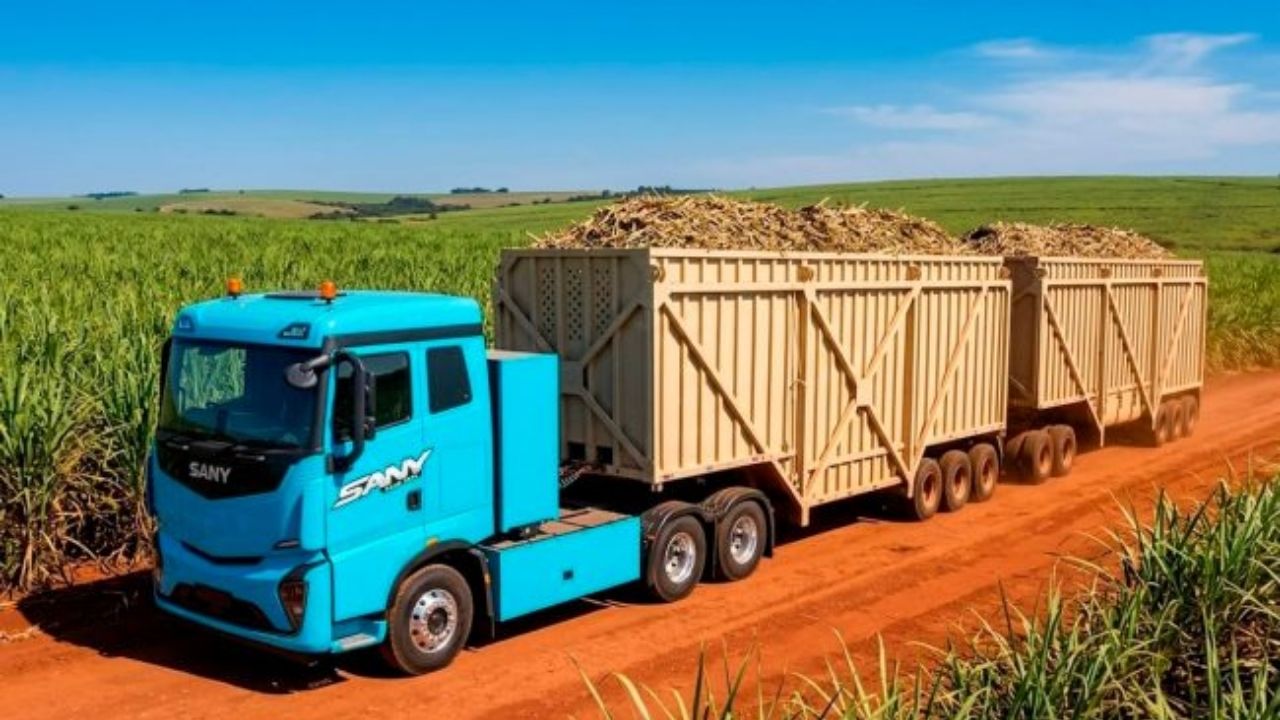
The Sany 6×4 MTB 588SUPER tractor is manufactured in China and is available in the Brazilian market through the brand’s official representation. The model has an electric motor of 480 kW, equivalent to 652 horsepower.
The immediate torque reported is 2,800 Nm, a relevant number for high-effort operations, such as starting with a heavy load and moving in rural areas. In sugarcane transport with up to 120 tons, torque and traction are central to the proposal.
The transmission is a six-speed automatic, with a selector on the steering wheel and power take-off. The truck also features suspension with 10 leaf springs at the front and rear, a configuration aligned with severe use.
The package includes ABS brakes, electronic stability control, and an energy regeneration function during braking. This last feature allows recovering part of the energy during decelerations, something useful in operations with frequent stops and starts.
588 kWh battery seeks autonomy for dedicated operation
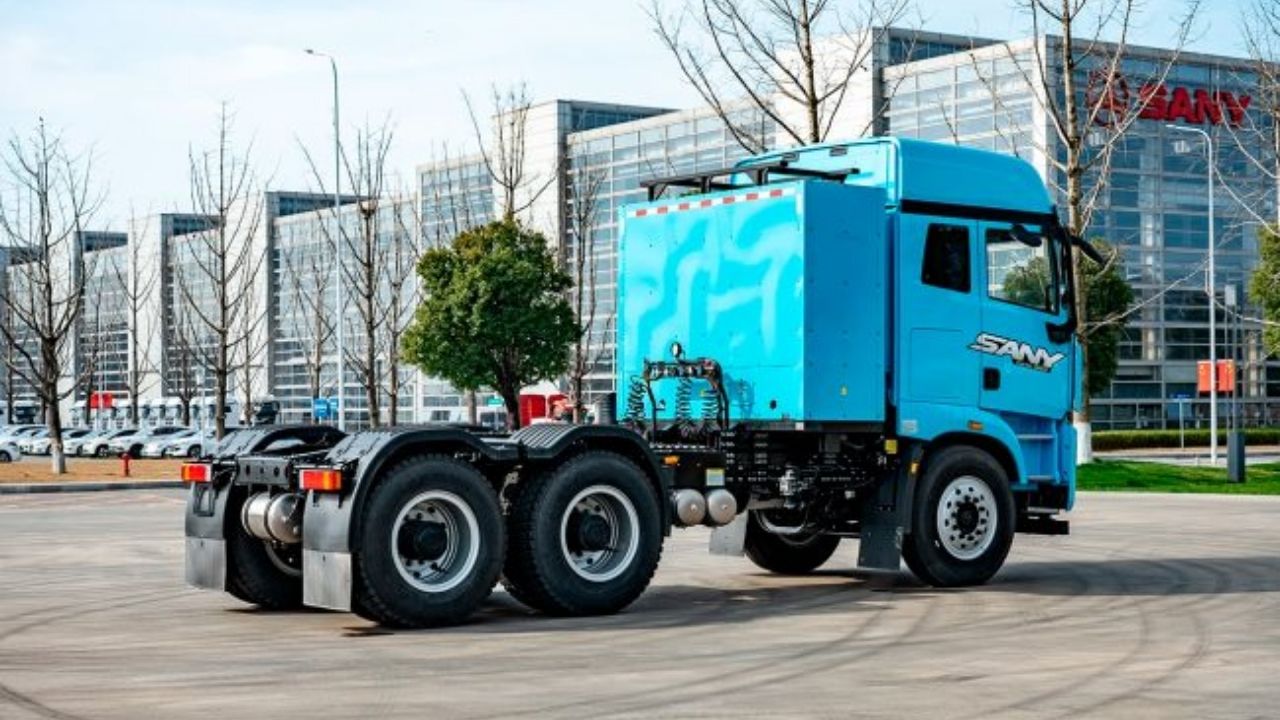
The heavy electric truck from Sany uses an iron-lithium ion battery with a capacity of 588 kWh. According to the source, the range varies between 300 and 400 kilometers, depending on the configuration and type of operation.
This point is crucial because heavy rural transport does not rely solely on the technical sheet. Real autonomy changes according to weight, terrain, speed, route, temperature, and harvest pace. Therefore, practical operation tests help measure the model’s viability.
Sany also reports, in its truck portfolio, heavy electric versions of 588 kWh with a range between 350 and 500 km, depending on the model and application. In the case of use in sugarcane, Agência Transporta Brasil highlights the 6×4 MTB 588SUPER model.
The difference between portfolio data and field performance needs to be observed with caution. Testing in a sugarcane field is more demanding than an ideal condition, especially when it involves extra-heavy composition and off-road use.
Swap can reduce downtime in operation
One of the model’s differentiators is the battery swap system. Instead of relying solely on conventional recharging, the truck can have the discharged battery removed and replaced with a charged one.
Fast charging can occur in less than an hour, depending on the available infrastructure. However, the swap aims to increase vehicle availability, reducing downtime during long or high-intensity operations.
For agriculture, downtime can weigh as much as range. During harvest periods, when machines, trucks, and teams work in sequence, the ability to quickly return to operation can influence the adoption of technology.
Sany also presents solutions in Brazil such as chargers and Mini Station for battery swapping. According to company material, these stations were designed to serve electric fleets, reduce queues, and speed up the replacement of packs.
Sugarcane transport requires more than power on paper


Transporting sugarcane in rural operations is not the same as driving with standardized loads on flat roads. The truck needs to handle heavy weight, uneven terrain, dust, heat, stops, starts, and long working periods.
Therefore, the test with a 17-axle set has practical relevance. It puts electrification in front of an application where diesel still dominates due to tradition, availability, and already installed infrastructure.
The ability to tow up to 120 tons shows that Sany seeks to position the model in extra-heavy operations. This type of application interests sectors such as sugar-alcohol, forestry, mining, pulp, and port flow.
Even so, progress depends on recharging infrastructure, battery availability, technical assistance, operational cost, and farm adaptation. An electric truck may have high power, but it needs to prove viability in the complete operation cycle.
Factory in Campinas enters Sany’s plans in Brazil
In addition to testing in sugarcane fields, Sany reported that it is in negotiation and beginning the process to install a factory in Brazil. The planned structure would be at the former Mercedes-Benz factory in Campinas, in the interior of São Paulo.
According to the Transporta Brasil Agency, the initial idea is to assemble trucks with components manufactured in China. This move could bring the brand closer to the Brazilian market and reduce barriers for expansion in heavy transport.
The local industrial presence can also be important for after-sales, parts, training, and adapting vehicles to national requirements. In heavy trucks, the decision to purchase or adopt depends not only on the vehicle but on the network that supports the operation.
The plan is still presented as a negotiation and beginning of the process, not as a factory already in full production. Therefore, the text should treat Campinas as Sany’s industrial objective, not as a completed operation.
Sany bets on electric and diesel portfolio in the country
Sany Trucks, the business unit of Sany in Brazil, launched a portfolio with electric trucks and also diesel models compatible with Proconve P8, equivalent to the Euro 6 standard. The brand seeks to operate in both urban and road and extra-heavy applications.
In the case of electric vehicles, the portfolio includes a light truck with 6 tons of GVW and 106 kWh, as well as heavy trucks with batteries of 437 kWh and 588 kWh. The strategy combines electrification, low operational cost, and decarbonization of transport.
The company claims that its heavy electric trucks can support up to 120 tons of GCW, depending on the model and application. This data directly relates to the truck test in sugarcane fields, where traction demand is high.
Sany also maintains heavy diesel models 6×4 and 6x2R, suitable for cargo transport and logistics operations. This shows that the brand does not rely solely on an immediate replacement but on a mixed portfolio for different customer profiles.
Decarbonization in agriculture still depends on infrastructure
The use of electric trucks in agribusiness points to an important trend: the pursuit of emission reduction is also beginning to reach operations outside urban centers. Sugarcane, for example, involves intense logistics between fields, loading, mills, and support areas.
However, the challenge of electrifying this type of transport is greater than simply replacing a diesel engine with an electric one. It is necessary to create a charging structure, energy management, specialized maintenance, and route planning.
The swap system can help in this process, especially in dedicated operations with predictable routes. If the fleet always operates on a known circuit, the company can better plan where to recharge or swap batteries.
Even so, each operation will have its own account. Distance, load, harvest time, energy availability, and infrastructure cost will determine if the electric model makes sense on a scale.
Chinese electric truck tries to carve out space in Brazilian agriculture
The test of the Sany 6×4 MTB 588SUPER shows that heavy transport in the field has entered the electrification radar. The Chinese truck appeared not only as a technological showcase, but in a real sugarcane operation, pulling an extra-heavy off-road composition.
Sany’s bet combines 652 horsepower, a 588 kWh battery, 2,800 Nm torque, and the possibility of quick swap. It is an attempt to solve the most sensitive point of the heavy electric vehicle: maintaining productivity even with high energy demand.
The next step will be to prove consistency in more operations, with more data on cost, real autonomy, maintenance, and availability. Without this, the truck will still be seen as a promising test, not as a definitive turnaround.
And you, do you believe that electric trucks can already handle the heavy work of sugarcane fields, or will diesel still dominate for a long time in Brazilian agriculture? Leave your opinion in the comments and tell us which factor weighs the most: autonomy, price, recharge, or maintenance.


no impossibility in mobility. what ever makes business sense will carry the day!