





 Portuguese
  English
  Spanish
 5 min of reading
  0 comments


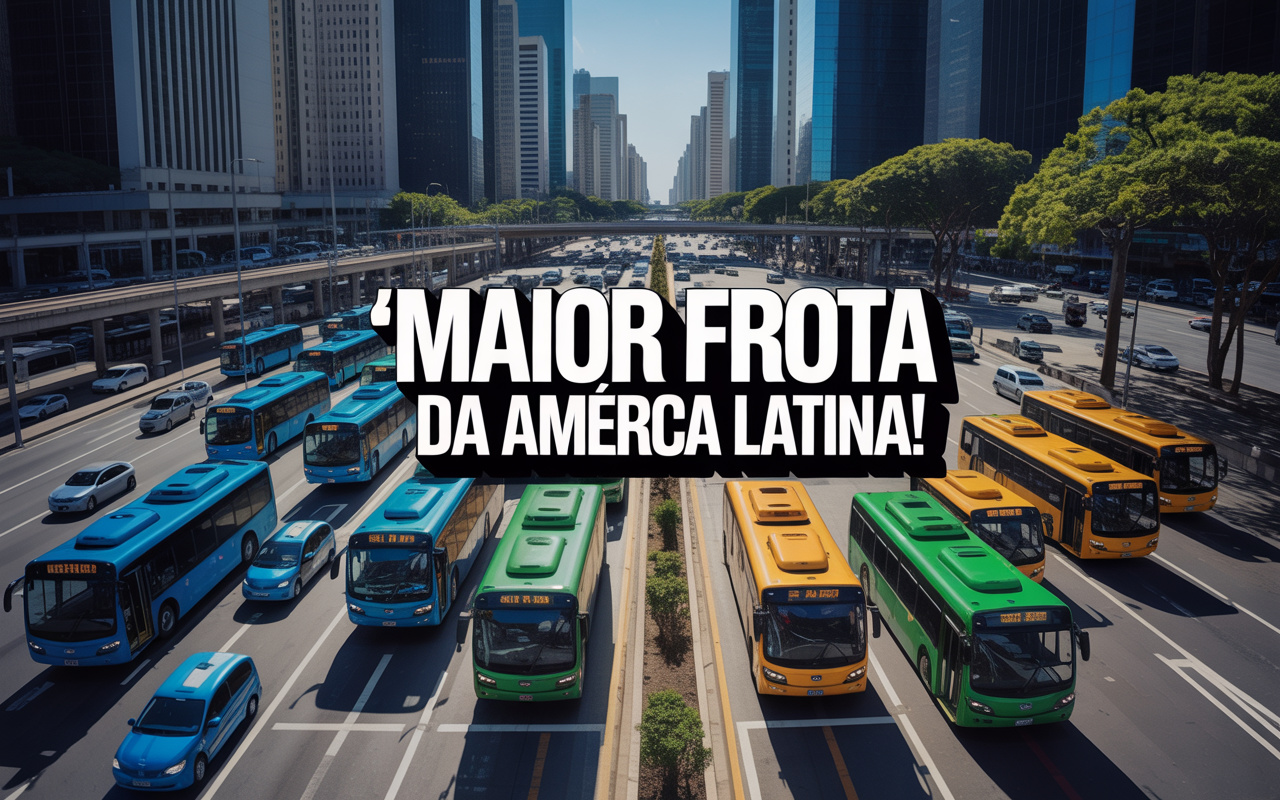
São Paulo Has the Largest Urban Bus Fleet in Latin America: 13.7 Thousand Vehicles, 6 Million Passengers, and 600 km of Exclusive Corridors.
São Paulo is a metropolis that never stops and also the city with the largest wheeled public transportation system on the continent. According to official data from SPTrans (São Paulo Transporte S.A.) and the National Association of Public Transport (ANTP), the São Paulo capital houses the largest urban bus fleet in Latin America, with around 14 thousand vehicles in operation and over 6 million passengers transported daily.
While metropolises like Mexico City, Bogotá, and Buenos Aires face similar mobility challenges, none come close to the scale and complexity of the São Paulo system — a true city on wheels that keeps the capital moving day and night.
A City Powered by Nearly 14 Thousand Buses
The bus system in São Paulo is operated by 32 companies and authorized operators, organized into 1,300 regular routes. The fleet covers the entire urban area of the city — 1,521 km², equivalent to the territory of countries like Luxembourg, and interconnects peripheral regions, commercial centers, and industrial hubs.
-
MBRF surprises the logistics sector by demonstrating how Artificial Intelligence can directly influence deliveries throughout Brazil by reorganizing distribution routes in seconds, optimizing fleet usage, reducing logistics costs, and speeding up product arrivals even in the face of unforeseen road incidents.

-
With deep ports and strategic railway, Espírito Santo advances to compete with Santos and attract foreign trade cargo.
-
It is now official: Correios and AliExpress join forces to speed up deliveries throughout Brazil, enhance package tracking, and strengthen the digital logistics infrastructure that supports the rapid growth of e-commerce in 2026.
-
The truck that “bent physics” in the Monte Carlo case: report indicates impossible route between São Paulo and Mato Grosso, R$ 4 million in recorded refueling, R$ 3 million advanced, and suspicion of entries without real correspondence.

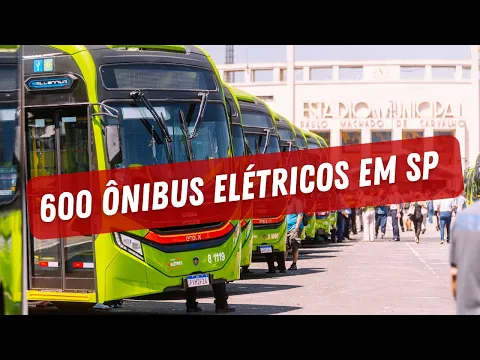

The structure is divided into two major operational axes:
- Trunk and structural lines, which connect the main corridors and terminals;
- Local and feeder lines, which link neighborhoods and subway or train stations.
In total, the system performs around 60 thousand trips per day, covering more than 3 million kilometers traveled. According to SPTrans, the buses transport 6 million people on weekdays, which is almost half the city’s population moving on wheels daily.
The Largest Bus System in Latin America
The size and efficiency of the system place São Paulo in a prominent global position. According to the UITP Global Urban Mobility Report (2023), the São Paulo capital is the city with the largest active urban bus fleet in Latin America and one of the five largest in the world, surpassed only by Asian megacities like Beijing, Shanghai, and Tokyo.
International Comparison (2023):
- São Paulo (Brazil): 14 thousand buses, 6 million passengers/day.
- Mexico City (Mexico): 11 thousand buses, 4.5 million/day.
- Bogotá (Colombia): 9 thousand (including the TransMilenio BRT system), 5.5 million/day.
- Buenos Aires (Argentina): 8 thousand buses, 3.2 million/day.
The data shows that, even with advances in subway and light rail systems in other capitals, buses remain the main means of public transport in Latin America — and São Paulo is the most emblematic example of this reality.
Corridors, Exclusive Lanes, and Multimodal Integration
To optimize flow and reduce travel time, São Paulo has implemented one of the largest exclusive bus lane systems in the world, with over 600 kilometers of corridors and priority lanes.
These structures, combined with the Bilhete Único, allow passengers to integrate different modes — buses, subways, trains, and even bicycles by paying a single fare within a time window.
The integration model has been recognized internationally by the UITP (International Association of Public Transport) as one of the most efficient urban mobility solutions in Latin America.
In recent years, the city has also begun to invest heavily in electric buses. The São Paulo City Hall estimates that by 2026, around 2,000 vehicles in the fleet will be fully powered by clean energy, reducing CO₂ emissions and urban noise.
24 Hours in Motion
Few cities in the world have such active tire-based transportation for 24 hours a day. In São Paulo, night lines operate from midnight to 4 AM, ensuring continuous movement even outside peak hours.
This characteristic is essential for a city with an economy that never sleeps, where industrial shifts, hospitals, and logistics centers operate around the clock.
The Operational Control Center (CCO) of SPTrans monitors the movement of 14 thousand vehicles in real time through GPS and traffic intelligence systems. The data allows for timely corrections of delays, redistributions of routes, and instant identification of bottlenecks.
According to the agency, there are more than 45 thousand trips tracked simultaneously, with an average wait time on major lines of less than 8 minutes during regular hours.
The Cost and Challenge of Efficiency
Maintaining the largest fleet in Latin America requires a gigantic financial and logistical effort. The system consumes over R$ 10 billion annually in operations, including subsidies, fuel, maintenance, and payroll.
Even so, public transport still faces challenges such as overcrowding during peak hours and slowdowns in some congested sections.
The Municipal Department of Mobility and Traffic (SMT) acknowledges that the city needs to balance fleet expansion with sustainability measures and roadway reorganization. The goal for the coming years is to reduce average travel time by 15% and gradually replace diesel vehicles with electric and hybrid models.
The Gear That Moves the Largest Metropolis in the Southern Hemisphere
São Paulo is more than just a city; it is a living organism that depends on the constant movement of people, products, and services. And what sustains this daily flow are the 14 thousand buses that traverse the avenues and corridors from north to south.
While in many cities public transport is still seen as a problem, in São Paulo it is the backbone that keeps the metropolis standing. Without it, collapse would be immediate: 6 million passengers without alternatives, 1.5 million extra vehicles on the streets, and a city that would simply come to a standstill.
Behind the noise of engines and crowded stops lies a colossal structure, a mobility system that, by itself, transports more people per day than the entire population of countries like Denmark or Finland.
This is the true city on wheels: São Paulo, where public transport is so immense that it has become a technical, economic, and social phenomenon, and above all, the engine that makes Brazil turn.





Be the first to react!