






 Portuguese
  Spanish


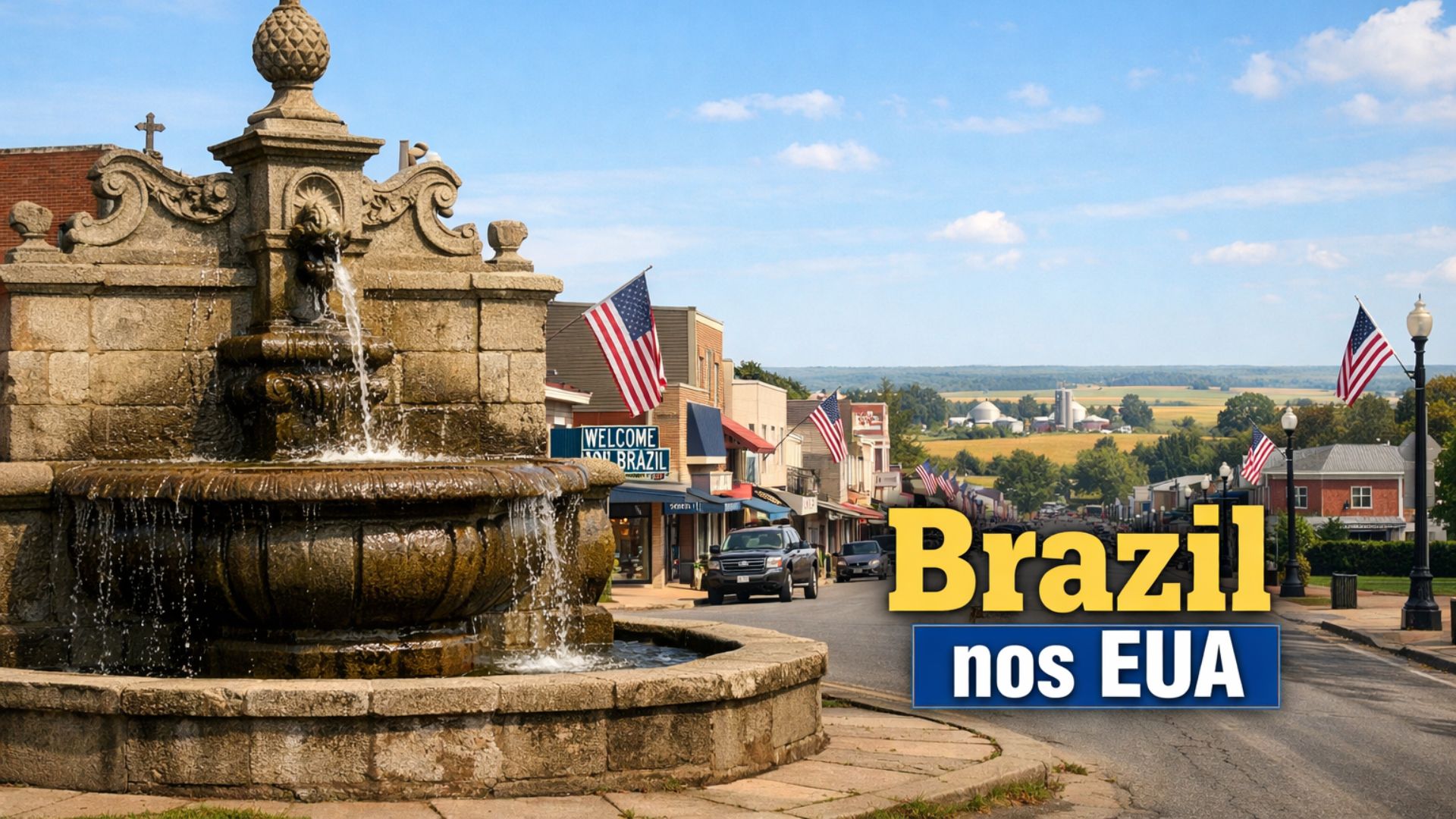


Brazilian Name in American City Intrigues Visitors and Preserves Little-Known Historical Connection
A small town in the Midwest of the United States carries a name that immediately piques curiosity among Brazilians, even though its daily life does not show evident traits of the country it is named after.
Located in the state of Indiana, Brazil has about 8,000 inhabitants, an economy linked to rural areas, and a routine marked by typically American symbols common to small towns in the region.
Still, there is a concrete link to Brazil, preserved not in customs, but in a historical element that catches the attention of attentive visitors.
-
Billionaire says the most valuable skill will help overcome job elimination caused by AI, following Bill Gates’ fears

-
A Dutchman created a ‘box’ that makes trees grow in the desert almost without water and without irrigation: the invention has already brought seedlings to dozens of countries and achieves up to 90% survival where common planting did not exceed 10%.

-
Abandoned warehouse hid a giant collection of rare computers, with over 2,000 artifacts from the 1930s to the 1980s.
-
Scientists warn that melting ice is triggering an alarming chemical transformation in preserved areas, and the first signs are already concerning researchers worldwide.




This consists of a fountain inspired by one of the most famous monuments in Ouro Preto, Minas Gerais, installed in the municipality as an official gesture of rapprochement between the two cities.
Upon arrival, the visitor finds a familiar landscape for those who know the interior of the United States, with quiet streets and buildings that follow local architectural standards.
American flags appear on houses, public buildings, and commercial establishments, reinforcing the national identity predominant in the city.
Signs, official vehicles, and facades display the name “Brazil” as a municipal brand, but with no visual references that relate to Brazilian culture in the urban daily life.
The expectation of finding music, language, or cuisine associated with Brazil quickly dissipates as the city reveals habits aligned with the regional reality.
The streets are named after American states and local figures, while restaurants have menus common to the interior of Indiana.

Even the barbecue restaurant mentioned by locals operates under Italian inspiration, reinforcing the cultural distance from the country that names the municipality.
Churches, shops, and banks complete the scenario of a typical town in the region, far from the idea of a foreign enclave or an established immigrant community.
In informal conversations, the strangeness also appears in the language used by the residents themselves.
When asked how they would refer to someone coming from Brazil, a resident responded “Brazilbillies”, a term recorded as a local curiosity and more of an improvised nickname than a consolidated cultural designation.
The municipal library reinforces this perception by reflecting the little linguistic diversity present in the city.
The section dedicated to foreign languages is small and does not include works in Portuguese, indicating the absence of a large or organized Brazilian community.
Fountain from Ouro Preto in Indiana Symbolizes Link Between Cities
The main clue to a more direct connection with Brazil is not found in commerce or daily life observed on the streets.
It arises in a park in the city, where a specific monument concentrates the historical significance of this connection.

There, next to flags of Brazil and the United States, stands a fountain that catches the attention of those who know the historical heritage from Minas Gerais.
The structure is a replica of the Chafariz dos Contos, a colonial period monument located in Ouro Preto, Minas Gerais.
The fountain was installed in Brazil, Indiana, as an official gift from Brazil to the American city, in a symbolic gesture of cultural rapprochement.
Local records indicate that the donation occurred in the 1950s, a time marked by such initiatives between municipalities of different countries.
There are references that place the offering in 1954, while others indicate 1956 as the year of the formal dedication of the monument.
This difference suggests a process that involved negotiation, sending, and inauguration in distinct phases.
Regardless of the exact date, the fountain has established itself as a unique landmark in the local urban landscape.
It materializes the connection between the two places and serves as a point of historical curiosity in a municipality that, outside of this, rarely evokes Brazil.
For visitors and residents, the monument helps to explain why a town in the interior of Indiana carries a name so distant from its daily reality.
Origin of the Name Brazil in Indiana Gathers Historical Versions
The most widely circulated explanation about the name “Brazil” usually associates it with the context of Brazil’s Independence, proclaimed in 1822.


According to this narrative, news about the new country would have circulated in the United States in the following decades, generating interest and inspiring the choice of the name.
The date 1830 frequently appears as a symbolic reference in this account, although it is not consensus among historians.
More consolidated historical records, however, indicate a different chronology for the formation of the municipality.
The area that gave rise to the city was initially occupied by farms, and one of these farms would have been named “Brazil” in the 1840s.
The municipality was officially founded only in 1866, already at a later moment than the informal baptism of the land.
These data indicate that the name preceded the formally constituted city and was linked to individual decisions by the landowners of the time.
The influence of international news in the 19th century may have contributed to the choice, but there is no historical consensus that confirms this motivation as a documented fact.
The divergence between versions does not eliminate the fascination surrounding the origin of the name.
On the contrary, it helps explain why it remains a central element of local identity, even without cultural reflections in daily life.
The term has crossed generations and remains as a historical heritage, more than as a result of continuous migratory ties.
American City Named Brazil Sparks International Curiosity

Currently, Brazil, Indiana, follows the routine of many other small American towns in the interior.
The economy revolves around local agricultural production, while the rhythm of local life is dictated by typical Midwestern habits.
The presence of Brazil is concentrated in the name and in the fountain that honors Ouro Preto, without extending to parties, neighborhoods, or recurring cultural practices.
There are no regular Brazilian events, nor areas marked by recent immigration or the everyday use of the Portuguese language.
Still, the municipality has become a point of interest for curious travelers and for Brazilians who are surprised to find the name of the country on maps and official signs.
In this context, the mining fountain takes on a symbolic role by showing that cultural relationships are not always built through migration or daily coexistence.
Historical choices, diplomatic gestures, and coincidences also shape local identities over time.
Amid corn and soybean fields, quiet streets, and typically American symbols, the name Brazil continues to provoke a recurring question.
To what extent is a name enough to transform an ordinary place into an object of international curiosity?





Que pena, vocês não foram visitar a Fonte que foi um presente de MINAS GERAIS para o Brazil de Indiana