






 Portuguese
  Spanish


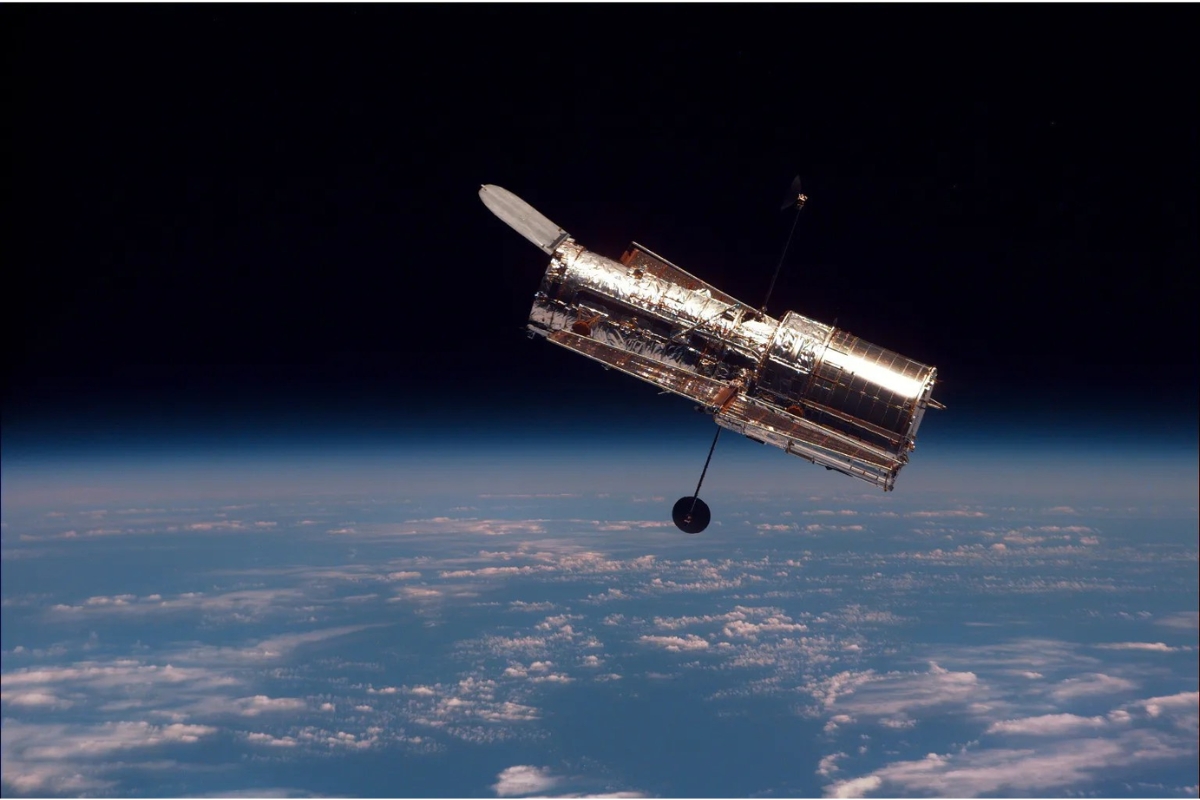


The Hubble Orbit Constantly Loses Altitude And Re-Entry May Spread Debris, With Low Risk To Populated Areas, But Potential Global Impact
The Hubble Space Telescope continues to operate and still sends important data for science. Nevertheless, the altitude of its orbit has been steadily decreasing, increasing the risk of re-entry into the Earth’s atmosphere.
The issue has gained traction because it involves one of the most famous observatories in the world, with decades of operation and without the same maintenance options that existed in the past. The most likely projection points to 2033, but there is a chance it could happen sooner, reaching 2029.
The main concern is what may survive the extreme heat during re-entry and where these fragments could fall, even with a low probability of hitting populated areas.
-
Meta to Launch Arena, a New Prediction App Targeting 3.56 Billion Users, Competing with Polymarket and Kalshi

-
Scientist Challenges Famous Human Evolution Theory, Argues Homo Sapiens Evolved Gradually Over Thousands of Years
-
15-Year-Old American Builds Ocean Generator with PVC Pipe and 3D-Printed Propeller for $12, Wins National Prize, Presents at White House, and Makes Forbes 30 Under 30 List

-
$12 Billion Invested in AI Data Centers in Semi-Desert Mexican State, But 17 of 18 Municipalities Now Face Water Shortages, Residents Receive Water Only 3 Days a Week




Hubble Remains Active, But The Orbit Is Slowly Losing Altitude
Launched in 1990, Hubble has become a reference in modern astronomy. Over the years, it has helped confirm the existence of black holes, monitored the expansion of the universe, and revealed unknown moons of Pluto.
Even with the mission still ongoing, the loss of altitude shows that the telescope is not free from the influence of the atmosphere. This process is gradual, but constant.
Over time, the reduction in orbit increases the risk of the equipment returning to denser layers of air and initiating an uncontrolled fall.
Why Hubble May Fall Even Though It Is In Space

Hubble orbits the Earth at about 550 kilometers in altitude, within low Earth orbit. It moves at approximately 28,000 kilometers per hour, in a region where there is still a minimal level of atmosphere.
This resistance, even if weak, creates a continuous drag that gradually reduces altitude. This effect accumulates over the years.
The more the orbit shrinks, the greater the impact of this friction tends to be, accelerating the telescope’s approach to re-entry.
The End Of The Shuttle Program In 2009 Changed The Future Of The Telescope
For many years, NASA was able to compensate for this wear with maintenance missions performed by astronauts from the space shuttle program. In addition to repairing instruments, these missions also elevated Hubble’s orbit.
This possibility ended with the definitive retirement of the shuttles in 2009. Since then, the telescope has lost a practical way to receive this type of direct support.
Even with this limitation, Hubble has achieved 35 years of operation and has conducted over 1.3 million observations, with the expectation of continuing to operate as long as possible.
Worn-Out Gyroscopes And Less Margin To Maintain Control
Time also weighs on the internal systems of the telescope. Components like the gyroscopes, used to orient Hubble accurately, already show clear signs of deterioration.
This reduces the margin for maneuvering and increases the difficulty of maintaining the equipment working with the same stability as before. Operations continue, but with limitations that become more evident.
With fewer technical options, wear and tear becomes more than just a maintenance issue and starts to directly influence the observatory’s lifespan.
SpaceX Evaluated A Mission In 2022, But The Idea Was Discarded
In 2022, SpaceX assessed the possibility of conducting a mission to push Hubble into a safer orbit. The proposal aimed to extend the telescope’s operational time.
However, the plan did not advance and was ultimately discarded. As a result, the trend of orbital decline continues without a confirmed practical intervention.
The consequence is direct: Hubble continues to lose altitude and approaches the moment when re-entry becomes inevitable.
Fall In 2033 Is The Most Probable Scenario, But 2029 Is Also On The Radar
The most probable scenario indicates re-entry around 2033. Still, there is a probability of 1 in 10 that the process may occur sooner, reaching 2029.
The variation depends on solar activity and the behavior of atmospheric resistance over time. Small changes in these factors can accelerate or delay the moment of re-entry.
The projection also points to a possible debris range between 350 and 800 kilometers along the trajectory, should fragments survive the heat.
What May Hit The Ground And What Is The Real Risk To Populated Areas
During re-entry, much of the telescope tends to disintegrate due to extreme heat. Nonetheless, some fragments may survive and fall to the Earth’s surface.
Simulations indicate a medium risk of 1 in 330 along the path crossing Hubble’s orbit. In remote areas like the South Pacific Ocean, the probability drops to 1 in 31,000.
The exact point of the fall can still not be precisely calculated, as the final trajectory depends on factors that change over time.
The Hubble Space Telescope still operates, but the constant loss of altitude keeps re-entry as an expected event in the future. The most probable scenario points to 2033, with a chance of anticipation for 2029.
The practical impact involves the possibility of fragments hitting the ground, even with a low probability of falling in populated areas and with much of the equipment disintegrating during re-entry.





