Portuguese
  Spanish


Scientists Discover Self-Healing Metal That Could Revolutionize The Engineering Sector. Understand How This Metal That Heals Itself Works.
Scientists in the U.S. made an incredible discovery by observing, for the first time, a metal that regenerates. The metals can spontaneously heal microcracks that appeared in the materials during testing. The discovery was made by a research team from Sandia National Laboratories and Texas A&M University.
Understand How The Self-Healing Metal Could Change The Industry
The scientists managed to observe pieces of metal cracking and then fusing back together. The phenomenon goes against a series of scientific theories created in recent years and could pave the way for a major revolution in the engineering world.
Fatigue damage is a common cause of machine failure, which is why this type of discovery is so interesting. This damage manifests as microcracks that form due to repeated stress or movement.
-
China Launches World’s First 307-Meter Floating Wind Platform to Supply Oil Rigs, Aiming to Cut 35,000 Tons of CO2 Annually

-
Japan Deploys Offshore Concrete Factory, Constructs Massive Caissons in 8 Days, Revolutionizing Port Construction with Industrial Efficiency

-
China Builds World’s Largest Power Grid, Generating Enough Energy to Supply 15 Times Brazil’s Needs, Surpassing the US, EU, and India Combined
-
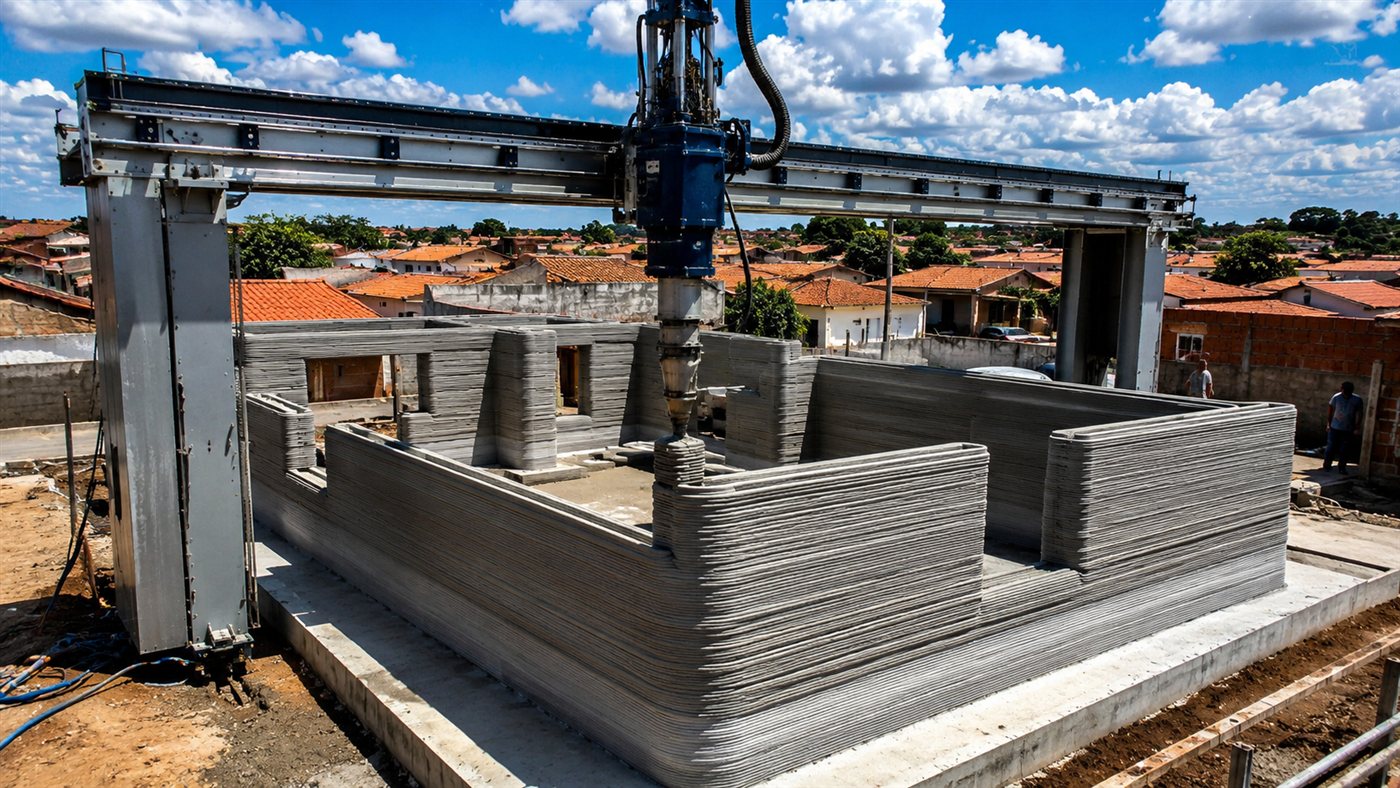
Brazil’s First 3D-Printed House Built in 30 Hours with Two Operators and 20% Lower Costs


Over time, these cracks expand and propagate until the device breaks. The crack that the team of scientists saw disappear was one of those tiny fractures, measured in nanometers.
The research team from Sandia National Laboratories and Texas A&M University described their findings about the self-healing metal in the journal Nature. According to Brad Boyce, a materials scientist at Sandia, it was absolutely stunning to watch first-hand.
What has been confirmed is that metals have their own intrinsic and natural ability to heal themselves, at least in the case of fatigue damage at the nanoscale. Fatigue damage is one of the main ways that machines wear out and eventually break.
From repeated stresses or movements, microscopic cracks develop that grow over time, leading to device failure.
Scientists Say That Self-Healing Metal Is Nearly Impossible In Theory
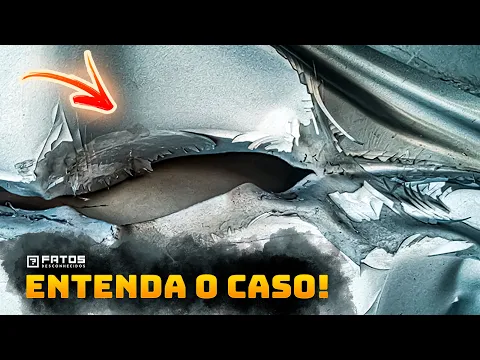

The crack that the researchers observed in the self-healing metal was one of those tiny fractures, measured in nanometers. According to scientists, from the weld joints in our electronic devices to motors and bridges, they often fail unpredictably due to cyclic loading, which leads to the initiation of cracks and eventual fracture. In theory, when that happens, humans must intervene and replace them.
The economic impact of these failures is measured in hundreds of billions of dollars each year for governments around the world. While scientists have already created some self-healing materials, primarily plastics, the notion of a self-healing metal has largely been the domain of science fiction.
For Boyce, cracks in metals were only expected to increase, not decrease. Even some of the basic equations used to describe crack growth exclude the possibility of such healing processes.
Self-Healing Metal Had Been Theorized
In 2013, Michael Demkowicz, then an assistant professor in the materials science and engineering department at the Massachusetts Institute of Technology, began to question the conventional theory of materials. He published a new theory, based on findings from computer simulations, that under certain conditions metal should be able to weld cracks formed by wear.
The discovery that his theory was inadvertently true was made at the Center for Integrated Nanotechnologies, a facility of the Department of Energy operated jointly by the Sandia and Los Alamos national laboratories. According to Boyce, certainly the self-healing metal was a big surprise.
Little is still known about the self-healing process, including whether it will become a practical tool in a manufacturing environment. According to scientists, the extent to which these findings are generalizable will likely become a subject of extensive research.