






 Portuguese
  Spanish


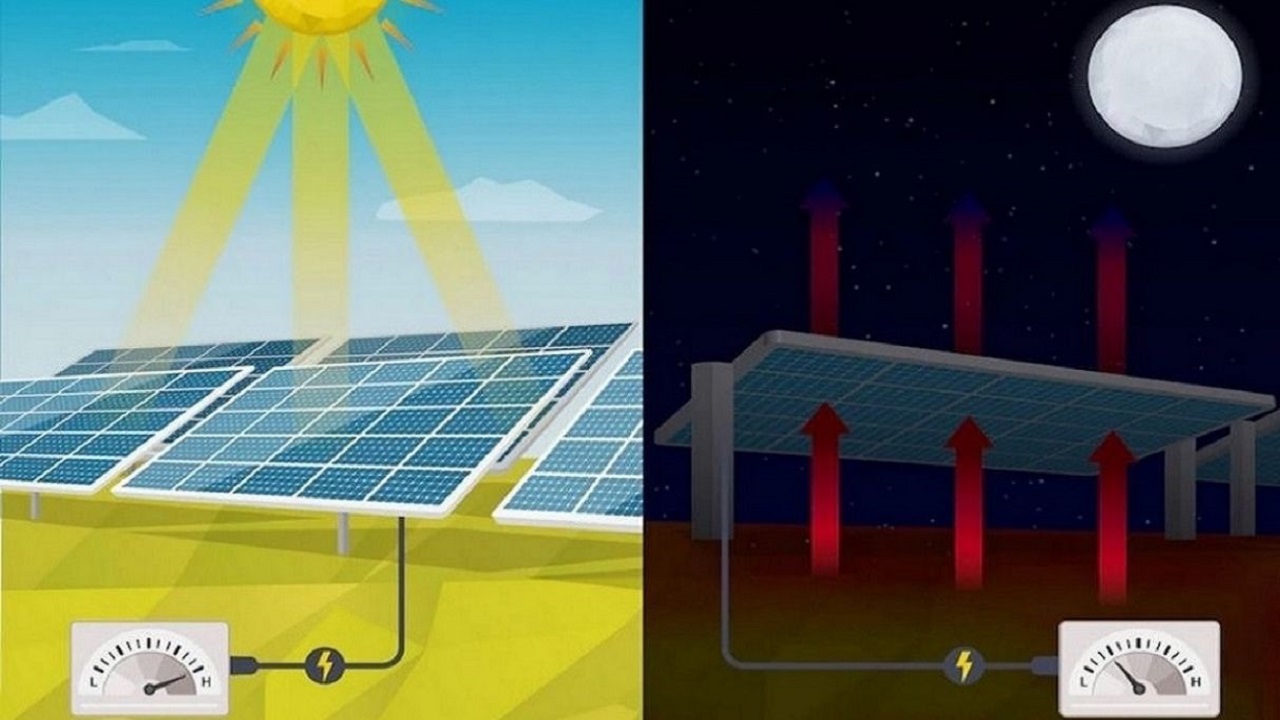

Australian Scientists Developed A Technology That Allows Solar Energy Generation At Night Using Infrared Waves.
A group of scientists from the University of New South Wales (UNSW), in Sydney, Australia, created a technology capable of producing solar energy at night. The equipment generates energy through what is called nighttime solar energy, a novel discovery recently made in the scientific community. This was made possible by the heat emitted in infrared light, just as the Earth cools by radiating into space at night.
How Was the Technology That Generates Solar Energy At Night Developed?
-

Representation of a Thermoradiative Diode | Image: UNSW -

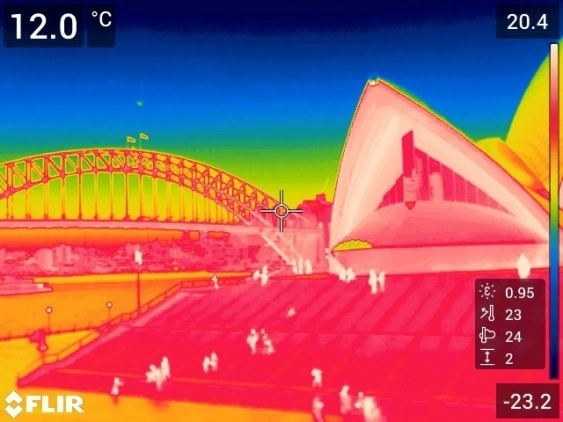
A thermal imaging camera highlights the amount of heat radiating from Sydney’s bay back into the atmosphere at night. | Credit: UNSW
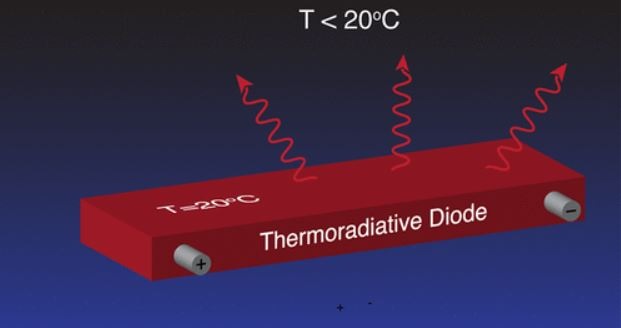
The study was led by a team of scientists from the School of Photovoltaic and Renewable Energy Engineering at the University. To achieve this feat, the team used a semiconductor device known as a thermoradiative diode, which is made from materials found in night vision goggles.
The study generated energy from the emission of infrared light. Although the amount of useful solar energy generated by the technology is small, the scientists assert that this can be improved in the future. According to associate professor Ned Ekins-Daukes, the team’s leader, a clear demonstration of electricity from a thermoradiative diode has been made.
-
Brazilian scientists are simultaneously advancing two research projects on clean hydrogen and driving solutions that could transform the energy matrix, enhance industrial competitiveness, and accelerate large-scale emission reduction targets.

-
Advancement in renewable energy: A R$ 150 million project launched by Petrobras and Finep aims to create state-of-the-art electrolyzers for green hydrogen, strengthening national research and preparing Brazil to compete in a billion-dollar energy market.
-
Solar energy can increase property value by up to 10% and become a selling point.
-
Illiterate or semi-literate grandmothers were trained to repair solar systems, open rural workshops, and light up homes that still depended on kerosene.




According to Ned, using thermal imaging cameras, it is possible to see how much radiation exists during the night, but only in the infrared, and not in the visible wavelengths. What the scientists did was develop a device capable of generating electrical energy through the emission of infrared thermal radiation.
How Does The Nighttime Solar Energy Technology Work?

According to the professor, the invention takes advantage of the solar energy at night and, as it gets darker, the same energy radiates back into space in the form of infrared light. Thus, the thermoradiative diode was shown to be capable of generating energy by taking advantage of that process. According to Phoebe Pearce, one of the co-authors of the article, whenever there is an energy flow, it is possible to convert it into various forms.
Solar energy, that is, the direct conversion of sunlight into energy, is an artificial process that humans have developed. Thus, the process performed by the technology is similar. The scientists are developing the energy that flows in infrared from a warm Earth into the cold universe.
Phoebe also stated that just as a solar cell can generate energy by absorbing emitted sunlight, the thermoradiative diode generates solar energy by emitting infrared light in a colder environment. In both cases, the difference in temperature is what allows electricity to be generated.
From Theory To Practice
The nighttime solar energy technology from the University of New South Wales is an exciting confirmation of a process that until now was theoretical, and the first step toward developing much more efficient devices that will one day be able to capture solar energy on a larger scale than currently.
To give an idea, Professor Ned explained that the first silicon solar panel in practice was presented in 1954, and this first solar cell had an efficiency of 2%. However, current cells have the capacity to convert approximately 23% of sunlight into electricity.
The scientist understands that this is an innovative technology and that we should not underestimate the need for industries to intervene and truly boost them. If the industry sees this as a technology of great value, then the process of improving this technology will be extremely rapid. Ned hopes that his finding can be reproduced on an industrial scale in the coming years, generating benefits for millions of people around the world.
Credits: ABC Australia








